

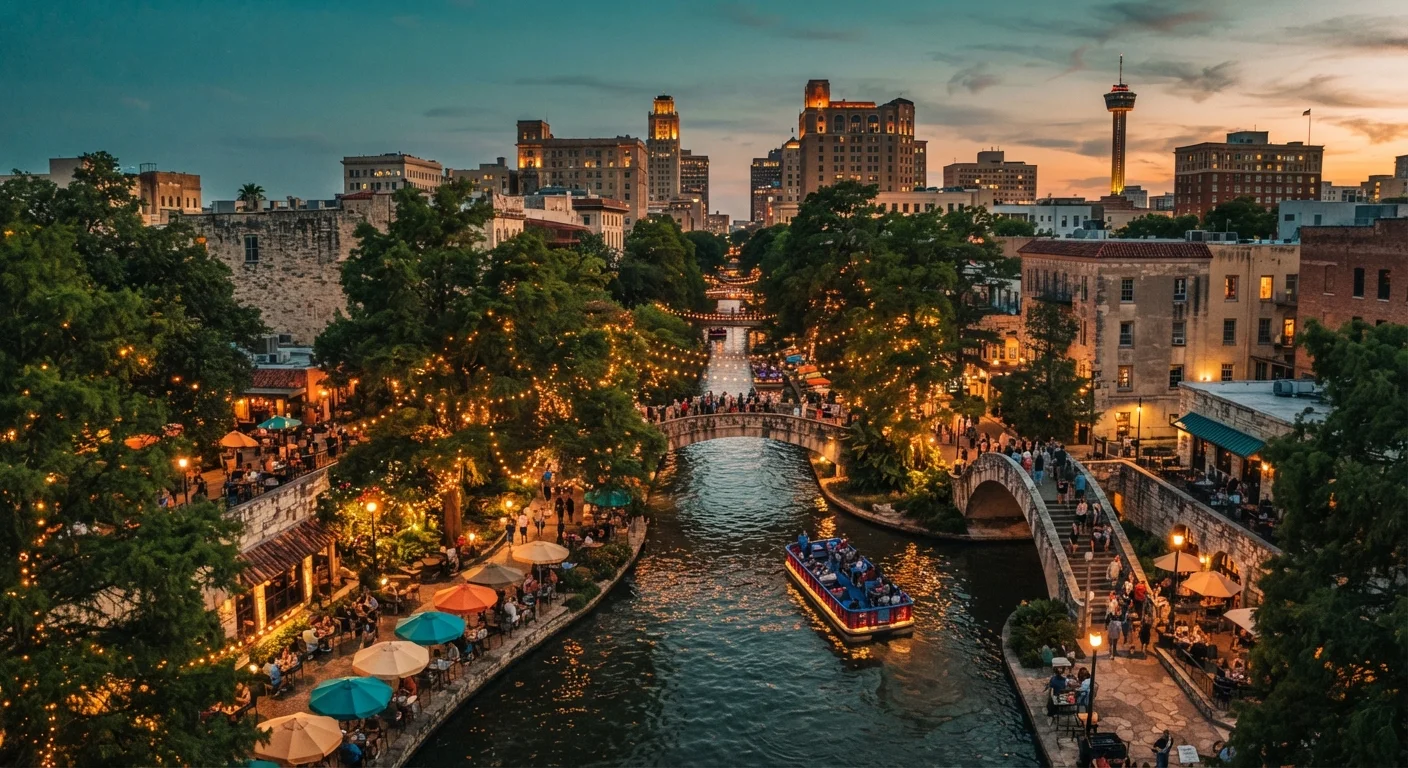
What the River Walk Actually Is
First-time visitors often expect something more organic - a meandering natural waterway tucked through a city. What you find is more purposefully constructed than that. The San Antonio River flows through it, yes, but the downtown channel was reshaped and channelized decades ago. The famous horseshoe bend - the dense, restaurant-lined stretch most people picture - was designed with commerce and pedestrian life in mind. It works, and it works well, but it helps to arrive with accurate expectations.
The pathway itself sits about 20 feet below the surrounding streets, which creates a sense of enclosure that feels surprisingly pleasant. Traffic noise drops away. Cypress trees arch overhead. The scale is human. On a weekday morning, the atmosphere can be genuinely tranquil; on a Saturday evening in tourist season, it's considerably more alive - and considerably louder.
“The River Walk is not just an amenity - it's the connective tissue of downtown San Antonio, linking its history, its commerce, and its daily life in a way few urban waterways manage.”
— Lewis F. Fisher, San Antonio historian and author of books on the city's architecture and urban development
What the River Walk Isn't
It isn't a hidden local gem. The River Walk is one of the most visited tourist destinations in the United States, drawing millions of visitors annually. The majority of restaurants on the main loop cater to that volume - expect familiar pricing, broad menus, and outdoor seating designed more for turnover than intimacy. That's not a condemnation; it's just useful to know before you assume you've stumbled onto the authentic soul of San Antonio.
It also isn't the whole story of the river. The Museum Reach, extending north toward the Pearl District, and the Mission Reach heading south toward the historic missions, are quieter, greener, and more locally used. Joggers, cyclists, and families with strollers occupy these stretches in ways that feel meaningfully different from the tourist corridor.
Try the Museum Reach for a Local Feel
If you walk only the downtown commercial loop, you're seeing the most tourist-oriented slice of the River Walk. Extending your walk north along the Museum Reach to the Pearl District takes roughly 30-45 minutes and delivers a noticeably different atmosphere - public art installations, locals out for exercise, and a neighborhood feel that's genuinely worth the extra steps.
What Surrounds It - And Why That Matters
The River Walk's real value may be geographic: it puts you within easy reach of the city's most substantive history. The Alamo - the 18th-century mission turned battleground - is a few minutes' walk from the main loop. The San Antonio Missions National Historical Park, a UNESCO World Heritage Site, sits a short drive south and encompasses four additional colonial-era missions. These sites carry a depth of history that the River Walk's restaurant row doesn't attempt to match, and combining both gives a visit considerably more texture.
The Pearl District, accessible via the Museum Reach, is worth the extra effort. A former brewery complex redeveloped into a neighborhood of restaurants, a hotel, a weekend farmers market, and local shops, it represents what many travelers mean when they're looking for a more locally grounded experience in San Antonio.
15 miles
Total length of the River Walk system
The full River Walk network, including the Museum Reach and Mission Reach extensions, spans approximately 15 miles - far beyond the downtown tourist loop most visitors see.
11+ million
Annual visitors to the River Walk area
The San Antonio River Walk is consistently ranked among the most visited tourist destinations in the United States, according to tourism estimates from the City of San Antonio.
1930s
Decade the River Walk was first developed
The below-street-level promenade was originally engineered as a flood-control project following damaging floods in 1921, later evolving into a pedestrian and commercial destination.
And if you're considering your broader itinerary, the Texas Hill Country begins roughly an hour west of San Antonio - rolling limestone hills, spring-fed swimming holes, and small towns with their own distinct character. It's a natural extension for anyone spending more than a couple of days in the region and wanting contrast to a dense urban itinerary.
How to Approach a Visit Honestly
Walk the main loop once - it's genuinely pleasant, and the below-grade atmosphere does create its own mood. Then venture north toward the Pearl or south toward the missions if time allows. Avoid peak weekend evenings if crowds aren't your preference. And resist the urge to judge the whole city by the tourist corridor; San Antonio has neighborhoods and histories that reward curiosity beyond what's visible from the riverbanks.
Timing matters in practical terms, too. Summer temperatures in San Antonio regularly climb above 95°F, and the below-street-level path offers little shade relief during peak afternoon hours. Spring and fall visits are noticeably more comfortable. December holiday lighting draws its own devoted crowd, which is a spectacle worth seeing - though accommodations and walkways fill accordingly.
The River Walk delivers what it promises: a walkable, scenic, food-and-drink-oriented stretch of urban waterfront with easy access to serious history nearby. Going in with that honest picture tends to produce a satisfied visitor rather than a disappointed one.
Frequently Asked Questions
Yes - the pedestrian paths along the River Walk are open to the public at no cost. You pay only for dining, river cruises, or any ticketed attractions you choose to visit along the way.
The main downtown horseshoe loop is roughly 2.5 miles and takes about 45 minutes to walk at a leisurely pace without stopping. Budget more time if you plan to eat, explore shops, or visit nearby attractions.
The downtown River Walk corridor is generally considered safe and is well-lit and patrolled, particularly in the evenings. As with any urban area, standard awareness is sensible - stay aware of your surroundings, especially on quieter stretches after dark.
Spring (March-May) and fall (October-November) offer the most comfortable temperatures. Summer is hot and humid. December brings festive holiday lighting, though crowds increase significantly during that period.
Much of the main River Walk loop is accessible, with ramps connecting the below-street-level paths to street level at multiple points. However, some older sections have uneven surfaces, so it's worth checking current accessibility maps before your visit.
The Alamo, the San Fernando Cathedral, and the Pearl District are all within easy reach. Farther out, the five Spanish colonial missions of the San Antonio Missions National Historical Park are a UNESCO World Heritage Site worth the short drive.
The content on this site is for informational purposes only and is not a substitute for professional advice. Always consult a qualified professional for guidance specific to your situation.