

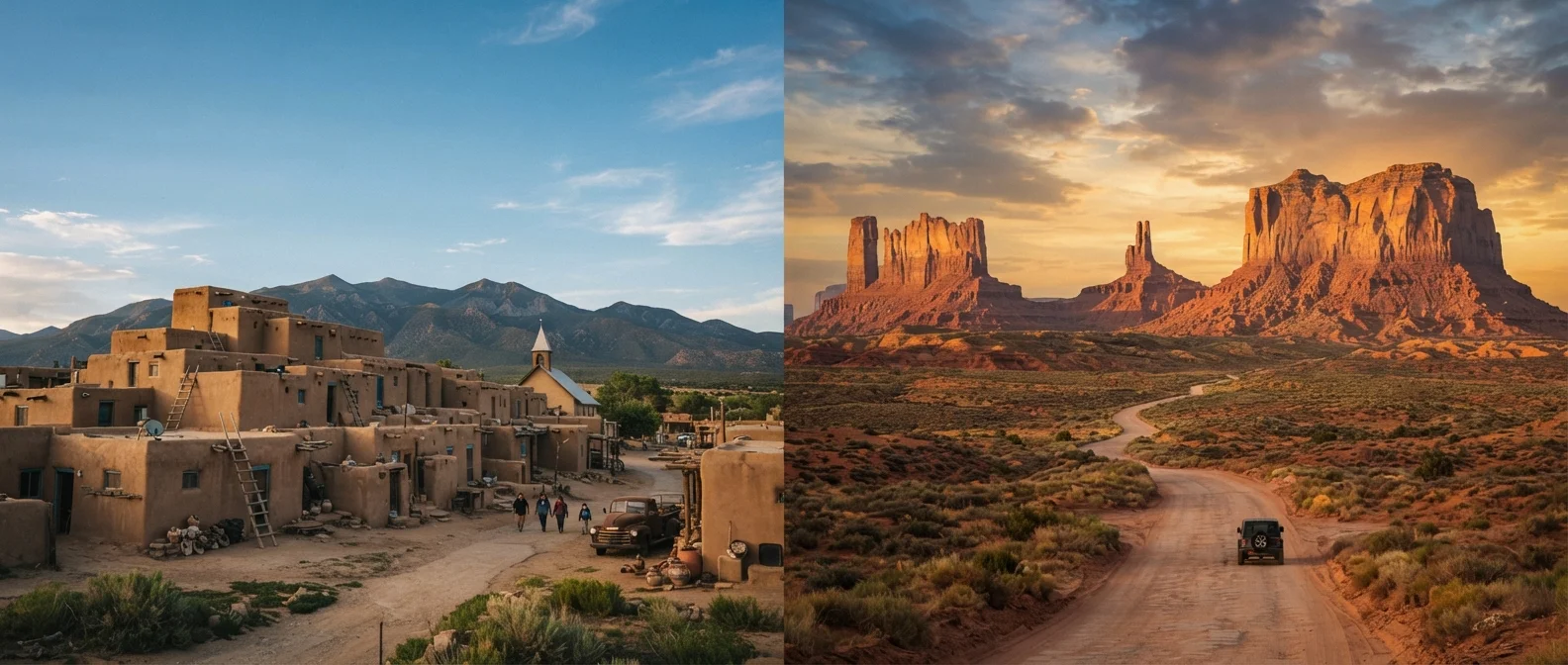
Option A
Santa Fe, New Mexico
The cultural capital with deep historical roots.
Best for: Travelers who want museums, world-class dining, Indigenous art markets, and a walkable historic downtown steeped in centuries of layered history.
Option B
Sedona, Arizona
The dramatic canyon escape for nature and wellness seekers.
Best for: Travelers drawn to red rock hiking, outdoor adventure, spiritual retreats, and jaw-dropping scenery that rewards exploration on foot or by jeep.
How These Two Towns Are Often Confused - and Why They Shouldn't Be
Santa Fe and Sedona share a few obvious traits: both sit in the arid Southwest, both attract artists and seekers, and both have developed strong reputations as places to slow down and reconnect. But spending a day in each town quickly reveals how different they actually feel on the ground.
Santa Fe is a city - small by national standards, but genuinely urban in its density of culture, history, and food. Its downtown Plaza dates to the early 1600s, and the surrounding streets are lined with adobe buildings that house everything from Native American jewelry markets to acclaimed contemporary restaurants. The city's identity is layered and complex, built across centuries of Pueblo, Spanish, Mexican, and American influence.
Sedona, by contrast, is organized almost entirely around the landscape that surrounds it. The red sandstone buttes and canyons aren't a backdrop - they're the destination. Most travelers spend their mornings on trails and their afternoons debating whether to book a jeep tour or a sound bath. It's a town that exists in service of its scenery and the emotional experiences that scenery tends to provoke.
Understanding this distinction helps set the right expectations before you book. If you're weighing how deeply to settle into one place, the contrast between these two towns is a useful lens for thinking through your broader travel style.
| Criterion | Santa Fe, NM | Sedona, AZ |
|---|---|---|
| Primary draw | Culture, history, cuisine | Scenery, hiking, wellness |
| Elevation | ~7,200 feet | ~4,350 feet |
| Walkability | High in historic downtown | Low; mostly car-dependent |
| Crowd character | Manageable year-round | Heavy at peak trailheads |
| Best season to visit | Spring, summer, fall | Spring and fall |
| Wellness/retreat scene | Present but secondary | Central to town identity |
| Art & galleries | World-class, extensive | Present but smaller scale |
What Each Town Actually Feels Like to Visit
Walking around Santa Fe's historic center is genuinely pleasant in a way that few American cities manage. The low-slung adobe architecture is consistent and handsome; the Palace of the Governors on the Plaza hosts Native artisans selling jewelry and pottery directly to visitors under its portal, a tradition that has continued for generations. Canyon Road's mile-long stretch of galleries is easy to navigate on foot, and the city's restaurant scene - driven in part by the regional New Mexican chile pepper culture - regularly earns national attention.
Sedona's visitor experience is more car-dependent and, in peak season, more congested. Trailhead parking fills early on spring and fall weekends, and the main commercial corridor of Highway 89A can feel tourist-heavy. That said, the payoff for getting out on the trails - even moderately popular ones - is extraordinary. The scale and color of the rock formations shift throughout the day, and sunrise and sunset hikes consistently rank among travelers' most memorable experiences.
~7,200 ft
Santa Fe's elevation above sea level
Santa Fe sits among the highest capital cities in the US, and altitude effects - including shortness of breath and dehydration - are commonly reported by visitors arriving from sea level.
3M+
Annual visitors to Sedona area
Sedona's popularity has grown significantly in recent decades; the Arizona Office of Tourism estimates several million visitors pass through the region annually, putting pressure on parking and trails.
For Sedona first-timers, it's worth reading up on common misconceptions before arrival. Our guide on Sedona myths that trip up first-time visitors covers topics from vortex expectations to trail crowd realities.
Altitude Affects Both Destinations
Santa Fe sits at roughly 7,200 feet - significantly higher than Sedona's 4,350 feet. Visitors arriving from lower elevations, particularly those planning active days, should plan for extra hydration and a slower first day. Symptoms like headaches or fatigue are common at higher altitudes and typically ease within a day or two, but anyone with heart or respiratory conditions should consult a healthcare provider before planning strenuous activity at elevation.
The content on this site is for informational purposes only and is not a substitute for professional advice. Always consult a qualified professional for guidance specific to your situation.