

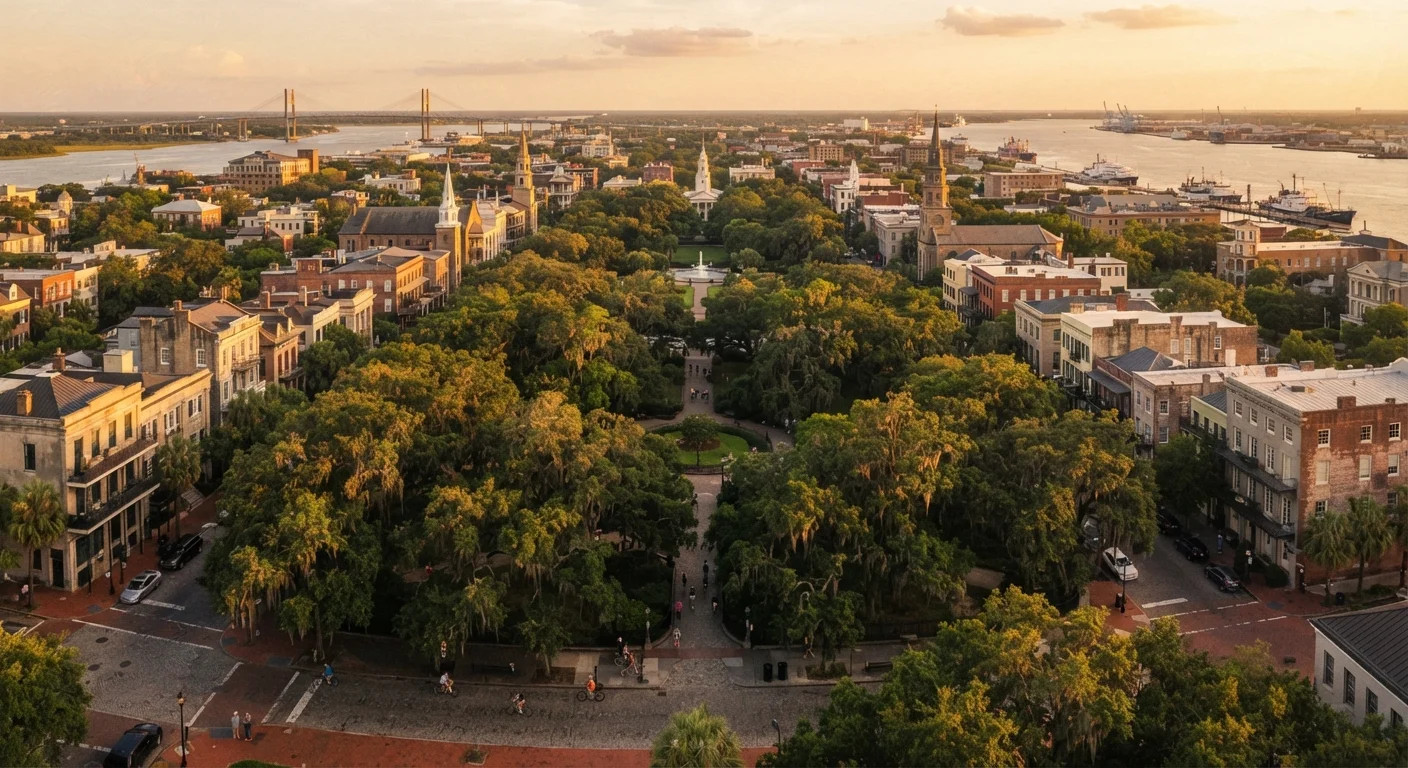
A City Built Around Its Squares
Most American cities evolved organically - streets laid down where paths already ran, neighborhoods shaped by industrial proximity or topography. Savannah was different from its first day. When General James Oglethorpe founded the city in 1733, he built it around a repeating pattern of wards, each anchored by a central public square. Today, 22 of those squares survive intact, shaded by live oaks draped in Spanish moss, ringed by townhouses, churches, and small monuments.
What makes this remarkable isn't just the history - it's that the squares still function. Locals eat lunch there. Dogs walk through them. Visitors sit and simply watch the city move. This isn't a preserved-for-tourism artifact; it's a working civic infrastructure that happens to be beautiful.
How Savannah Feels Different on the Ground
Cities like Charleston, New Orleans, and Nashville each carry their own Southern identity - but Savannah occupies a quieter, more atmospheric register. Where Nashville leans into nightlife energy and Charleston into curated tidiness, Savannah feels genuinely unhurried. The pace isn't sleepy so much as deliberate. Conversations with strangers are common. Detours are rewarded.
The city's Lowcountry geography plays a role. Tidal rivers and salt marshes surround Savannah on three sides, and the humidity, light, and vegetation reflect that coastal character. The Spanish moss that drapes every oak isn't a postcard cliché - it's an ecological fact of life that softens the skyline and filters the afternoon sun into something genuinely cinematic.
22
Historic squares still intact in Savannah
Of the original ward squares laid out in Oglethorpe's 1733 city plan, 22 remain preserved and in active public use today.
2.5 sq mi
Area of the Savannah Historic District
The National Historic Landmark District encompasses one of the largest and most intact historic urban areas in the United States.
Savannah is also unusually easy to navigate on foot, a quality that shapes how travelers actually experience the place. Unlike cities where the historic district is cordoned off from everyday life, Savannah's walkable grid puts restaurants, galleries, and residential streets in constant conversation with each other.
Culture, Food, and the Art Scene
Savannah College of Art and Design - known as SCAD - established campuses throughout the historic district beginning in the 1970s, and its influence is visible across the city. Renovated buildings that might have been demolished elsewhere became studios and galleries. The student population keeps the creative energy rotating, making Savannah's art scene feel current rather than merely nostalgic.
Lowcountry cuisine also sets Savannah apart. Shrimp and grits, she-crab soup, and rice-based dishes reflect the region's coastal heritage and the lasting cultural influence of Gullah Geechee foodways - a tradition with deep roots among the descendants of enslaved Africans who shaped the Carolina and Georgia Lowcountry. Travelers who engage with the food honestly will find a culinary story that goes well beyond surface-level Southern comfort cooking.
A Note on Savannah's History
Savannah's beauty is inseparable from a layered and sometimes painful history. The city's antebellum architecture was built in a slave economy, and Savannah was a major port in the domestic slave trade. Travelers who engage honestly with this history - through local museums, heritage tours, and cultural institutions - will come away with a fuller, more respectful understanding of the city and its people. This context enriches rather than diminishes the experience of visiting.
What to Keep in Mind Before You Go
Savannah's mild winters make it approachable year-round, but summers are genuinely hot and humid - plan outdoor exploring for mornings and evenings. The Savannah Historic District is compact enough that visitors can absorb much of it without a car, though the outlying neighborhoods and Forsyth Park reward a bit more time and wandering.
The city's ghost tour culture is prominent and sometimes overshadows deeper history. Savannah has a complex past that includes slavery, the Civil War, and Reconstruction - travelers who seek out that history through guided cultural tours or local museums will leave with a more honest understanding of what the city actually is, not just what it looks like.
“Savannah is a city of contradictions - deeply rooted in the past, yet alive in ways that many better-known cities have lost. Its squares force you to pause, and pausing is where the real travel begins.”
— David Hsiung, Urban historian and author writing on American Southern cities
As with any destination, verify entry requirements, parking rules, and seasonal schedules with official local sources before your visit, as conditions can change. What Savannah offers at its best is something increasingly rare: a historic American city that hasn't been fully smoothed into a branded experience. It asks you to slow down - and rewards you for doing so.
The content on this site is for informational purposes only and is not a substitute for professional advice. Always consult a qualified professional for guidance specific to your situation.