

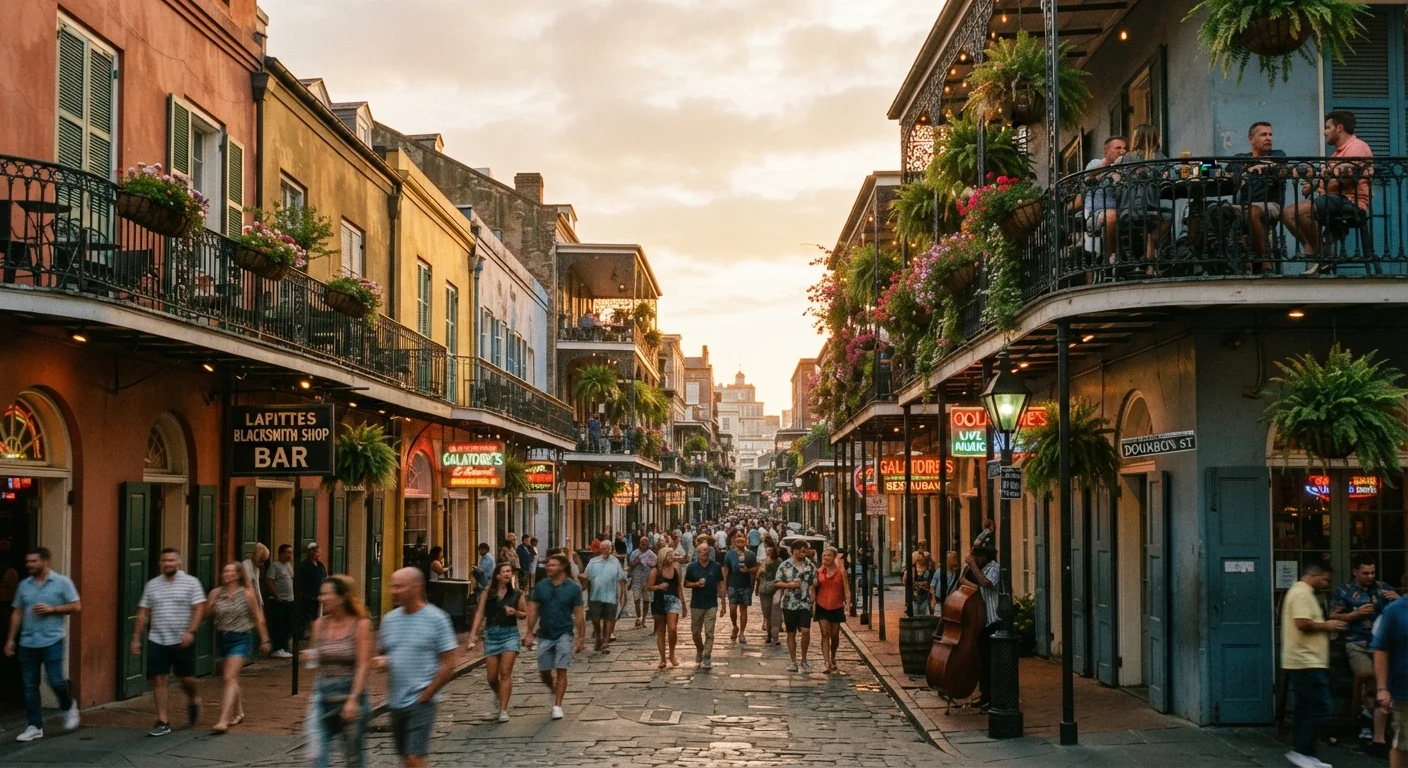
Why New Orleans Gets Misread So Often
Few American cities carry as much mythology as New Orleans. Its reputation arrives before you do - all Mardi Gras beads, Bourbon Street revelry, and jazz pouring out of every doorway. That reputation isn't entirely wrong, but it's incomplete in ways that cost travelers real experiences. First-timers often spend their entire trip in a narrow corridor of the French Quarter, then leave thinking they've seen the city. They haven't.
Understanding what New Orleans actually is - and what it isn't - takes some honest myth-busting. Whether you're planning your first trip or returning with fresh eyes, stripping away the assumptions is the best thing you can do before you pack. If you've also wrestled with overthought trip logistics, the myths that make travel planning harder than it needs to be are worth examining alongside this one.
Myth
New Orleans is really only worth visiting during Mardi Gras or Jazz Fest.
Fact
New Orleans has a thriving cultural calendar year-round, and some travelers find it more enjoyable outside peak festival periods.
Mardi Gras and Jazz Fest are genuine highlights, but they also bring enormous crowds, elevated prices, and logistics that can overwhelm first-time visitors. The city's music, food, and street life don't disappear between festivals - they're simply quieter and more accessible. Fall and early winter are particularly pleasant, with milder temperatures and fewer tourists. Local institutions like Frenchmen Street's live music clubs operate nightly regardless of the calendar.
Myth
Bourbon Street is the heart of New Orleans' music and culture.
Fact
Bourbon Street is primarily a tourist entertainment strip; the city's authentic music and cultural life exists largely elsewhere.
Bourbon Street has its place, but locals rarely go there for music. Frenchmen Street in the Marigny neighborhood is where working musicians play in intimate clubs most nights of the week - an experience that feels genuinely rooted in the city's jazz and brass band traditions. The Tremé neighborhood, widely considered the oldest African American neighborhood in the country, carries deep cultural significance that Bourbon Street doesn't touch. Travelers who spend all their time on Bourbon Street often leave without understanding what makes New Orleans music actually distinctive.
Myth
New Orleans food is all beignets, gumbo, and po'boys.
Fact
New Orleans has one of the most layered and diverse food cultures in the country, spanning dozens of cuisines and cooking traditions.
The iconic dishes are iconic for good reason, but stopping there is like visiting Italy and only eating pizza. New Orleans food reflects its history as a port city with French, Spanish, West African, Creole, and Caribbean influences - traditions that express themselves differently across the city's neighborhoods. Uptown has long-standing neighborhood restaurants serving food that rarely appears on tourist itineraries. Vietnamese cuisine has deep roots in New Orleans, particularly in the eastern parts of the city, a legacy of post-Vietnam War resettlement communities. Eating well here means wandering past the obvious.
Myth
The whole city floods constantly and is generally unsafe to visit.
Fact
New Orleans is a functioning city with millions of annual visitors; flood risk and safety vary significantly by area and circumstance.
Hurricane Katrina in 2005 left lasting images in public memory, and parts of the city did experience catastrophic flooding tied to specific geographic and infrastructure factors. Since then, significant levee improvements have been made, though the city's flood risk hasn't been eliminated entirely. For visitors, understanding that most heavily visited areas sit on higher ground helps contextualize the risk. Safety concerns are real in certain neighborhoods and situations - primarily late at night in less-trafficked areas - but framing all of New Orleans as uniformly dangerous leads travelers to avoid a city that millions visit without incident each year. Check current travel advisories from official sources before your trip.
Myth
New Orleans is just a party city with little historical or cultural depth.
Fact
New Orleans has one of the richest and most complex histories of any American city, shaped by colonialism, slavery, immigration, and survival.
The party reputation is loud enough to drown out everything else for casual observers, but New Orleans is a city where history is embedded in the architecture, the food, the music, and the social fabric. The Whitney Plantation - the only plantation museum in Louisiana with its interpretive focus on the enslaved people who lived and worked there - offers a sobering and important historical experience. The city's Creole history, its role in the domestic slave trade, its French and Spanish colonial layers, and its post-Katrina story all make it one of the most historically significant places in the United States. Travelers who approach it that way leave with far more than they arrived with.
What a Smarter Visit to New Orleans Actually Looks Like
Once the misconceptions fall away, New Orleans opens up in surprising ways. The neighborhoods beyond the Quarter - Tremé, Bywater, Uptown, Mid-City - each have distinct personalities worth a half-day or more. A neighborhood-by-neighborhood breakdown can help you figure out which parts of the city match what you're actually looking for.
Safety deserves honest attention too. New Orleans has areas where tourists should be cautious, particularly at night and away from well-trafficked zones. Staying aware of your surroundings and checking current local guidance matters more than any generalized reassurance. The travel safety myths that create false confidence apply here as much as anywhere.
Don't Rely on General Safety Assumptions
New Orleans' reputation as a festive, welcoming city can lead some visitors to let their guard down in ways they wouldn't elsewhere. Street crime does occur, and certain areas carry higher risk after dark. Always check current guidance from local authorities or the U.S. Travel Advisory system, walk with awareness at night, and avoid displaying valuables openly. Being a tourist in a celebratory atmosphere doesn't eliminate ordinary travel risk.
Approached with realistic expectations and genuine curiosity, New Orleans is one of the most culturally dense and genuinely singular cities in the United States. The food is extraordinary, the music is real, and the history runs deep - none of which requires a parade or a plastic cup to access.
The content on this site is for informational purposes only and is not a substitute for professional advice. Always consult a qualified professional for guidance specific to your situation.