

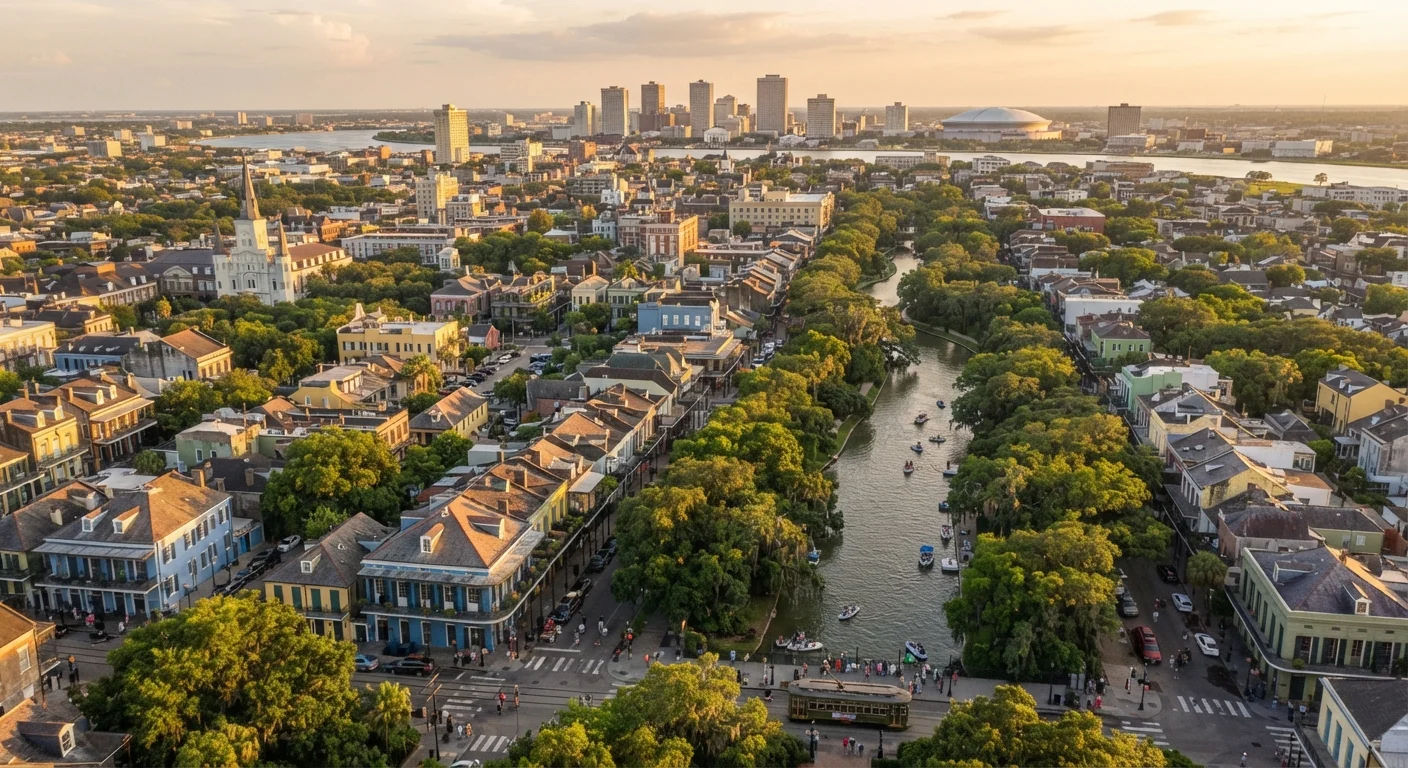
Why Neighborhood Matters More in New Orleans Than Almost Anywhere Else
New Orleans doesn't behave like a single city - it behaves like a collection of small towns sharing a zip code. The culture, architecture, noise level, and even the demographic character shift meaningfully from block to block. Visitors who stay only in the French Quarter and leave thinking they've seen New Orleans have missed most of the story. As our companion piece explains, many common assumptions about the city lead people straight past its most rewarding corners.
This guide covers the neighborhoods most relevant to visitors - not just their reputations, but what they actually feel like when you're standing in them.
| Number of distinct neighborhoods | Roughly 72 recognized neighborhoods (City of New Orleans neighborhood planning data) |
| Most visited neighborhood | French Quarter (New Orleans & Company tourism research) |
| Primary transit option between neighborhoods | St. Charles Avenue streetcar line (New Orleans Regional Transit Authority) |
| Neighborhood known for brass band origins | Tremé (Louisiana State Museum and cultural historians) |
| Best neighborhood for architecture walks | Garden District (Preservation Resource Center of New Orleans) |
| Neighborhood with Frenchmen Street music scene | Faubourg Marigny |
French Quarter: Iconic, Crowded, and More Layered Than It Looks
The Quarter earns its fame. The iron lacework balconies, the smell of café au lait drifting from open doors, the second-line parades that materialize without warning - these are real. But the experience divides sharply depending on where you land. Bourbon Street runs hot and loud until well past 2 a.m., oriented almost entirely around tourist nightlife. Move two blocks to Royal or Chartres and you're in a quieter register: antique galleries, neighborhood restaurants, and locals walking dogs past 18th-century buildings.
The Quarter suits visitors who want walkable access to jazz clubs, historic architecture, and Creole food without needing a car. It is not a relaxing, low-key base - noise travels freely, and weekend nights push into full festival mode regardless of the calendar.
72+
Recognized neighborhoods in New Orleans
The City of New Orleans officially recognizes more than 72 distinct neighborhood areas, each with its own planning identity.
~1.4 miles
Length of Frenchmen Street music corridor
Frenchmen Street in Faubourg Marigny concentrates multiple live music venues within walking distance, offering an alternative to Bourbon Street.
1,300+ acres
Size of City Park in Mid-City
City Park is among the largest urban parks in the United States, according to the City Park Improvement Association.
Tremé, Bywater, and Marigny: The Cultural Engine South of the Quarter
Tremé sits just north of the Quarter and is widely regarded as one of the oldest African American neighborhoods in the country. It's the spiritual home of New Orleans brass band culture and jazz funerals. Visitors will find deeply rooted community institutions, live music venues that feel genuinely local, and a pace that rewards wandering on foot. Be aware that some blocks see safety concerns that are worth researching before walking at night.
Faubourg Marigny, just downriver from the Quarter, draws musicians, artists, and a diverse crowd to Frenchmen Street - the block-long stretch of live music venues that locals often prefer over Bourbon Street. It's walkable from the Quarter, more intimate, and the music is live and serious.
Bywater extends further downriver and has become the neighborhood of choice for creative types and longer-stay visitors. Shotgun houses painted in unexpected colors, independent coffee shops, and a slower residential rhythm define it. It's a good base for visitors who want to feel less like a tourist and more like a temporary local.
Garden District and Uptown: New Orleans at Its Most Livable
Cross Canal Street and the city shifts. The Garden District offers one of the most architecturally coherent streetscapes in the American South - Greek Revival and Italianate mansions shaded by enormous live oaks, many with intact original ironwork. Magazine Street, the neighborhood's commercial spine, runs for miles and holds independent bookstores, cafés, and local clothing boutiques.
Uptown extends further from there, encompassing Tulane and Loyola universities, Audubon Park, and a residential character that feels genuinely lived-in. It's a neighborhood for visitors who want to experience New Orleans as its residents do - grocery runs, neighborhood bars, streetcar rides. The St. Charles Avenue streetcar is not just picturesque; it's a functional transit line that connects these areas to the CBD and Quarter.
For visitors comparing experience across American cities, this kind of walkable, historically intact urban neighborhood has a counterpart in how Chicago's neighborhoods each offer a different version of the city - the principle of reading a city through its districts applies just as much here.
Shotgun house
A narrow, single-story home where rooms are arranged in a straight line from front to back, with no hallway. The style is deeply common in New Orleans and reflects both the city's French and Caribbean architectural influences.
Creole cottage
A low-to-the-ground, four-room house form developed in New Orleans in the 18th and 19th centuries. It typically sits at or near the sidewalk line with a steeply pitched roof and large shuttered windows.
Second line
A New Orleans tradition in which a brass band leads a procession through the streets, followed by community members dancing and parading. Second lines occur for funerals, weddings, and neighborhood celebrations.
Faubourg
A French term meaning 'suburb' or 'outlying district.' In New Orleans, it refers to the historic neighborhoods that developed just outside the original French Quarter boundaries.
Mid-City and Bayou St. John: The Neighborhood Locals Actually Live In
Mid-City is New Orleans without the performance. Bayou St. John, a slender waterway cutting through the area, draws walkers, cyclists, and families on weekend mornings. The surrounding blocks are dense with Creole cottages and double shotgun houses - the architectural vernacular that defines working-class New Orleans. City Park, one of the largest urban parks in the country, anchors the northern edge with its sculpture garden, botanical garden, and century-old live oaks.
Visitors who spend a morning here - especially around the bayou - often describe it as the moment New Orleans stopped feeling like a destination and started feeling like a place where people actually live. There are fewer curated experiences and more authentic ones. For those curious about the urban factors that make neighborhoods like this resilient over time, the framework outlined in evaluating a neighborhood's long-term outlook offers useful context on what sustains communities like Mid-City.
This article is intended as general travel information. Conditions, safety considerations, and neighborhood character can change; verify current conditions through local and official sources before visiting.
The content on this site is for informational purposes only and is not a substitute for professional advice. Always consult a qualified professional for guidance specific to your situation.