

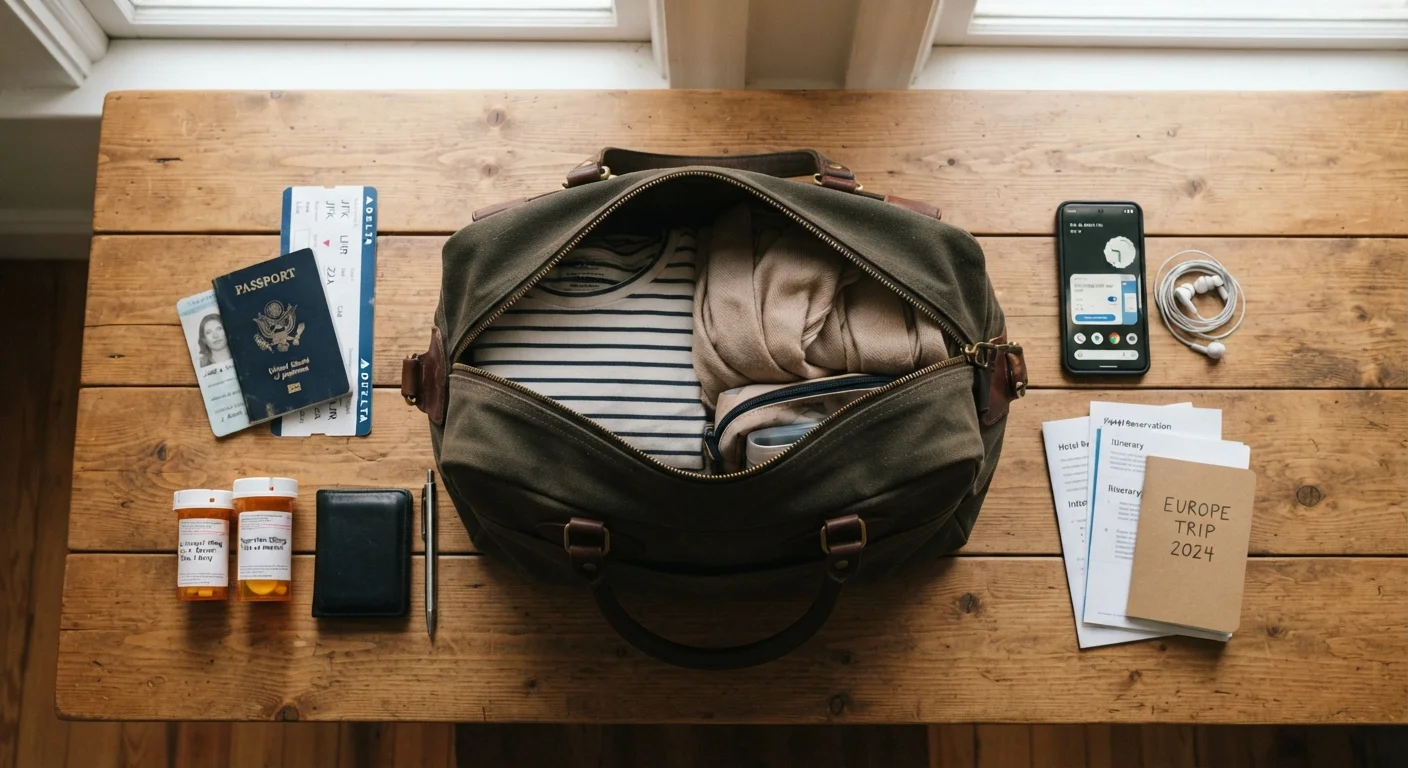
Summary
22 items · 30-60 minutes
Why a Pre-Departure Checklist Actually Matters
Most travel mishaps don't happen at the destination - they start before the taxi even arrives. A forgotten travel insurance policy number, a passport with only four months of validity left, a credit card flagged for fraud at a foreign ATM - these are the moments that turn exciting trips into stressful ones. The good news is that nearly all of them are preventable.
This checklist is designed to be run in the final days before you leave home, after your research and booking are done. If you're still in the planning phase, our pre-trip research checklist covers visa rules, entry requirements, and health advisories to verify before you finalize anything. This list picks up where that one leaves off.
Work through the groups below in order - documents first, then logistics, then home prep. Give yourself an honest hour, and you'll board your flight with genuine confidence instead of low-grade anxiety.
Secure cloud storage (e.g., any encrypted cloud service)
Store digital copies of your passport, insurance policy, and booking confirmations so they're accessible anywhere.
Offline maps app
Navigate your destination without relying on a local data connection, particularly useful upon arrival.
Travel insurance policy documents
Confirm your coverage details, emergency contact number, and claims process before you leave home.
US Department of State STEP registration
Enroll your trip so the nearest US embassy can contact you during emergencies or regional disruptions.
The Complete Pre-Departure Checklist
The items below are organized into four areas that travelers most commonly overlook. Each group is manageable on its own; together they form a complete pre-departure sweep. For a parallel look at safety-specific preparation, see our pre-trip safety checklist, which focuses on emergency contacts and digital backups.
Travel Documents
Money and Banking
Health and Medications
Home and Logistics
Passport Validity: Six Months Is the Standard
Many countries - including popular destinations across Europe, Southeast Asia, and Latin America - require that your passport remain valid for at least six months beyond your travel dates, not just your departure date. An expired or nearly-expired passport can result in being denied boarding at the gate, not just at the border. Check your passport's expiration date now, and factor in standard processing times (typically several weeks for routine renewal) if an update is needed. Official current timelines are listed at travel.state.gov.
A Few Things Worth Knowing Before You Go
Running through a checklist is only half the picture. A couple of broader points are worth keeping in mind as you prepare.
Document copies aren't paranoia - they're standard practice. Most experienced travelers carry a color photocopy of their passport photo page in a separate bag from the original, and a scanned PDF saved to a secure cloud folder or emailed to themselves. If your passport is lost or stolen abroad, having that copy dramatically speeds up the process at the nearest US embassy or consulate. For a full breakdown of what documentation you may need by destination, our entry document guide is a clear starting point.
Emergency numbers matter more than people think. Knowing the local emergency number at your destination, your travel insurance claims line, and the nearest US embassy contact can make an enormous difference in a crisis. Our quick-reference guide to key travel numbers is worth bookmarking before you leave.
If this is your first time traveling internationally, this orientation for first-time international travelers covers the broader picture - customs, currency, and managing the unexpected - in plain, practical terms.
Don't Rely on Checked Luggage for Medications
Checked bags can be delayed, misdirected, or lost - and replacing prescription medications abroad is rarely straightforward. Always pack any medication you depend on in your carry-on, ideally in its original labeled packaging. If you're carrying controlled substances or injectable medications, check both US export regulations and your destination country's import rules before you leave, as these vary significantly.
Verify Entry Requirements With Official Sources
Visa rules, health documentation requirements, and entry conditions change with little notice. Always verify current requirements directly through the official embassy or consulate website of your destination country, as well as the US Department of State's travel pages, rather than relying on third-party sites or older guides. This checklist provides a general framework and is not a substitute for up-to-date official guidance.
This article provides general travel preparation information and is not a substitute for verifying requirements with official government sources, your airline, or relevant embassies before you travel.
The content on this site is for informational purposes only and is not a substitute for professional advice. Always consult a qualified professional for guidance specific to your situation.