

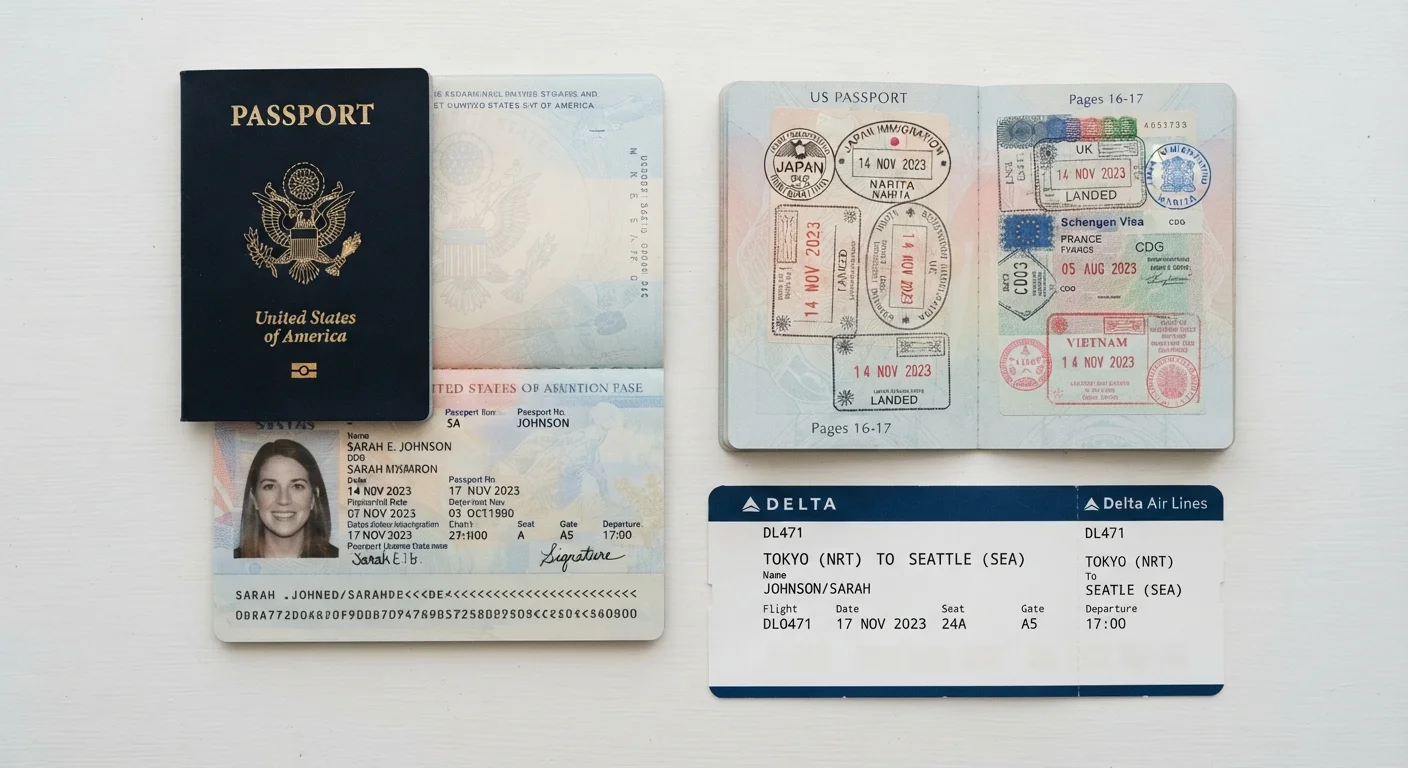
Passport vs. Visa: Two Different Things
These two documents are often mentioned together, but they serve entirely different purposes. A passport is issued by your own government - it's proof of who you are and which country you're a citizen of. Without it, you generally can't cross an international border at all.
A visa, on the other hand, is issued by the government of the country you want to visit. Think of it as formal permission to enter. It specifies why you're allowed in (tourism, business, study), for how long, and sometimes how many times you can enter. A visa alone means nothing without a valid passport to attach it to.
The confusion often arises because many travelers - particularly US passport holders - don't regularly need visas for popular destinations. But that experience isn't universal, and it doesn't mean visas don't exist or don't matter for other trips.
Visa-Free Doesn't Mean Entry Is Guaranteed
Even when no visa is required, border officers retain the legal authority to deny entry. They may ask questions about your itinerary, finances, or accommodation, and travelers who cannot answer satisfactorily - or who have past immigration violations - can be turned away. Visa-free access simplifies the process; it doesn't eliminate border scrutiny.
Why Requirements Differ by Nationality
There's no single global rule about who needs a visa. Every country sets its own entry policy based on diplomatic relationships, reciprocity agreements, and security considerations. This is why two travelers on the same flight to the same destination can face completely different document requirements simply because they hold different passports.
For example, citizens of countries that participate in the US Visa Waiver Program can visit the United States for up to 90 days without a traditional visa - but they must obtain an approved ESTA (Electronic System for Travel Authorization) first. Meanwhile, travelers from countries not in the program must apply for a visa at a US embassy or consulate.
186
Countries accessible visa-free on a US passport
According to the Henley Passport Index, the US passport ranked among the most powerful globally for visa-free or visa-on-arrival access as of recent index editions.
90 days
Maximum visa-free stay in the Schengen Area for US citizens
This 90-day limit applies within any 180-day rolling period across all 27 Schengen member countries combined, not per individual country.
6 months
Passport validity margin many countries require beyond departure
A common international standard, though the exact requirement varies by country; travelers should check each destination's specific rules before departure.
The same logic applies in reverse. US passport holders can enter many countries without a visa for short stays, but destinations like China, India, and Brazil have traditionally required advance visa applications from Americans. Requirements also shift over time as diplomatic relationships evolve, so a country that was visa-free last year may not be today.
Visa Types and What They Actually Mean
Visas are not one-size-fits-all. Even when you know you need one, the type matters. Common categories include:
- Tourist visa: For leisure travel, typically short-term with restrictions on working.
- Business visa: For attending meetings, conferences, or conducting commerce - not employment.
- Transit visa: Required in some countries even if you're just passing through an airport without technically entering the country.
- Student or long-stay visa: For extended visits tied to enrollment or residency applications.
- Electronic visa (e-visa): A pre-approved visa delivered digitally, often processed faster than a stamped paper visa.
- Visa on arrival: Issued by immigration officers at the port of entry for eligible nationalities.
Applying for the wrong visa type is a common and costly mistake. Always verify that the visa category matches your actual purpose of travel. See our breakdown of common visa misconceptions for more on where travelers tend to go wrong.
Always Check Official Government Sources
Entry requirements change - sometimes with little public notice. The most reliable sources are the destination country's official immigration or embassy website and the US State Department's country information pages (travel.state.gov). Third-party travel sites can be helpful starting points, but always confirm details with official sources before finalizing any plans.
Beyond the Stamp: Other Documents You May Need
Even travelers who have both a valid passport and the correct visa can be turned away at the border if they're missing supporting documents. Border officers in many countries are empowered to ask for evidence that you meet entry conditions - and refusal to present it can mean being sent home on the next flight.
Common additional requirements include:
- Proof of onward or return travel: Showing you intend to leave before your visa expires.
- Proof of sufficient funds: Bank statements or a credit card showing you can support yourself during the visit.
- Travel insurance documentation: Required by some countries, particularly in the Schengen Area.
- Hotel reservations or host letters: Proof of where you'll be staying.
- Vaccination records: Some destinations require proof of specific vaccinations for entry. Always verify with official sources and check current health travel advisories.
Being prepared with these documents isn't paranoia - it's good planning. Our pre-trip research checklist walks through exactly how to verify each requirement well before your departure date. And once you've confirmed everything, make sure your key documents are stored safely - see our guide on documents every traveler should have on hand for practical tips on backups and digital copies.
Frequently Asked Questions
A passport is an identity document issued by your home country that certifies your citizenship and allows international travel. A visa is a separate authorization - issued by a destination country - that permits you to enter for a specific purpose and duration. You typically need a passport first, and then apply for a visa if required.
US citizens can travel visa-free to most Schengen Area countries for up to 90 days within any 180-day period for tourism or business. However, the European Travel Information and Authorisation System (ETIAS) - a pre-travel authorization - is expected to be required in the future. Always check the specific country's embassy website and the US State Department for current requirements.
No. Countries require your original, valid passport at the border. A photocopy is useful as a backup if your passport is lost or stolen, but it does not serve as a legal entry document. Always travel with your physical passport.
A visa on arrival is a visa issued by immigration officials at a port of entry rather than applied for in advance. Not all nationalities are eligible for every country's visa-on-arrival program, and fees and conditions apply. Confirm eligibility before traveling, as availability is not guaranteed.
Processing times vary widely - from a few days for e-visas to several months for complex applications. A general rule is to apply at least 6-8 weeks before travel for standard visas and earlier for destinations known for longer processing. Check the issuing embassy's current timelines before planning your trip.
Many countries require your passport to remain valid for 3 to 6 months beyond your planned departure date. Even if your passport hasn't expired, failing this validity window can result in denied boarding or entry. Check the specific requirement for each country you plan to visit.
The content on this site is for informational purposes only and is not a substitute for professional advice. Always consult a qualified professional for guidance specific to your situation.