

Our Verdict
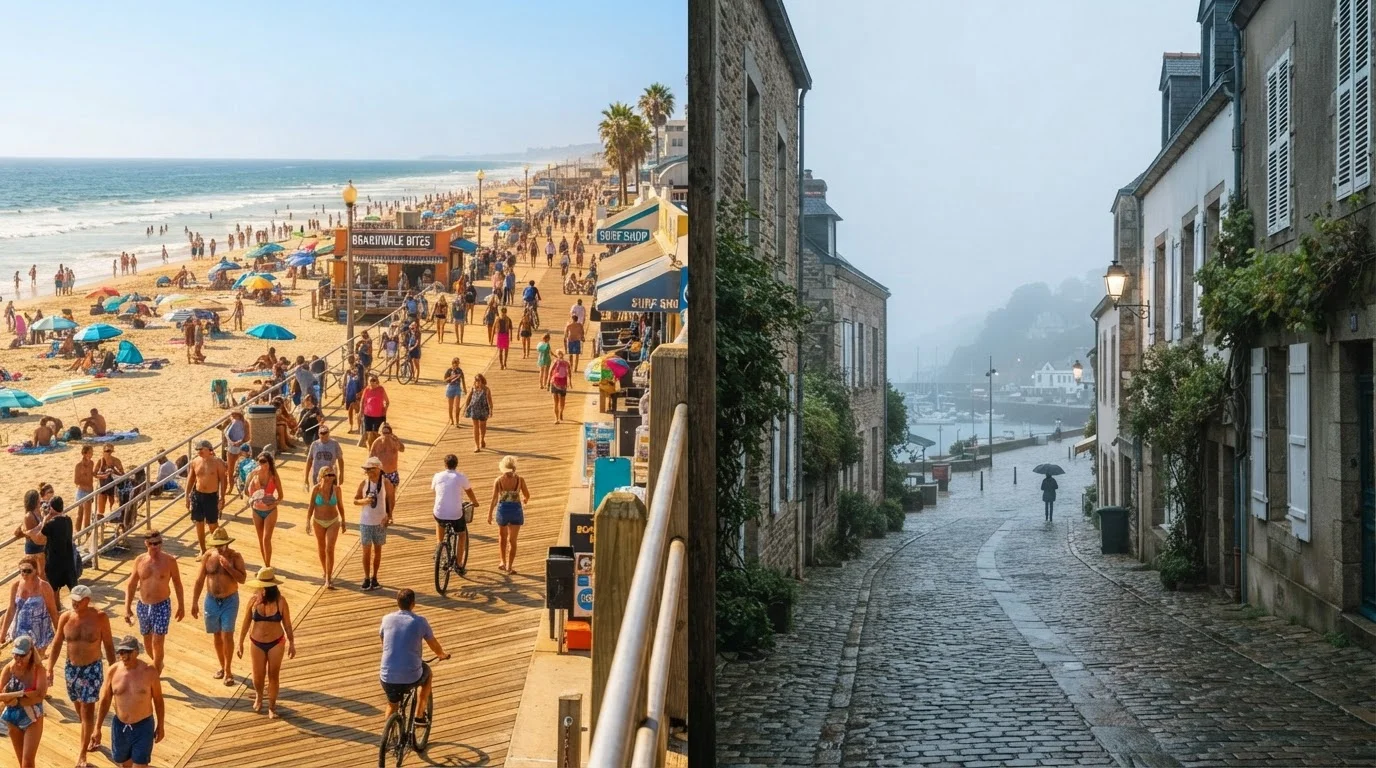
Neither peak nor off-season travel is universally better - the right choice depends entirely on your priorities. If predictability, guaranteed access to attractions, and good weather anchor your trip, peak season usually delivers despite its costs and crowds. If you value fewer tourists, a slower pace, and genuine local immersion and can absorb some uncertainty, off-season travel rewards the flexible traveler.
Peak season suits families with fixed school schedules or first-time visitors wanting full access; off-season suits independent, adaptable travelers comfortable with some spontaneity and self-research.
Why Timing Your Trip Is Never a Simple Formula
Every traveler has heard some version of the seasonal gospel: go in summer for sunshine, go in winter to save money. But real travel planning rarely works that cleanly. The same destination can feel like two completely different places depending on when you show up - and what counts as a benefit for one traveler is a genuine problem for another.
Understanding the real trade-offs means moving past assumptions about crowds or cost and asking sharper questions: What does this destination actually look and feel like in each season? What's available, what's closed, and what does the weather genuinely do? This article walks through the honest advantages and disadvantages on both sides, so you can match your timing to how you actually travel. For more on the booking side of this equation, see our piece on booking early vs. late.
The Case for Peak Season Travel
Traveling in high season has real, concrete advantages - not just for first-timers, but for anyone whose trip depends on specific conditions being met.
Most attractions and services are fully operational
Peak season is when destinations are designed to be visited - ferries run full schedules, parks staff up, and seasonal businesses open their doors. You're far less likely to arrive and find a key experience unavailable.
Weather is typically at its most predictable
High season often aligns with the most stable weather window for a destination. While no weather is guaranteed, peak periods are usually chosen by travelers precisely because conditions are most reliable then.
More traveler infrastructure and support
From tourist offices to guided tour availability to emergency services calibrated for visitor volumes, peak season destinations tend to have more support systems actively running.
Easier to find other English-speaking travelers if needed
For solo travelers or those navigating an unfamiliar destination, the higher traveler density during peak season can make logistics and companionship easier to find.
Attractions, tours, ferry routes, mountain lodges, and seasonal businesses are typically all operational during peak season. If a destination's main draw is a particular coastal trail, a remote island ferry, or an outdoor market, those things are almost certainly running. That reliability is worth something, especially when you have limited time or have traveled a long distance.
Families with school-age children often have little seasonal flexibility - summer or spring break travel is simply the reality. For those travelers, peak season isn't a choice so much as a given, and understanding its dynamics (booking accommodations earlier, arriving at popular sites at opening time, setting realistic expectations about crowds) is more useful than being told to go in October instead.
The Case for Off-Season Travel
Off-season travel has a different kind of value - one that's harder to quantify but frequently more memorable for the right kind of traveler.
Some seasonal businesses and services close entirely
A significant number of restaurants, guesthouses, and tour operators in tourism-dependent areas simply shut down during low season. Checking what's open before you book is essential, not optional.
Weather can be genuinely difficult or risky
Off-season often aligns with rainy seasons, hurricane seasons, or cold snaps - depending on the destination. In some cases this means inconvenience; in others it means real safety considerations that must be taken seriously.
Reduced transport frequency can complicate logistics
Flight routes may be suspended, ferries may operate on skeleton schedules, and ground transport may be limited. Off-season travelers need to build more buffer time into their itineraries.
Less predictability requires more personal research
Unlike peak season where you can reasonably rely on standard operating hours and availability, off-season travel rewards those who've done specific, recent research - often right up until departure.
When visitor volumes drop, the texture of a place changes. Locals are more present, interactions feel less transactional, and the rhythm of daily life becomes visible in a way it isn't during peak rush. Many travelers describe off-season trips as feeling more authentic - though it's worth noting that "authentic" is a subjective standard and not every quieter experience is a better one.
The practical uncertainties are real and worth stating plainly. Some restaurants close entirely in winter. Boat services to islands may run once a day instead of five times. A hiking trail you planned around might be inaccessible due to weather. None of this should be a deal-breaker, but it does require more research upfront and more willingness to adapt in the moment. If you're weighing how your travel style fits these trade-offs, our comparison of slow travel vs. multi-destination trips offers useful framing.
Off-Season Doesn't Always Mean Cheaper
It's commonly assumed that traveling off-peak automatically means lower costs. While accommodation demand often drops, some destinations see airfare remain high year-round due to limited route competition. Others see off-season deals emerge only on very short notice. Don't plan an off-season trip primarily around assumed savings - research actual pricing for your specific destination and travel window rather than working from general rules.
Shoulder Season: The Often-Overlooked Middle Ground
For many destinations and travel styles, the weeks immediately before or after peak season - commonly called shoulder season - offer a genuinely strong option. Crowds thin out, many businesses remain fully open, and weather is often still favorable. It's not a universal rule, since shoulder timing varies significantly by destination, but it's worth researching specifically for wherever you're going.
3-6 weeks
Typical shoulder season window per destination
Travel industry guidance generally defines shoulder season as the two to six weeks immediately before and after a destination's declared peak period, though this varies by region.
40-60%
Drop in visitor numbers during off-season at many sites
Visitor data from popular European destinations consistently shows visitor volumes falling by roughly half or more between peak summer months and winter low season.
The key is checking shoulder timing destination by destination rather than applying a generic calendar. A European coastal town's shoulder might be May and September. A Caribbean island's might be late April or late November. For destination-specific timing nuances, our Hawaii islands planning guide shows how even within a single destination, seasonal trade-offs vary meaningfully by location.
Whatever season you choose, verify current entry requirements, safety conditions, and any travel advisories through official government sources before booking. Conditions change, and no article - including this one - is a substitute for up-to-date official guidance.
The content on this site is for informational purposes only and is not a substitute for professional advice. Always consult a qualified professional for guidance specific to your situation.