

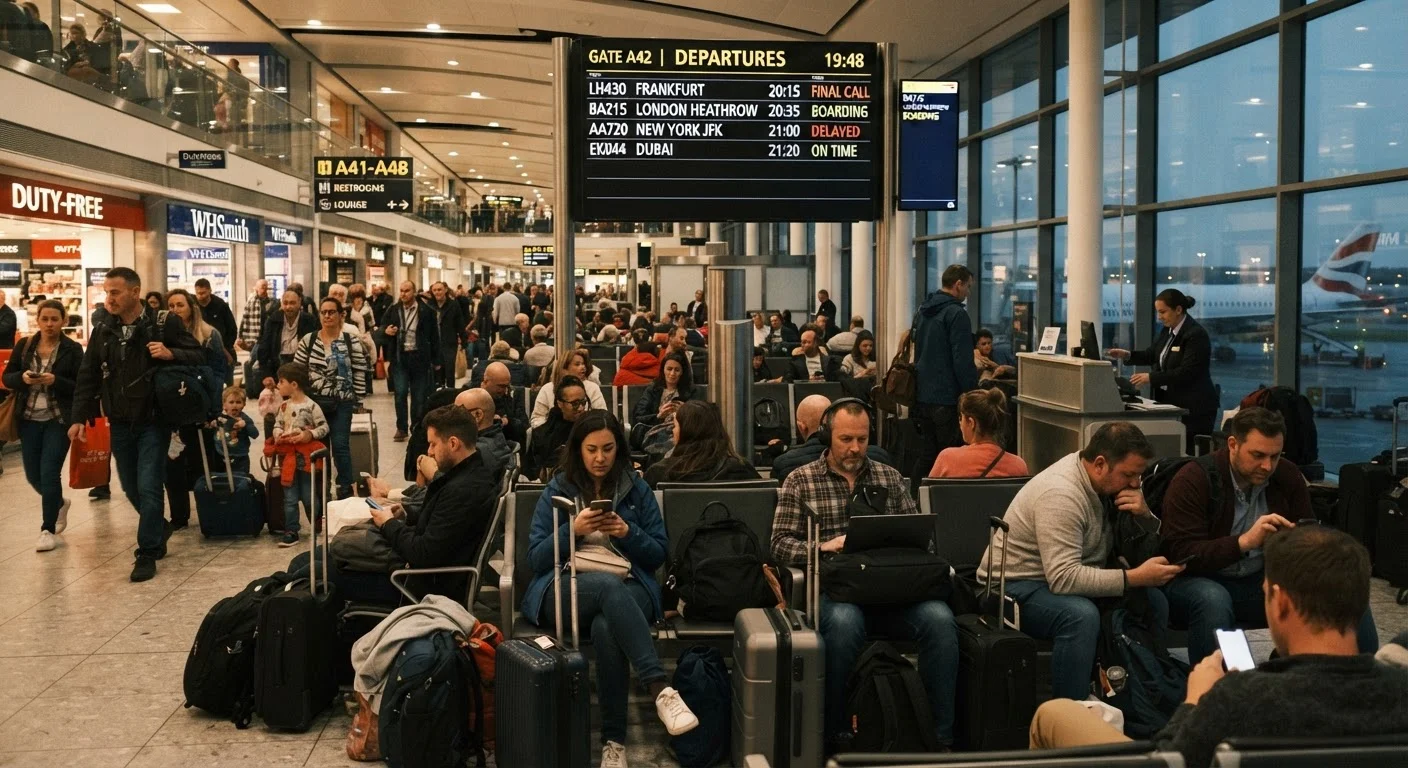
Why Layovers Go Wrong More Often Than People Expect
A layover feels routine - sit, wait, board. But airports are complex logistical systems, and a surprising number of variables can collide during that window between flights. Delays cascade. Immigration lines balloon. Gates change. And travelers who've never dealt with a disruption mid-journey are suddenly making high-stakes decisions with limited information and a ticking clock.
The good news is that most layover problems are predictable. Understanding where things break down - and why - puts you in a far stronger position than the average traveler standing at a customer service queue wondering what just happened. See our guide to handling common travel crises for a calm, step-by-step breakdown if disruption has already found you.
Booking a layover that's too short to realistically make the connection.
Why it happens: Travelers often choose the cheapest or most direct itinerary without accounting for terminal changes, immigration queues, or gate distance at unfamiliar airports.
Assuming checked luggage transfers automatically when tickets are booked separately.
Why it happens: Travelers accustomed to single-itinerary bookings expect bags to flow through to the final destination, but separate ticket purchases have no such guarantee.
Not knowing which airline or airport is responsible when a disruption occurs.
Why it happens: Responsibility rules differ depending on whether flights are on one booking, codeshares, or entirely separate airlines - and travelers rarely read the fine print in advance.
Failing to check transit visa requirements for layover countries.
Why it happens: It's easy to assume that staying airside means no documentation is needed, but many countries require a transit visa regardless of whether you exit the terminal.
Carrying all travel documents and backup funds only in a checked bag or a single digital location.
Why it happens: Travelers pack for convenience, not contingency, and trust that bags will arrive as expected.
The Preparations That Separate Stressed Travelers from Confident Ones
Most layover disasters share a common thread: a gap between what the traveler assumed and what the situation actually required. Closing that gap is mostly a matter of doing a small amount of research before you leave home.
Transit Visas Can Ground You Unexpectedly
Some countries require a transit visa even when you never leave the international terminal. Requirements vary by your passport, destination, and the specific airport. Always verify entry and transit rules through the official embassy or consulate website of every country on your itinerary before you travel. Airlines may deny boarding if transit documentation isn't in order.
Start by mapping every leg of your journey - which airlines operate each flight, whether your bags are checked through or need to be reclaimed, and what the entry rules are for every country your plane touches down in. Then consider what happens if your first flight is delayed by an hour. Does your connection still work? What's the airport's policy on rebooking?
For a comprehensive pre-departure framework, the pre-trip safety and preparedness checklist covers documents, emergency contacts, and digital backups that matter most when plans shift mid-trip. If you're the kind of traveler who appreciates having everything in one place, this pre-departure checklist is worth running through before any journey with connections.
~30%
Flight delays attributable to late-arriving aircraft
According to U.S. Bureau of Transportation Statistics data, late-arriving aircraft are consistently among the top causes of domestic flight delays, which directly impacts connecting passengers.
2-3 hrs
Recommended layover time for international connections
Many seasoned travel advisors and airline scheduling guidelines suggest allowing at least two to three hours for international layovers where customs and re-check are required.
The financial side of being unprepared can be steep - rebooking fees, overnight hotel stays, and replacement costs for delayed bags add up quickly. The hidden costs of traveling unprepared explores what these disruptions actually cost travelers who haven't planned for them.
Ultimately, layovers reward travelers who treat them as a distinct part of the journey rather than a gap to ignore. A little pre-flight attention to the details - timing, documentation, airline policies, and a contingency mindset - is what keeps a long travel day from becoming a genuinely difficult one.
The content on this site is for informational purposes only and is not a substitute for professional advice. Always consult a qualified professional for guidance specific to your situation.