

Our Verdict
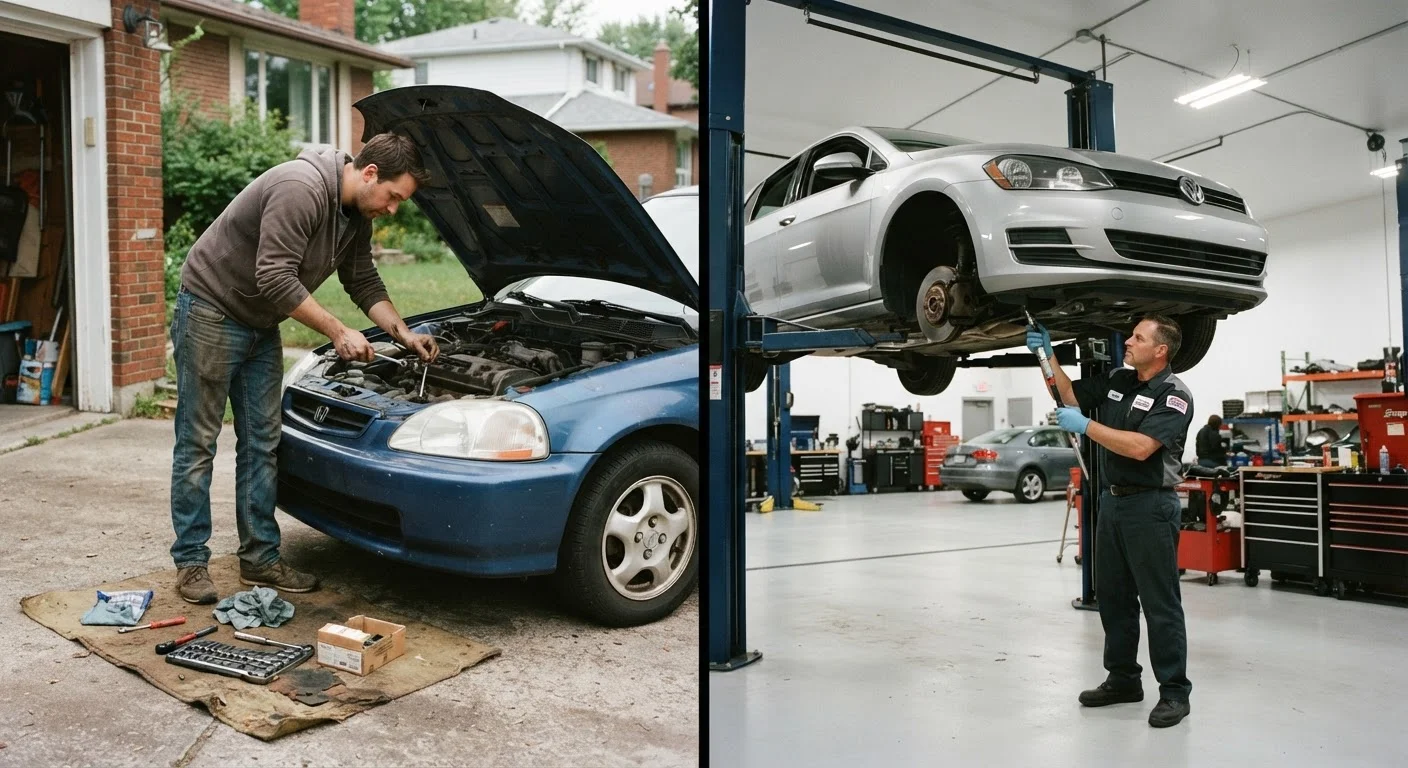
DIY car maintenance makes sense for confident, informed drivers tackling straightforward tasks like checking fluids, swapping wiper blades, or replacing an air filter. For anything involving safety-critical systems - brakes, steering, suspension, or advanced diagnostics - a qualified mechanic is the right call. The two approaches aren't mutually exclusive; most drivers benefit from handling simple upkeep themselves while leaving complex work to professionals.
Drivers who want to stay engaged with their vehicle's health, reduce routine costs, and understand what's happening under the hood - without overstepping into territory that demands specialist training or equipment.
What Counts as DIY-Friendly Maintenance?
Not all car maintenance is created equal. Some tasks require nothing more than a clean rag, a basic toolkit, and your vehicle's owner manual. Others demand specialist diagnostic equipment, years of training, or a workshop lift - and attempting them without those resources can make a problem worse, not better.
DIY-friendly jobs typically include checking and topping off fluids (engine oil, coolant, windshield washer fluid), replacing wiper blades, swapping cabin or engine air filters, checking tire pressure, and inspecting bulbs. These are the kinds of routine checks covered in detail in our car maintenance schedule guide.
If you've just started driving, our guide for new drivers is a good place to understand what basic upkeep actually involves before deciding what to tackle yourself.
Saves money on routine labor costs
Handling straightforward tasks yourself - oil checks, filter swaps, wiper replacements - eliminates labor charges that can add up significantly over the life of a vehicle.
Builds genuine understanding of your vehicle
Drivers who perform their own basic maintenance tend to spot warning signs earlier because they're familiar with how their car looks, sounds, and feels when everything is normal.
Flexible timing on your schedule
You're not waiting for an available service slot - routine checks and minor tasks can be done at home whenever it's convenient, which makes it easier to stay on top of upkeep.
Simple tasks are genuinely low-risk
Checking tire pressure, topping off washer fluid, or replacing a cabin air filter carries minimal risk of causing damage and requires no specialized mechanical skill.
The Real Risks of Getting It Wrong
The appeal of DIY is understandable - labor costs at a garage can be significant, and the sense of self-sufficiency has real value. But some maintenance tasks carry genuine safety consequences if performed incorrectly.
Brake system work is the clearest example. An improperly bled brake line, a caliper reinstalled without correct torque, or brake pads fitted the wrong way around can cause brake failure at the worst possible moment. Similarly, suspension components affect steering and vehicle stability - errors here can be hard to detect until it's too late. These are not tasks to learn on the fly.
There's also the question of modern vehicle complexity. Many newer cars rely on electronic control systems that require specialized diagnostic tools to service or reset properly. Replacing a battery, for instance, sometimes requires a software reset that a standard home toolkit can't provide.
Mistakes on safety systems can be dangerous
Errors on brakes, steering, or suspension components can compromise vehicle control. These systems have no margin for error, and the consequences of getting them wrong are serious.
Modern vehicles require specialist diagnostics
Many current cars rely on electronic control modules that only respond to dedicated scan tools. Without the right equipment, some maintenance tasks simply can't be completed correctly at home.
Upfront tool costs can erode savings
Building a capable home toolkit takes investment. For infrequent tasks, the cost of purchasing a specialized tool can exceed what a garage would have charged for the job.
Warranty and documentation risks
Improperly documented DIY work or the use of non-approved parts can complicate warranty claims, even where the law generally protects your right to service your own vehicle.
Hybrid and Electric Vehicles: Extra Caution Required
If you drive a hybrid or fully electric vehicle, high-voltage battery systems operate at levels that can be lethal without proper training and insulated equipment. The general DIY principles in this article apply to conventional petrol and diesel vehicles. For EVs and hybrids, any work near the high-voltage system should be handled exclusively by a technician trained and certified for that specific technology.
Cost, Warranty, and Practical Considerations
One of the most common motivations for DIY maintenance is saving money. Labor rates at independent garages and dealerships vary widely, and for a simple job like an oil change, the cost difference between doing it yourself and paying a mechanic can be meaningful over time. However, it's worth weighing those savings against the cost of parts you might waste, tools you need to purchase, and any potential remediation if something goes wrong.
Warranty is another factor worth checking. If your vehicle is still under a manufacturer's warranty, certain servicing requirements may apply. In the US, the Magnuson-Moss Warranty Act generally prohibits manufacturers from voiding a warranty solely because you performed your own maintenance - but there are nuances, and using non-approved parts or failing to document work properly can create complications. When in doubt, review your warranty documentation carefully.
It's also worth noting that the DIY-versus-professional decision isn't unique to cars. Homeowners face similar trade-offs - our DIY vs. contractor framework explores a comparable set of questions for home projects.
~35%
Of US drivers perform some routine maintenance themselves
Consumer surveys consistently show a significant share of American drivers handle at least some basic upkeep at home, particularly fluid checks and tire inflation.
$100-$200
Typical hourly labor rate at US repair shops
Labor rates vary widely by region and shop type; understanding this figure helps drivers assess which DIY tasks offer the most meaningful cost offset.
Making the Call: A Practical Framework
Before deciding whether to handle a job yourself, ask three straightforward questions. First: do you understand what the task involves, including what can go wrong? If the answer is no, look it up - your owner's manual, reputable automotive resources, and manufacturer service documentation are good starting points. Second: do you have the right tools and a safe workspace? Improvising with the wrong equipment is a common source of DIY mishaps. Third: is this a safety-critical system? If the answer is yes - brakes, steering, fuel, or high-voltage systems on hybrids and EVs - default to a qualified mechanic.
For older vehicles with higher mileage, the calculus can shift. These cars may need more frequent attention, and some owners find it more cost-effective to handle routine jobs themselves while budgeting for professional repairs on bigger-ticket items. Our article on high-mileage car upkeep trade-offs covers this in more depth.
Finally, don't let myths about what your car needs push you toward unnecessary garage visits - or unnecessary DIY. Common maintenance myths can cost drivers money either way.
The content on this site is for informational purposes only and is not a substitute for professional advice. Always consult a qualified professional for guidance specific to your situation.