

Start here
Why Routine Maintenance Matters From Day One
Next
The Checks You Can Do Yourself
Then
Understanding Your Car's Service Schedule
Important
When to Call a Mechanic
Finally
Building Maintenance Into Your Driving Life
Why Routine Maintenance Matters From Day One
Getting your licence is a milestone - but so is taking responsibility for the vehicle you're driving. A well-maintained car is safer, more reliable, and cheaper to run over time. Neglecting basic upkeep, by contrast, can turn a small, inexpensive problem into a much larger one.
The good news is that most routine maintenance isn't complicated. It's about observation and consistency - noticing when something seems off and acting before it becomes a breakdown. Safe driving starts before you even turn the key, and a roadworthy vehicle is a core part of that equation.
Engine oil
A lubricating fluid that reduces friction between moving engine parts. It degrades over time and needs to be changed at regular intervals.
Coolant
Also called antifreeze, this liquid circulates through the engine to regulate temperature and prevent overheating or freezing.
Tyre pressure
The amount of air inside a tyre, measured in PSI (pounds per square inch). Running at the correct pressure improves safety and fuel efficiency.
Service interval
The mileage or time period after which a specific maintenance task - like an oil change or filter replacement - is due, as specified by the manufacturer.
Tread depth
The measurement of the grooves on a tyre's surface. Adequate tread depth is critical for grip, especially on wet roads.
Dipstick
A long thin rod used to check the engine oil level. You pull it out, wipe it clean, reinsert it, and read where the oil sits against the markers.
The Checks You Can Do Yourself
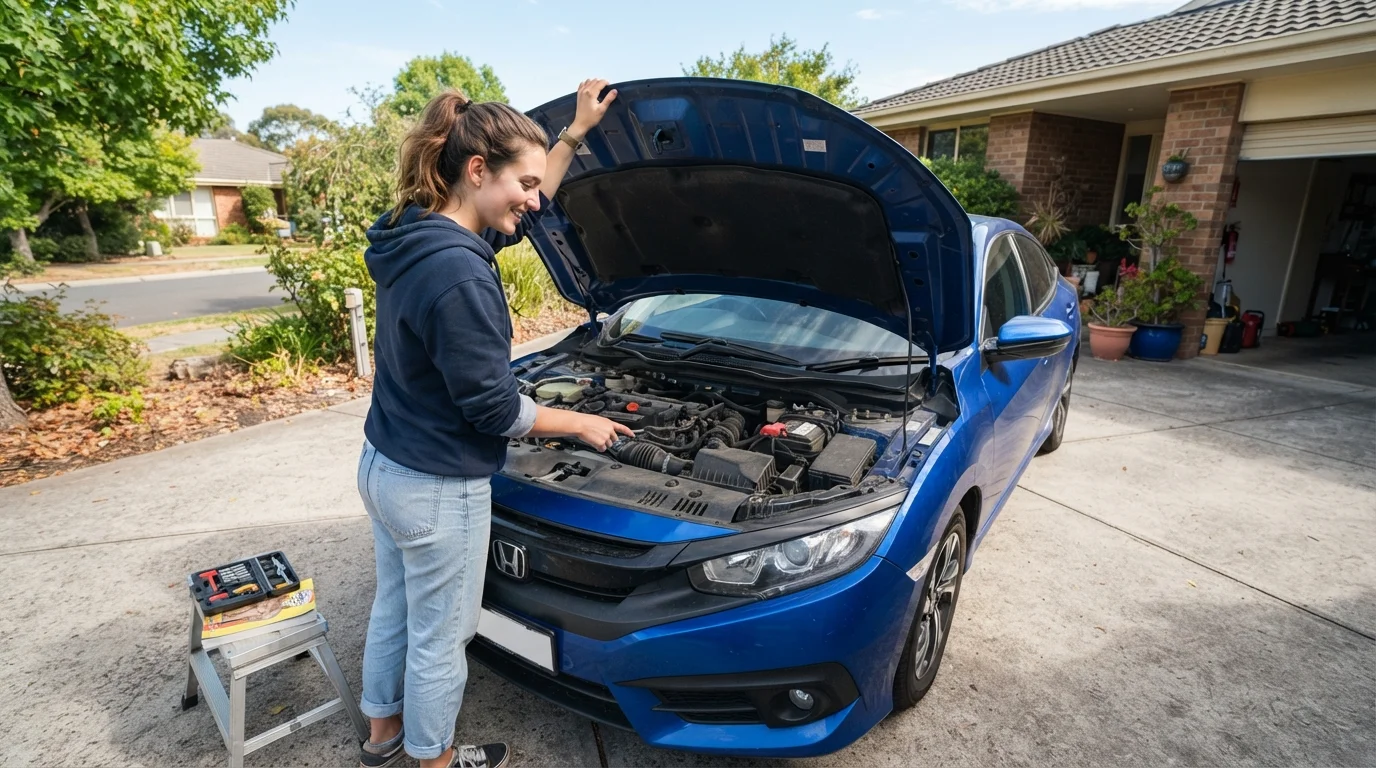
You don't need mechanical training to stay on top of the basics. Here are the key areas worth monitoring regularly:
- Engine oil: Pull the dipstick (usually marked with a yellow or orange handle), wipe it clean, reinsert it, and pull it out again. The oil level should fall between the two markers. If it's low or looks very dark and gritty, it's time for a change.
- Tyre pressure and tread: Under-inflated tyres affect handling and fuel economy; worn tread reduces grip in wet conditions. Tyre maintenance covers this in more depth, including how to check tread depth safely.
- Coolant level: Check the coolant reservoir when the engine is cold. The level should sit between the min and max marks. Low coolant can lead to overheating.
- Lights: Walk around your car occasionally and check that headlights, brake lights, and turn signals are all working. A failed brake light is both a safety risk and a traffic violation.
- Windshield wipers: If they're streaking or skipping, the blades likely need replacing - a straightforward swap most drivers can do themselves.
Use Your Owner's Manual First
Before watching a tutorial or asking online, check your owner's manual. It's written specifically for your car's make, model, and year, and will tell you the correct oil grade, tyre pressure, and service intervals. Most are also available as a PDF on the manufacturer's website if your physical copy is missing.
Understanding Your Car's Service Schedule
Every vehicle comes with a manufacturer-recommended maintenance schedule, usually found in the owner's manual. This outlines which tasks should happen at specific mileage or time intervals - things like oil changes, air filter replacements, spark plug checks, and brake inspections.
Sticking to this schedule is one of the most reliable ways to protect the long-term health of your car. Our guide to your car's maintenance schedule explains what each milestone typically involves and why the intervals exist.
If you've bought a used car, it's worth asking for service records to understand what's already been done - and what might be due soon.
New vs. Used Car Considerations
If you're driving a new car, the manufacturer's schedule applies from the start. With a used vehicle, you may not know exactly what's been done - a mechanic can perform a general inspection to give you a current baseline. This is especially useful if you don't have complete service records.
When to Call a Mechanic
Some tasks genuinely belong in the hands of a qualified professional. Brake pad replacement, wheel alignment, timing belt changes, and anything involving the fuel or exhaust system carry real safety risks if done incorrectly. Dashboard warning lights - especially the check engine light or brake warning - should prompt a mechanic visit rather than a wait-and-see approach.
If you're ever unsure whether a task is within your ability, err on the side of caution. Our article on DIY car maintenance vs taking it to a garage gives a balanced breakdown of where that line typically falls.
Don't Ignore Warning Lights
It can be tempting to hope a dashboard warning light will go away on its own - but most indicate something that genuinely needs attention. Driving with an undiagnosed fault, particularly in the brake or engine systems, can turn a minor issue into a dangerous or very expensive one. Get it checked promptly.
Building Maintenance Into Your Driving Life
The most effective approach is to make maintenance habitual rather than reactive. A few practical ways to do that:
- Set a recurring calendar reminder for your monthly fluid and tyre checks.
- Keep your owner's manual in the glovebox so you can reference it easily.
- Note your current mileage and look up when your next service interval falls.
- Familiarise yourself with the glossary of terms - car maintenance terms every driver should know is a useful plain-language reference.
Good habits compound. The new drivers who take a few minutes each month to look over their vehicle are the ones who rarely get caught out by a preventable problem. For a broader foundation, see our guidance on building safe driving habits from day one and what to do in the first 30 days of owning a car.
Frequently Asked Questions
A quick visual inspection of tyres, lights, and fluid levels once a month is a solid starting point. Checking tyre pressure before long trips is also worthwhile. Your owner's manual will specify intervals for deeper checks.
The main ones to keep an eye on are engine oil, coolant (antifreeze), brake fluid, power steering fluid (if applicable), and windshield washer fluid. Most are visible through translucent reservoirs under the hood.
The correct pressure for your tyres is printed on a sticker inside the driver's door jamb - not on the tyre sidewall. You can check pressure with an inexpensive gauge at home or at most gas stations.
Engine oil degrades over time and loses its ability to lubricate moving parts. Skipping changes leads to increased engine wear and can eventually cause serious, expensive damage. Follow the interval in your owner's manual.
Many basic checks - fluid levels, tyre pressure, wiper blades - are safe for anyone to do. Brake work, suspension, or anything involving the fuel or exhaust system should be left to a qualified mechanic.
Warning lights vary by vehicle, but common ones include the oil pressure light, battery light, check engine light, and tyre pressure indicator. Never ignore a warning light - consult your owner's manual or a mechanic promptly.
The content on this site is for informational purposes only and is not a substitute for professional advice. Always consult a qualified professional for guidance specific to your situation.