

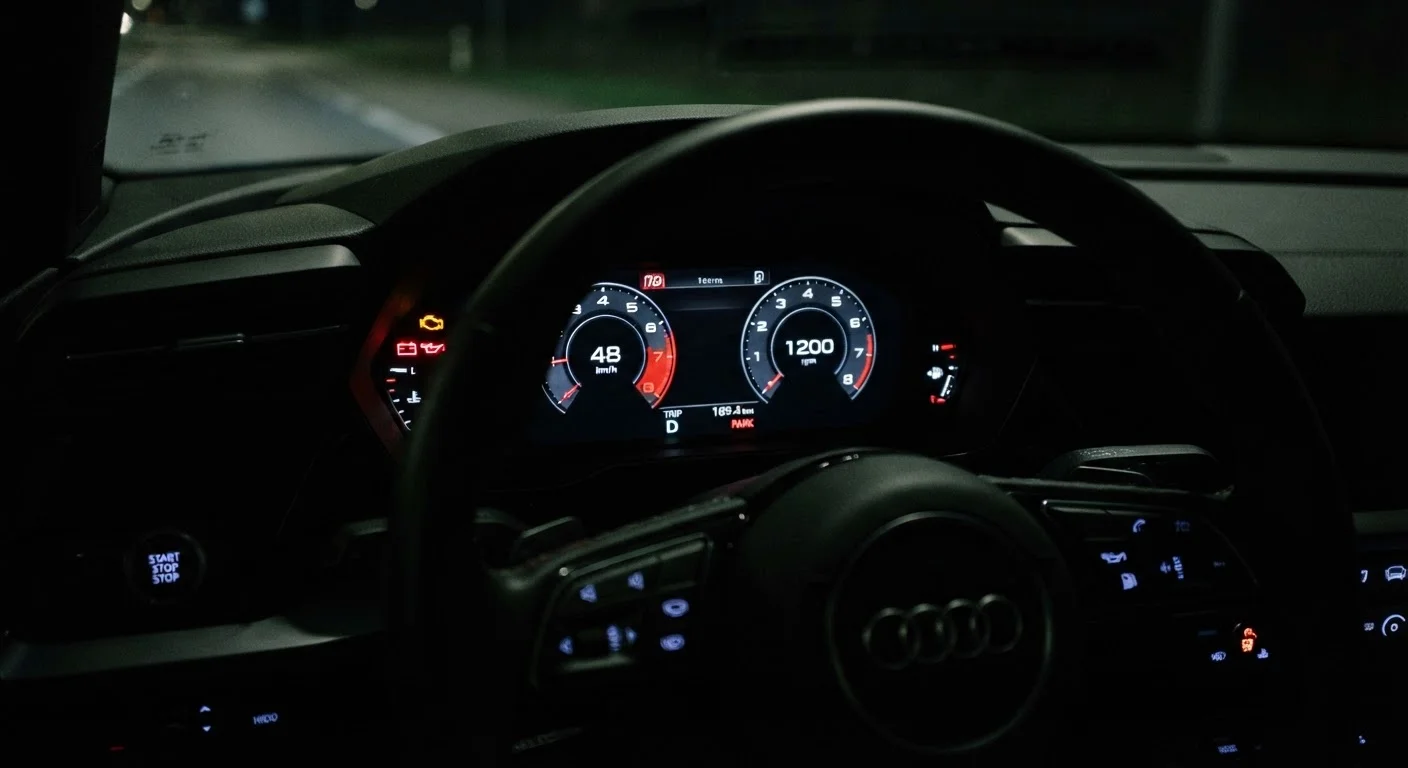
How Dashboard Warning Lights Work
Your car's onboard diagnostic system continuously monitors dozens of sensors - from engine temperature to brake pressure. When something falls outside the expected range, it triggers a warning light on your instrument cluster. Think of the dashboard as your vehicle's way of communicating before a small issue turns into an expensive repair.
Warning lights generally follow a color-coding system: red means stop or act immediately, amber/yellow means investigate soon, and green or blue is typically informational (a system is active, not a fault). This isn't universal across every make and model, but it's the most common convention in modern US vehicles.
Because symbols and meanings can vary slightly between manufacturers, your owner's manual remains the most reliable reference for your specific vehicle. For a broader look at keeping your car in good shape, see your complete maintenance schedule guide.
| Red light urgency | Stop or act immediately (Standard automotive convention, US market) |
| Amber/yellow light urgency | Schedule service within days (Standard automotive convention, US market) |
| Most common warning light | Check engine light (Reported widely by auto service industry data) |
| Correct tire pressure reference | Driver's door jamb sticker (not tire sidewall) (NHTSA TPMS guidance) |
| Owner's manual location | Usually in the glove compartment |
Common Warning Lights and What They Mean
Below is a plain-language breakdown of the warning lights most drivers encounter. Urgency levels are general guidance - always consult a qualified mechanic when in doubt.
OBD-II
On-Board Diagnostics II - the standardized system used in US vehicles since 1996 to monitor engine and emissions performance and store diagnostic trouble codes that a mechanic can read with a scanner.
Catalytic Converter
An emissions control device in the exhaust system that converts harmful combustion byproducts into less harmful gases. A failing converter can trigger the check engine light.
TPMS
Tire Pressure Monitoring System - a sensor-based system required on all US passenger vehicles since 2008 that alerts the driver when a tire's pressure drops significantly below the recommended level.
Alternator
A generator driven by the engine that keeps the battery charged while the car is running. A failing alternator is a common cause of the battery warning light illuminating.
Coolant
A liquid (also called antifreeze) that circulates through the engine to regulate operating temperature. Low or degraded coolant can cause the engine temperature warning light to activate.
High-Priority Lights (Act Immediately)
- Oil Pressure Warning (red oil can): Engine oil pressure has dropped dangerously low. Pull over safely and shut the engine off as soon as it is safe to do so. Driving with low oil pressure can cause severe, irreversible engine damage within minutes.
- Engine Temperature Warning (red thermometer): The engine is overheating. Stop driving, turn off the engine, and allow it to cool before checking coolant levels. Do not remove the radiator cap while the engine is hot.
- Battery / Charging System (red battery): The charging system isn't maintaining voltage. This could be a failing alternator, a bad battery, or a loose cable. You may have limited driving time before the car loses power entirely.
- Brake System Warning (red exclamation in circle): Could indicate low brake fluid, a hydraulic fault, or that the parking brake is still engaged. If the parking brake is off and the light remains on, have it inspected before driving further.
Moderate-Priority Lights (Investigate Soon)
- Check Engine (amber engine outline): One of the most common and most misunderstood lights. It can signal anything from a loose gas cap to a failing catalytic converter. A mechanic can read the stored diagnostic code to pinpoint the cause. A flashing check engine light - rather than a steady one - indicates a more serious misfire and warrants prompt attention.
- Tire Pressure Monitoring System / TPMS (amber flat tire icon): One or more tires is significantly under- or over-inflated. Check all four tires (plus the spare if your system monitors it) with a pressure gauge and inflate to the specification on the driver's door jamb sticker - not the number on the tire sidewall.
- Traction Control / Stability Control (amber car with wavy lines): These systems are actively working or have been disabled. If the light stays on while driving normally, the system may have a fault worth investigating.
For a deeper explanation of terms like catalytic converter, TPMS, and alternator, the car maintenance glossary is a useful companion resource.
A Loose Gas Cap Can Trigger the Check Engine Light
One of the simplest causes of a check engine light is an improperly tightened fuel cap, which allows fuel vapors to escape and trips an emissions sensor. Before heading to a mechanic, make sure your gas cap is on securely and fully tightened. If the light clears within a day or two of driving, a loose cap was likely the culprit. If it stays on, have the diagnostic code read.
What to Do When a Light Comes On
The right response depends on the color and symbol. Red lights should generally prompt you to stop driving as soon as it is safe; amber lights mean schedule a service appointment within a few days rather than weeks. Ignoring any persistent light - even an amber one - risks turning a minor fix into a major repair bill.
A few practical steps apply to almost every warning situation:
- Don't panic, but don't ignore it. Glance at the light's color and any accompanying message on your info display.
- Check your owner's manual if you're unsure of the symbol. Most glove compartments still contain the printed version.
- For amber lights, note whether the light appeared after a specific event (filling up with gas, driving through water, a bumpy road). That context helps a mechanic diagnose faster.
- For red lights, reduce speed, activate hazard lights if needed, and find a safe place to stop.
Safe driving starts with knowing your vehicle's signals. For more on staying safe behind the wheel, visit the safe driving hub.
~25%
US vehicles with a check engine light on at any time
Industry estimates from automotive data firms suggest roughly one in four cars on US roads has an active check engine light.
1996
Year OBD-II became mandatory in the US
The EPA required all US passenger cars and light trucks sold from model year 1996 onward to include a standardized OBD-II diagnostic port.
The content on this site is for informational purposes only and is not a substitute for professional advice. Always consult a qualified professional for guidance specific to your situation.