

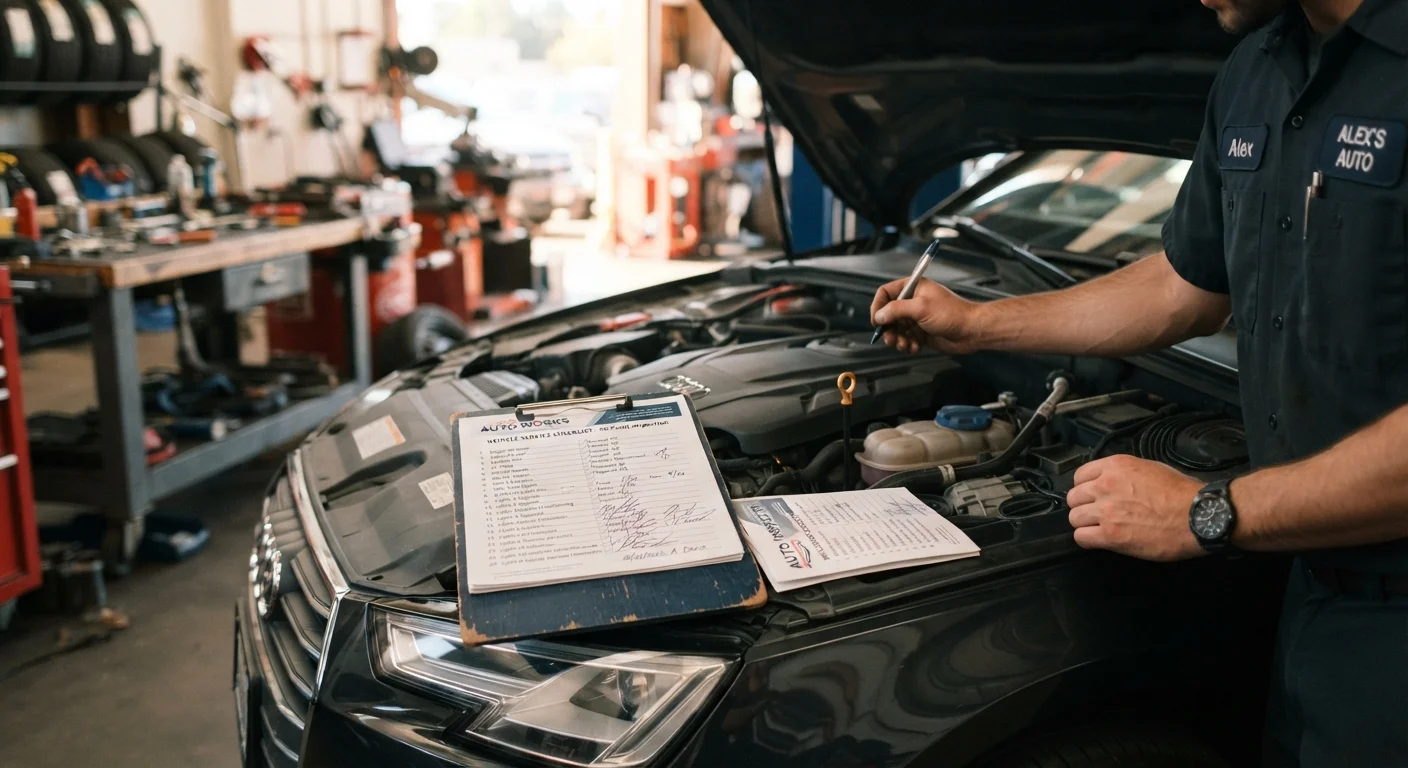
Why These Terms Matter
Bringing your car in for service and not understanding what the technician says is more common than most drivers admit. Terms like torque spec, camber, or coolant flush get tossed around as though everyone already knows them. They don't have to be mysterious.
This glossary covers the words you're most likely to encounter during routine maintenance visits, on a repair estimate, or while reading your owner's manual. Understanding them won't make you a mechanic - but it will help you ask better questions and make more informed decisions about your vehicle.
For a broader introduction to routine upkeep, see our guide for new drivers. If you're trying to decode your manufacturer's service intervals, your car's maintenance schedule, explained breaks that down clearly.
Oil Viscosity
A measure of how thick or thin engine oil is, expressed as a rating like 5W-30. The numbers indicate how the oil flows at cold and operating temperatures. Using the grade your manufacturer recommends helps protect the engine properly.
Coolant Flush
A service procedure where old engine coolant (antifreeze) is drained and replaced with fresh fluid. Coolant degrades over time, losing its ability to prevent corrosion and regulate engine temperature.
Torque Spec
A manufacturer-specified tightening value for bolts and fasteners, measured in foot-pounds or Newton-meters. Technicians use a torque wrench to meet these values precisely - incorrect torque can cause component failures.
Camber
The vertical angle of a tire when viewed from the front of the vehicle. Incorrect camber causes uneven tire wear and handling issues; it's corrected during a wheel alignment service.
Toe
Whether your front tires point slightly inward (toe-in) or outward (toe-out) when viewed from above. Toe is adjusted as part of a wheel alignment to ensure straight tracking and even tire wear.
OBD-II
On-Board Diagnostics II - a standardized diagnostic interface built into most vehicles sold in the U.S. after 1996. Technicians connect a scan tool to this port to read fault codes when a warning light appears.
Tire Rotation
Moving tires to different wheel positions on the vehicle so they wear evenly over time. Most manufacturers recommend rotating tires every 5,000-7,500 miles.
Brake Fade
A temporary reduction in braking effectiveness caused by heat buildup, typically from prolonged heavy braking on long downhill grades. Brake fade is a safety-relevant phenomenon, not a permanent defect.
TDC / BDC
Top Dead Centre and Bottom Dead Centre - the uppermost and lowermost positions of a piston in a cylinder. These reference points are used in engine timing and appear in repair documentation.
Tread Depth
The remaining depth of the rubber grooves on a tire, measured in 32nds of an inch. The U.S. legal minimum is 2/32", though replacement is often recommended at 4/32" for better wet-weather safety.
Interim Service
A lighter maintenance visit that typically covers an oil change, filter replacement, and a basic safety inspection. It is less comprehensive than a full service and is often recommended between full service intervals.
Full Service
A thorough maintenance visit covering oil, filters, fluid checks, spark plugs, and a detailed inspection. Scope varies by garage and vehicle age, so it's worth confirming what's included before booking.
Terms Grouped by System
Most maintenance language falls into a handful of categories. Here's a quick-reference overview by vehicle system to help you place each term in context.
| Oil change interval (modern vehicles) | Typically 5,000-10,000 miles (Varies by manufacturer and oil type; always check your owner's manual) |
| Minimum legal tire tread depth (U.S.) | 2/32 inch (Many safety organizations recommend replacement at 4/32 inch) |
| Tire rotation frequency | Every 5,000-7,500 miles (Manufacturer recommendations vary; consult your owner's manual) |
| OBD-II standard applies to vehicles sold after | 1996 (U.S. market) (Mandated by the U.S. Environmental Protection Agency) |
| Wheel alignment check recommended | Every 2-3 years, or after a significant impact (General industry guidance; varies by driving conditions) |
Engine & Fluids
Oil viscosity refers to how thick or thin the oil is - expressed as numbers like 5W-30. The first number describes cold-weather flow; the second describes performance at operating temperature. Using the viscosity your manufacturer specifies matters for engine protection.
Coolant flush means draining old coolant (antifreeze mixed with water) from the cooling system and replacing it with fresh fluid. Over time, coolant degrades and loses its ability to prevent corrosion and regulate temperature. Car Fluids 101 covers all the fluids under your hood in plain language.
TDC / BDC stands for Top Dead Centre and Bottom Dead Centre - the highest and lowest positions of a piston inside the cylinder. These terms appear in timing discussions and aren't something you'll adjust yourself, but you may see them in repair documentation.
Brakes & Suspension
Brake fade is a temporary loss of braking power caused by overheating - usually from prolonged heavy braking on a steep grade. It's a safety-relevant term worth knowing.
Camber describes the angle of your tires relative to vertical when viewed from the front of the car. Incorrect camber causes uneven tire wear and can affect handling. It's adjusted during a wheel alignment.
Toe refers to whether your front tires point slightly inward (toe-in) or outward (toe-out) when viewed from above. Like camber, it's part of a proper alignment check.
Tires & Wheels
Tire rotation means moving tires to different positions on the vehicle - front to rear, side to side - so they wear evenly. Most manufacturers recommend rotation every 5,000-7,500 miles, though check your owner's manual. Skipping rotations is one of the habits that quietly shorten a car's life.
Tread depth is how much rubber remains on the tire surface. The U.S. legal minimum is 2/32 of an inch, though many safety organizations recommend replacing tires at 4/32 for better wet-weather grip.
Electrical & Warning Systems
OBD-II (On-Board Diagnostics, second generation) is the standardized diagnostic port found in most vehicles sold after 1996. When a warning light appears, a technician plugs a scanner into this port to read stored fault codes. If a dashboard light comes on, our guide to dashboard warning lights explains what each one means and how urgent it is.
2/32"
U.S. minimum legal tire tread depth
Below this threshold, tires are considered unsafe for road use under U.S. regulations.
1996
Year OBD-II became standard in U.S. vehicles
The EPA mandated OBD-II compliance for all cars and light trucks sold in the U.S. from model year 1996 onward.
Service Terminology
Interim vs. full service: These terms describe scope. An interim service typically covers oil, filters, and a basic inspection. A full service is more comprehensive, including additional fluid checks, spark plugs, and other items. What each service type actually includes is worth reviewing before booking an appointment so you know what you're paying for.
Torque spec refers to a precise tightening measurement (in foot-pounds or Newton-meters) for bolts and fasteners. Mechanics use a torque wrench to meet these specs - under- or over-tightening can cause failures.
Finally, watch out for common misconceptions. Many drivers still believe myths like the 3,000-mile oil change rule. Our piece on car maintenance myths separates fact from fiction.
The content on this site is for informational purposes only and is not a substitute for professional advice. Always consult a qualified professional for guidance specific to your situation.