

Why Brakes Are So Easy to Ignore
Brakes are one of the most safety-critical systems on any vehicle, yet they're also among the most commonly neglected. Part of the reason is psychological: brake wear happens slowly and invisibly, without a dramatic event to trigger concern. Unlike a flat tyre or a warning light you can't dismiss, worn brake pads tend to degrade quietly - at least at first.
Drivers also face a steady stream of maintenance reminders competing for attention and budget. Oil changes, tyre rotations, and fluid checks feel more routine because they come with mileage stickers and service intervals. Brake inspections, by contrast, are often tied to how the car feels - a far less reliable prompt for most people.
Understanding the common mistakes that lead to neglected brakes is the first step toward avoiding them. These aren't failures of intelligence; they're predictable patterns worth recognising in yourself.
Dismissing the squealing sound as temporary or weather-related.
Why it happens: A brief squeal in wet or cold conditions can be normal, so drivers learn to tune it out - even when it persists.
Waiting for a dashboard warning light before acting.
Why it happens: Modern cars have trained drivers to respond to lights, but many vehicles don't have a brake pad wear sensor - or the sensor fails before the pad does.
Putting off service because the car still "feels fine."
Why it happens: Brake degradation is gradual, and the human brain adjusts to slow changes - drivers literally stop noticing the difference in feel.
Treating brake service as optional during a tight budget month.
Why it happens: Brakes that are worn but still technically functioning can feel like a problem that can wait - especially when money is short.
Ignoring vibration through the pedal or steering wheel when braking.
Why it happens: Vibration can feel like a minor annoyance or be mistaken for a road surface issue, so it rarely feels urgent enough to act on immediately.
What Actually Happens When You Wait Too Long
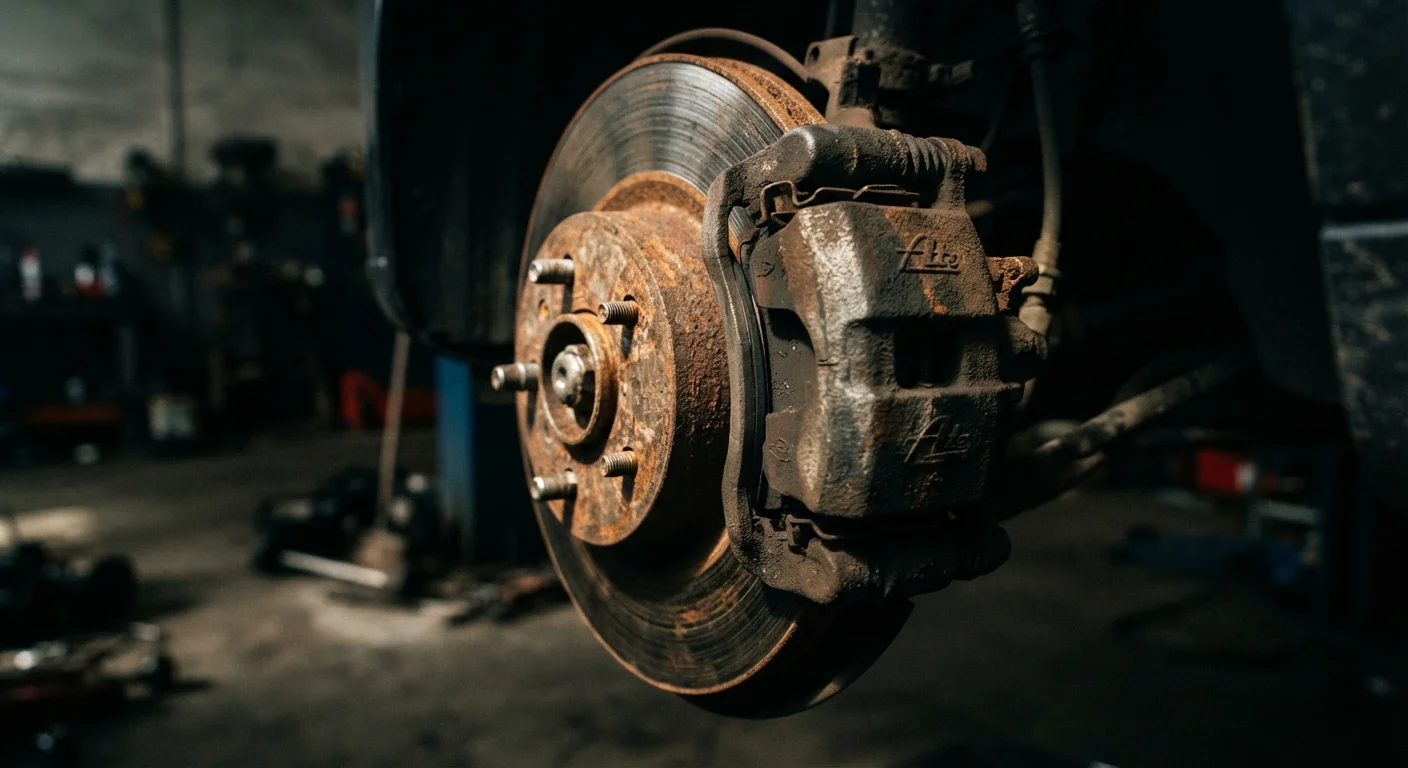
The consequences of delayed brake maintenance aren't abstract. When brake pads wear past their minimum thickness - typically around 2-3mm - the metal backing plate begins grinding directly against the brake rotor (also called the disc). This metal-on-metal contact damages the rotor surface, turning what would have been a straightforward pad replacement into a much more expensive job involving rotor resurfacing or full replacement.
~40%
Drivers with brake pads below minimum thickness
Periodic roadside vehicle safety studies in the US have found roughly 4 in 10 vehicles inspected had brake pads worn below the recommended service threshold.
2-4×
Cost increase when rotors are also damaged
Automotive service data consistently shows that allowing pads to wear to metal-on-metal contact typically multiplies the total repair bill due to rotor damage.
Beyond cost, there's a direct safety impact. Worn brakes increase stopping distances - the gap between pressing the pedal and the car actually stopping. At highway speeds, even a small increase in stopping distance can mean the difference between a near-miss and a collision. A soft or spongy pedal, meanwhile, can indicate air or moisture in the brake fluid, which reduces hydraulic pressure and braking efficiency.
For a deeper look at how wear typically progresses - and what your car is trying to tell you at each stage - see our guide on recognising brake wear before it becomes a safety issue. Brake neglect also fits into a broader pattern of habits that cause gradual damage; habits that quietly shorten a car's lifespan covers several others worth knowing.
Metal-on-Metal Contact Is an Emergency
If you hear a grinding or scraping sound when braking - not a squeal, but a harsh metallic grind - your pads may be fully worn through. This situation poses an immediate safety risk and can cause brake failure in severe cases. Do not defer this to a scheduled appointment; have the vehicle inspected as soon as safely possible.
Staying on top of brake maintenance also pairs with other routine checks. If you haven't reviewed your tyres recently, our guide on tyre pressure and tread depth checks walks through what to look for and when worn rubber becomes a genuine hazard.
This article is for general informational purposes only. Always consult a qualified mechanic for diagnosis and repair of your specific vehicle.
The content on this site is for informational purposes only and is not a substitute for professional advice. Always consult a qualified professional for guidance specific to your situation.