

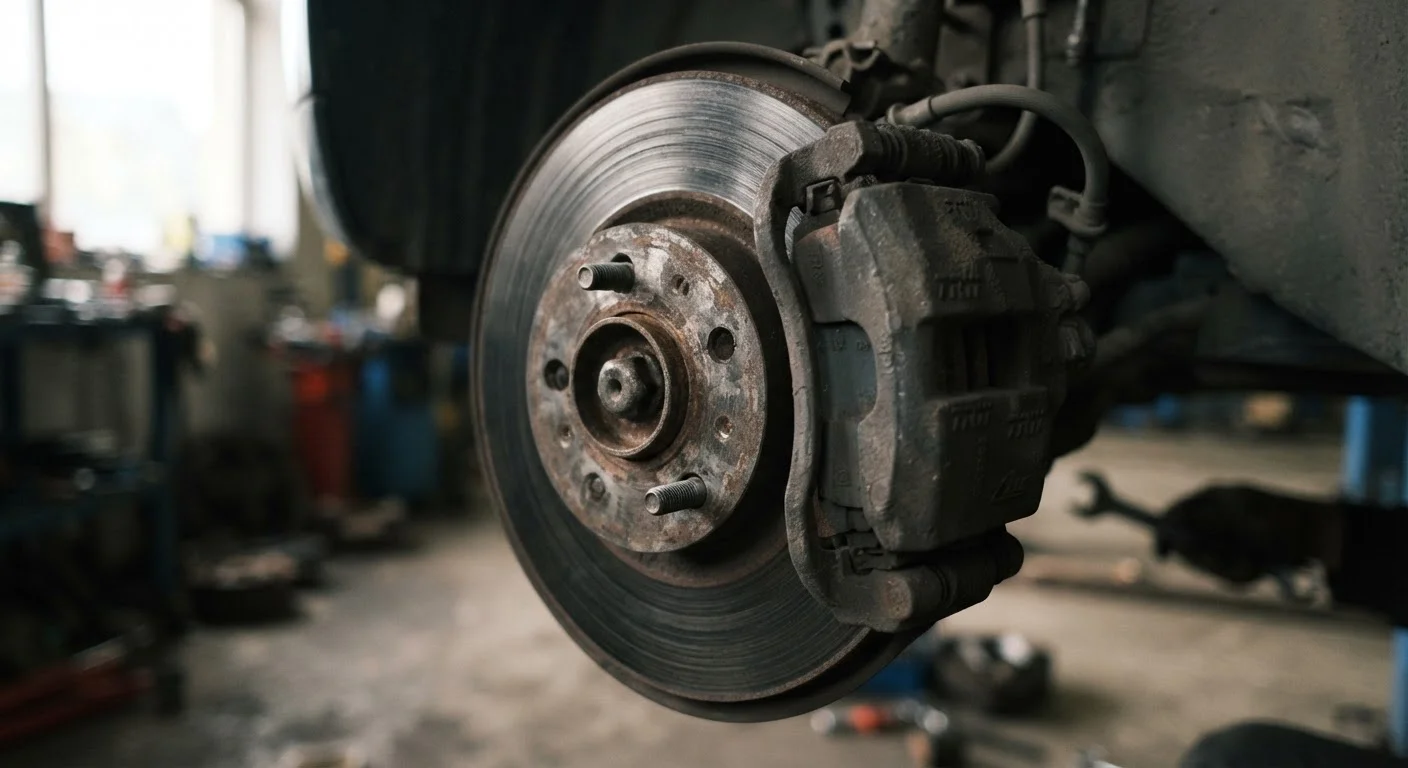
How Brake Wear Progresses
Brakes don't fail overnight. The process is gradual, and most vehicles give drivers clear signals at each stage - if you know what to listen and feel for. Understanding the progression helps you act at the right moment rather than waiting until there's a problem you can't ignore.
When pads are healthy, braking feels firm and quiet. As the friction material thins, many pads trigger a small metal wear indicator - a deliberate design that produces a high-pitched squeal when thickness drops to the warning zone. Think of it as the pad's built-in alarm. At this stage, you still have time to book an inspection without causing further damage.
If that squeal goes unaddressed, the pad material eventually runs out entirely. What follows is a grinding or growling sound - metal pressing directly against the rotor surface. This is the point where you're no longer just replacing pads; rotor damage often means resurfacing or full rotor replacement too, which costs significantly more. See our full breakdown of what happens when brake maintenance is delayed for more on how costs and risks escalate.
Use Engine Braking on Long Descents
On steep or extended downhill stretches, shift to a lower gear to let the engine help slow the vehicle. This reduces how much work your brakes have to do and lowers the risk of overheating. It's a straightforward technique that can meaningfully extend brake pad life on hilly routes.
The Warning Signs and What They Mean
Your brakes communicate through sound, feel, and sometimes smell. Here's what each signal typically indicates:
- Squealing or squeaking: Usually the wear indicator at work. Persistent squealing during normal braking - not just after the car has sat in rain overnight - warrants prompt inspection.
- Grinding or growling: The pad material is likely gone. Metal-on-metal contact is damaging the rotor with every stop. Get the vehicle inspected without delay.
- Soft or spongy pedal: If the pedal sinks closer to the floor than usual or feels mushy, there may be air in the brake lines or a brake fluid leak. This is a serious issue that affects your ability to stop quickly.
- Vibration or pulsation: Feeling a pulse through the pedal or steering wheel when braking suggests warped rotors. Heat from aggressive or prolonged braking can distort the rotor's surface.
- Pulling to one side: If the car veers left or right under braking, one brake may be applying more force than the other - often a sticking caliper or uneven pad wear.
- Burning smell: A sharp, acrid smell after sustained braking - on a long descent, for example - can signal overheated brakes or a dragging caliper.
Your dashboard may also light up. The brake warning light can indicate low brake fluid or an issue with the parking brake system. For a plain-language guide to what dashboard symbols mean, see Warning Lights on Your Dashboard.
25,000-65,000
Miles typical brake pad lifespan
This range reflects variation across driving styles, vehicle types, and pad compounds; city drivers typically fall at the lower end.
2-3 mm
Minimum safe brake pad thickness
Most manufacturers set the service limit in this range; many recommend replacement before pads reach this point.
~20%
Increase in stopping distance with worn brakes
Brake condition is one of several factors that extend stopping distance; worn pads reduce friction efficiency meaningfully.
What Affects How Fast Brakes Wear
Not all brake wear is equal. Several factors determine how quickly your pads and rotors reach the end of their life:
- Driving environment: Stop-and-go city traffic is far harder on brakes than open highway driving. Frequent braking at low speeds wears pads faster than occasional hard stops at higher speeds.
- Driving style: Drivers who brake late and hard consume pads more quickly than those who anticipate stops and slow gradually. Coasting to a red light rather than braking at the last moment is a simple habit that extends pad life.
- Vehicle weight: Heavier vehicles - trucks, SUVs, or cars carrying heavy loads - demand more braking force and therefore wear pads faster.
- Terrain: Hilly or mountainous routes require sustained braking on descents, generating heat and accelerating wear. Using a lower gear on long descents reduces brake load.
- Pad material: Brake pads come in different compounds. Some offer better longevity; others prioritise performance. A mechanic can explain what type is fitted to your vehicle.
Driving habits that wear brakes also tend to wear other components. Our guide to habits that quietly shorten a car's lifespan covers the broader picture of how everyday choices affect vehicle longevity.
When to See a Mechanic
The short answer: don't wait for the grinding. Any persistent noise, pedal change, vibration, or dashboard warning is a prompt to schedule an inspection - not something to monitor for another few weeks.
As a general guideline, brakes should be visually inspected at least once a year, or whenever tyres are rotated. Many mechanics will check pad thickness as part of a routine service. If your vehicle is due for a tyre check, that's a natural opportunity to ask about brakes at the same time - see Tyre Pressure and Tread for what else to look at during that visit.
Stopping distance is directly tied to brake condition. Worn pads, degraded fluid, and rotor damage all extend the distance your car needs to come to a halt. Understanding this connection is explored further in What Your Stopping Distance Actually Depends On.
Brake work should always be performed by a qualified mechanic. While visual pad checks through the wheel spokes are something most drivers can do, assessment of rotor thickness, caliper function, and brake fluid condition requires tools and expertise that go beyond a driveway inspection.
“The brake system is the single most critical safety system on your vehicle. Drivers often underestimate how quickly pad wear can affect stopping performance - and how much distance that difference adds up to in an emergency.”
— National Highway Traffic Safety Administration, U.S. federal vehicle safety agency
Frequently Asked Questions
Brake pad lifespan varies widely - commonly between 25,000 and 65,000 miles - depending on driving style, vehicle weight, and terrain. City drivers who brake frequently will see pads wear faster than highway commuters. Annual inspections help catch wear before it becomes a safety concern.
A brief squeal in wet or cold conditions can be normal and harmless. Persistent squealing every time you brake, however, is a reliable indicator that pads are nearing the end of their life. Continuing to drive without inspection risks damage to the rotors and reduced stopping ability.
A pedal that pulses or vibrates under your foot typically points to warped rotors - brake discs that have developed uneven surfaces from heat stress. This reduces consistent contact between the pad and rotor, affecting braking performance. A mechanic can measure rotor thickness variation to confirm the cause.
In many cases, yes - you can look through the wheel spokes to see the pad pressed against the rotor. If the pad material appears less than a quarter-inch thick, it is time for professional inspection. However, a mechanic's assessment is more reliable, since inner pads and rear brakes can be harder to see.
Uneven wear is often caused by a sticking caliper that keeps one pad pressed against the rotor, poor wheel alignment, or a defective pad itself. It can also result from aggressive one-sided braking habits. Uneven wear shortens pad life and can pull the vehicle to one side during braking.
The content on this site is for informational purposes only and is not a substitute for professional advice. Always consult a qualified professional for guidance specific to your situation.