

What the Two-Second Rule Actually Measures
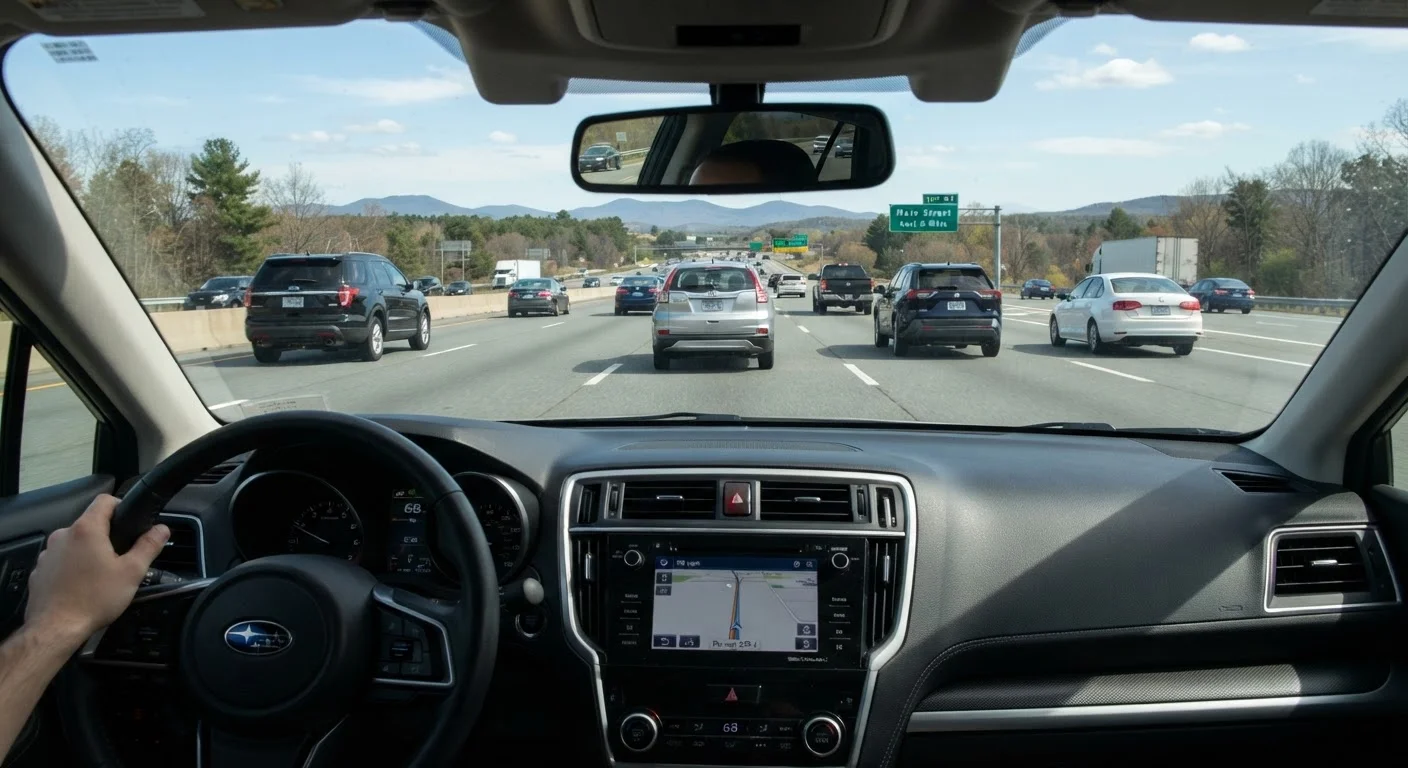
The two-second rule is taught in nearly every driver's education program in the United States: once the vehicle ahead passes a fixed point, at least two full seconds should pass before your front bumper reaches the same point. Simple enough - yet most drivers either miscount it or misunderstand what it's telling them.
The rule is a time-based measure, not a distance measure. That's the key insight. At 30 mph, two seconds translates to about 88 feet. At 65 mph, that same two seconds covers roughly 190 feet. The rule scales with speed automatically, which is exactly why it's practical. You don't need to estimate yards or car lengths - you just count.
The problem is in the counting. Most drivers say "one-one-thousand, two-one-thousand" but rush it, effectively measuring about 1.2 seconds instead of two. That shaved gap matters enormously when you're moving at highway speed. Stopping distance increases with the square of your speed, meaning the gap you need grows much faster than most people intuitively expect.
Myth
Two seconds of following distance is the safe gap in all conditions.
Fact
Two seconds is the minimum under ideal, dry-road conditions with an alert driver and a well-maintained vehicle.
Driver education programs often present the two-second rule without its key qualifier: it assumes dry roads, good visibility, a rested driver, and normal braking performance. Rain, fog, worn tires, or fatigue each erode your margin. In those situations, two seconds may not give you enough time to perceive a hazard, react, and stop before hitting the vehicle ahead. Think of two seconds as the floor of acceptable following distance, not the ceiling.
Myth
The two-second rule means keeping two car lengths between you and the car ahead.
Fact
The rule measures elapsed time, not physical distance. The actual distance it represents changes with your speed.
Car lengths are a fixed measure; two seconds at highway speed is a much larger physical gap than two seconds in a parking lot. At 60 mph, two seconds equals roughly 176 feet - about 10 to 12 car lengths. At 25 mph, it's closer to 73 feet, or four to five car lengths. Using car lengths as a proxy causes drivers to follow far too closely at higher speeds, where the stakes are highest.
Myth
As long as I can stop in time, my following distance is fine.
Fact
Stopping distance alone doesn't account for perception and reaction time, which together add significant distance before braking even begins.
Stopping distance is the sum of two components: reaction distance (the ground covered while your brain processes the hazard and your foot moves to the brake) and braking distance (the ground covered while the brakes bring you to a stop). At highway speed, reaction distance alone can be 60 feet or more, even for an alert driver. Tired, distracted, or impaired drivers need considerably more. A gap sized only around braking distance ignores the first half of the equation entirely.
Myth
Maintaining a large following gap just means other drivers cut in front of you.
Fact
Vehicles merging into your gap don't eliminate your safety margin - simply ease back to re-establish it.
This is a common frustration for drivers who try to maintain proper spacing. When another vehicle merges ahead of you, the correct response is a brief, smooth deceleration to open the gap back up - not aggressive braking or tailgating the intruder. In steady highway traffic, the net effect on your travel time is negligible. The habit of re-establishing your gap after every merge is far more important than keeping any specific vehicle out of it.
When Two Seconds Isn't Enough
Even a correctly timed two-second gap is only appropriate under good conditions: dry pavement, alert driver, well-maintained brakes, normal-sized passenger vehicle. Change any one of those variables and the minimum changes with it.
~40%
Rear-end crashes linked to following distance
According to the National Highway Traffic Safety Administration, rear-end collisions account for roughly 29% of all injury crashes, and following too closely is a leading contributing factor.
3-4 sec
Recommended gap on wet roads
Safety driving programs and state DMV guidelines widely advise doubling the two-second gap in wet conditions, where stopping distances increase substantially.
- Wet roads: Braking distances can increase by 50% or more on wet pavement. A three- to four-second gap is a more reasonable baseline.
- Snow or ice: Stopping distances can multiply by five to ten times compared to dry conditions. Add seconds - plural.
- Towing or heavy loads: Added weight extends braking distance significantly. Many drivers fail to account for this at all.
- Nighttime driving: Reduced visibility means you may not identify a hazard until you're already very close. Increase your gap and reduce speed.
- Driver fatigue: Reaction time degrades noticeably with fatigue. A gap that's fine for a rested driver may be dangerously short when you're tired.
The two-second rule is a minimum under ideal conditions, not an all-weather target. Treating it as a ceiling rather than a floor is one of the most common errors drivers make. For a deeper look at how following too closely plays out on real roads, see our article on tailgating and its risks.
Towing Changes Your Stopping Distance Dramatically
If you're hauling a trailer, boat, or camper, your braking distance increases in proportion to the added weight - often significantly more than drivers expect. The two-second baseline is not adequate when towing. Add at least two to three extra seconds as a starting point, more in adverse conditions, and consult your vehicle's towing guidelines for specific recommendations.
Building a More Reliable Habit
Knowing the rule intellectually and applying it consistently in traffic are very different things. A few habits help close that gap:
- Use a deliberate count. Say "one-one-thousand, two-one-thousand" at a pace that actually takes two seconds. If you're not sure, practice the count alongside a clock before you drive.
- Pick a clear fixed marker. A shadow line, a lane marking, or an overpass works well. Vague reference points lead to inconsistent results.
- Reset after lane changes. Many drivers unconsciously close the gap when merging behind another vehicle and never re-establish their buffer.
- Add seconds proactively, not reactively. Don't wait until conditions feel bad to extend your gap - build the habit of adding margin before you think you need it.
Road conditions, speed, and driver state all interact in ways that the posted speed limit doesn't account for. The two-second rule, applied correctly, gives you a reliable, self-adjusting buffer - but only if the counting is honest and the baseline gets extended when conditions demand it.
The content on this site is for informational purposes only and is not a substitute for professional advice. Always consult a qualified professional for guidance specific to your situation.