

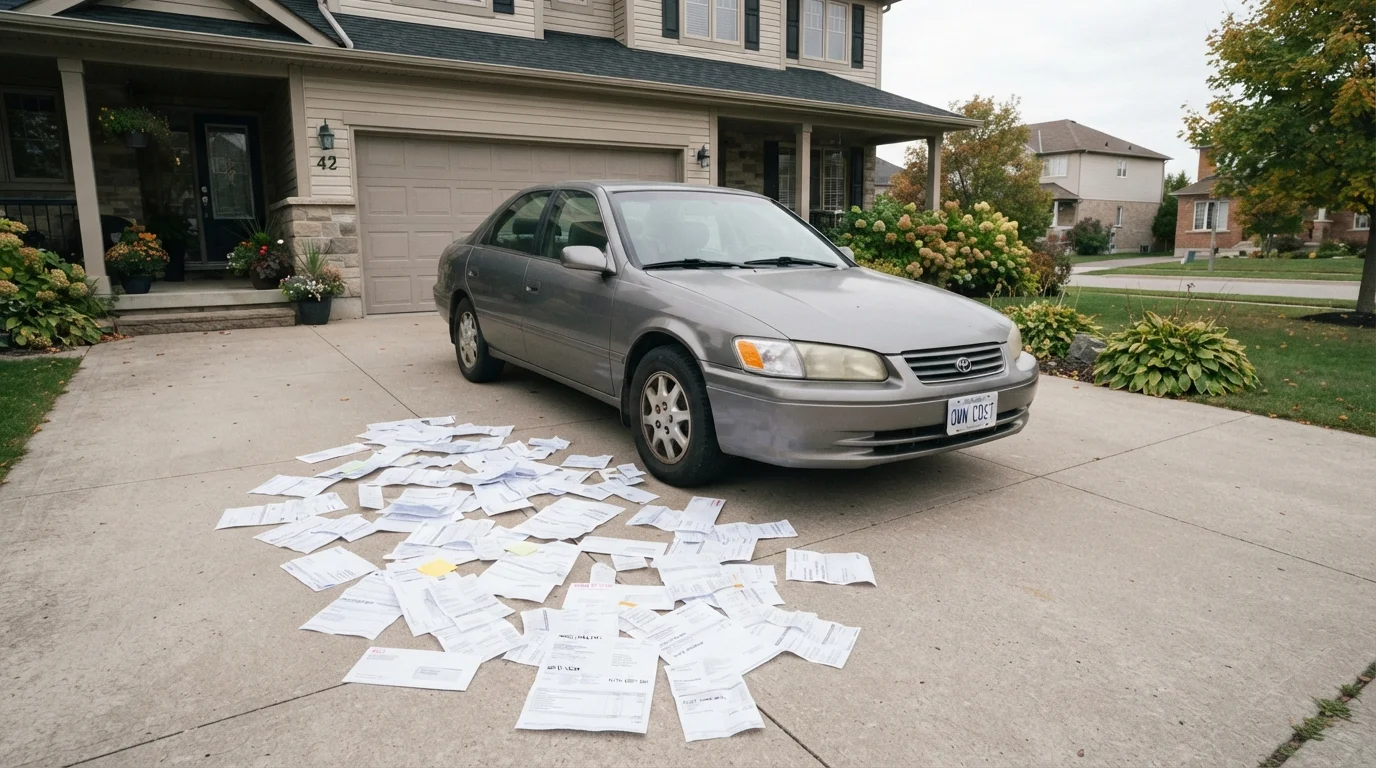
Why the Purchase Price Is Only the Beginning
When most people budget for a car, they focus on the monthly payment or the total purchase price. That's understandable - it's the most visible number. But experienced car owners know that what you pay at signing is just the entry fee. The real financial commitment plays out over years of ownership.
Think of the purchase price as a deposit on a long-term relationship with ongoing obligations. Every vehicle comes with a set of recurring and variable costs that can collectively outpace what you originally paid, depending on how long you own the car and how much you drive it.
Getting a clear picture of these costs before you commit - not after - puts you in a much stronger financial position. See our overview of common misconceptions about car costs to understand where most drivers go wrong.
15-25%
New car value lost in year one
Industry estimates consistently show new vehicles depreciate sharply in their first year, with the steepest losses front-loaded early in ownership.
$8,000-$12,000
Estimated annual cost to own a typical sedan
AAA's annual 'Your Driving Costs' study has placed average annual ownership costs in this range for a typical new mid-size sedan, encompassing all major expense categories.
~$0.14-$0.18
Estimated per-mile fuel cost (average passenger car)
Fuel costs per mile vary based on vehicle efficiency and local gas prices, but serve as a useful baseline for calculating annual driving expenses.
Depreciation: The Cost You Don't See on a Bill
Depreciation is the decline in your vehicle's market value over time, and it tends to be the largest single cost of ownership - especially for new cars. A new vehicle can lose a significant portion of its value within the first year of ownership, and that loss continues, though at a slower pace, in subsequent years.
This cost is easy to overlook because you don't receive an invoice for it. But when you eventually sell or trade in the vehicle, the gap between what you paid and what you receive reflects accumulated depreciation in real dollars.
For a deeper look at how this works and what it means for your finances, see our article on vehicle depreciation and why it matters.
“Depreciation is the elephant in the room when people talk about car costs. Most buyers focus on the monthly payment, but they're essentially renting an asset that loses value every single day.”
— Consumer Financial Education Specialist, Automotive cost analyst and consumer education advocate
Recurring Costs: Insurance, Fuel, and Registration
Beyond depreciation, three costs hit your budget on a regular schedule:
- Insurance: Required by law in nearly every state, auto insurance premiums are influenced by your driving record, age, location, the vehicle itself, and the coverage level you choose. These costs can vary by hundreds of dollars annually between otherwise similar drivers.
- Fuel: Your annual fuel spend depends on how many miles you drive, the vehicle's fuel efficiency, and local gas prices. A less fuel-efficient vehicle driven heavily can add thousands of dollars per year compared to a more efficient one.
- Registration and taxes: Annual registration fees, state taxes, and in some regions emissions inspection fees are easy to underestimate. These vary significantly by state and sometimes by the vehicle's value or age.
Together, these three categories often represent the most consistent ongoing drain on a car owner's budget.
Build a Car Budget Before You Shop
Before choosing a vehicle, get an actual insurance quote for that specific make, model, and trim - not just an estimate. Factor in your typical annual mileage and the vehicle's EPA fuel economy rating to project fuel costs. Adding registration fees and a maintenance allowance gives you a realistic monthly number that goes well beyond the loan payment.
Maintenance, Repairs, and the Unexpected
Routine maintenance - oil changes, tire rotations, brake inspections, fluid replacements - is a predictable and manageable cost when planned for. Skipping it, however, tends to produce far more expensive problems down the road. Our car maintenance resource hub covers the essential upkeep tasks every owner should know.
Repairs are less predictable. As a vehicle ages, components wear out and systems fail. A transmission issue, a failed alternator, or a cracked water pump can each represent hundreds to thousands of dollars. Owners of older vehicles should factor a repair buffer into their annual budget.
The decision between a new and used vehicle often comes down to this trade-off: new cars carry higher depreciation and purchase costs, while older cars may shift more financial risk toward maintenance and repairs. Our new vs. used car financial comparison breaks this down in detail.
Putting It All Together: Thinking in Total Costs
Shifting from sticker-price thinking to total-cost thinking is the most practical thing a car buyer can do. Before committing to a vehicle, it's worth estimating not just the monthly payment, but the full annual cost including insurance quotes, estimated fuel spending at your typical mileage, registration fees in your state, and a reasonable maintenance and repair allowance.
If you're weighing whether buying or leasing makes more sense for your situation, that same total-cost lens applies - see our leasing vs. buying breakdown for how the numbers typically compare.
And when the time comes to move on from a vehicle, understanding what private sales involve can also affect your net cost of ownership. Our guide on selling a car privately walks through what to expect.
No car is purely a financial decision - convenience, safety, and personal need all factor in. But knowing the full cost upfront means fewer surprises and better-informed choices over time.
Frequently Asked Questions
Annual costs vary widely based on vehicle type, location, and driving habits. AAA has historically estimated average ownership costs for a typical new sedan in the range of $8,000-$12,000 per year when all factors are included. This figure encompasses depreciation, insurance, fuel, maintenance, and fees.
Depreciation is widely considered the largest and most overlooked cost. A new vehicle can lose 15-25% of its value in the first year alone. Because this loss doesn't come as a direct bill, many owners don't factor it into their cost calculations.
Generally, yes - a used car has already absorbed its steepest depreciation, which can lower your overall cost of ownership. However, older vehicles may carry higher maintenance and repair costs. The full picture depends on the specific vehicle's condition and history.
Regular preventive maintenance can help avoid costly repairs down the line. Shopping around for insurance, driving fuel-efficiently, and keeping tires properly inflated are practical steps. Choosing a vehicle with lower insurance ratings and good fuel economy also helps reduce recurring expenses.
Insurance is one of the most significant recurring expenses, and premiums vary based on your driving record, location, vehicle type, and coverage level. It's worth comparing options and reviewing your coverage periodically, though decisions should reflect your actual risk needs, not just cost minimization.
The content on this site is for informational purposes only and is not a substitute for professional advice. Always consult a qualified professional for guidance specific to your situation.