

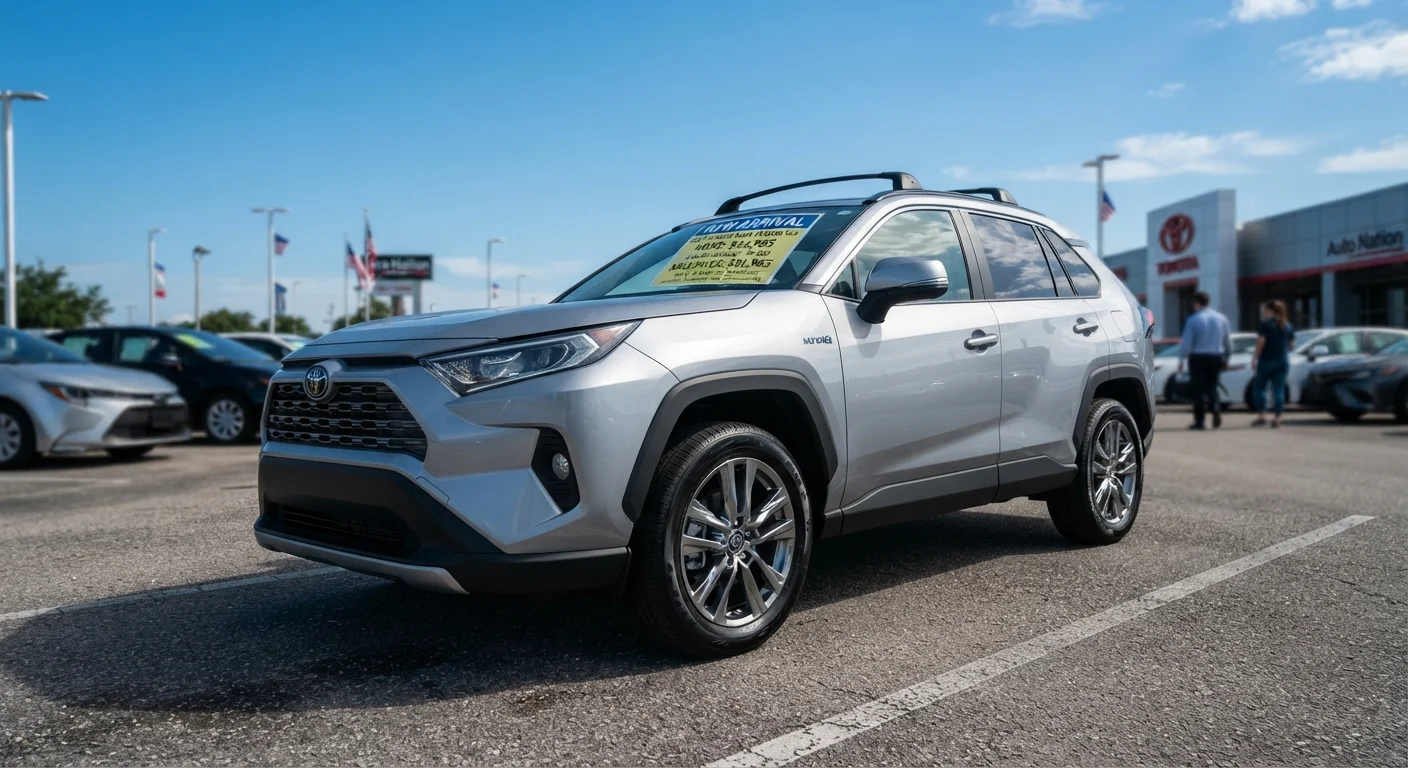
What Depreciation Actually Means for Your Car
Think of depreciation as the financial reality that your car is worth less today than it was yesterday - and less tomorrow than it is today. It is not a fee you pay directly, but it is a real cost because it represents money you spent that you cannot recover when you sell or trade in the vehicle.
The moment a new car leaves the dealership lot, it transitions from a new vehicle to a used one in the eyes of the market. That shift alone triggers an immediate drop in resale value. Over the following years, the combination of age, mileage, wear, and competition from newer models continues to erode what the car is worth.
Understanding depreciation helps you see the full financial picture of car ownership - not just the monthly payment.
15-25%
Average new car value lost in year one
Industry estimates consistently show new vehicles shed a large share of their value in the first 12 months of ownership.
~50%
Value lost by year five on average
Many vehicles retain only around half their original purchase price after five years, according to general automotive valuation data.
#1
Largest cost of car ownership
Depreciation is widely considered the single biggest expense of owning a vehicle, outpacing fuel and insurance for many drivers.
How the Depreciation Curve Works
Depreciation does not happen in a straight line. The loss is front-loaded, meaning new vehicles shed value fastest in the earliest years of ownership. Industry data consistently shows that the average new car loses a significant chunk of value in year one - often between 15% and 25% - and continues to decline, though at a slower pace, through years two to five.
By the time a vehicle reaches the five-year mark, many models have lost roughly half their original value. After that, depreciation typically levels off further, though it never fully stops.
This curve is why buying a vehicle that is one to three years old can offer meaningful savings. The original owner absorbed the steepest part of the drop, and you purchase the car at a lower starting point. For a deeper look at how new and used vehicles compare financially, see our new car vs. used car comparison.
What Makes Some Cars Depreciate Faster Than Others
Not all vehicles lose value at the same pace. Several factors influence how quickly depreciation happens:
- Mileage: Higher annual mileage accelerates depreciation because it increases wear and shortens the vehicle's remaining useful life in buyers' eyes.
- Condition: Dents, interior damage, and deferred maintenance all reduce what a buyer will pay. Good car maintenance habits protect both the vehicle and its resale value.
- Market demand: Vehicles with strong reputations for reliability or utility - certain pickup trucks and SUVs, for example - tend to hold value better because used-market demand stays high.
- Fuel economy: When fuel prices rise, vehicles with better efficiency tend to retain value better than fuel-heavy alternatives.
- Model updates: When a manufacturer releases a redesigned version of a model, older versions of that same model often depreciate faster as buyers shift interest to the new generation.
Keep Records to Protect Resale Value
Maintaining a complete service history - oil changes, tire rotations, brake work - gives future buyers confidence in the vehicle's condition. A documented maintenance record can support a stronger asking price and help offset some of the value lost to depreciation.
For a closer look at the specific factors that speed up or slow down depreciation, see our article on why your car loses value and what affects the rate.
Why Depreciation Matters Even If You're Not Selling
Many drivers assume depreciation is only relevant when it's time to sell or trade in. In reality, it affects your finances throughout the time you own the vehicle.
If you financed your car, depreciation can put you in a situation called negative equity - where you owe more on the loan than the car is currently worth. This becomes a real problem if the car is totaled in an accident or if you need to sell before the loan is paid off. Insurance typically pays the vehicle's actual cash value at the time of loss, not what you originally paid or what you still owe. Understanding this gap is important for any financed vehicle owner. Our article on the gap between what you owe and what your car is worth breaks this down in practical terms.
Depreciation is also worth understanding alongside broader financial concepts. Just as inflation quietly erodes purchasing power over time, depreciation quietly reduces the asset value of your vehicle - often without you noticing until it's time to sell.
This article is for general informational purposes only and does not constitute financial or legal advice. Consult a qualified professional for guidance specific to your situation.
Frequently Asked Questions
Most new cars lose between 15% and 25% of their purchase price within the first 12 months. This first-year drop is typically the steepest part of a vehicle's depreciation curve. After that, the decline tends to slow gradually over subsequent years.
Yes, mileage is one of the strongest drivers of depreciation. Higher mileage signals more wear on the engine, transmission, and other components, which reduces what buyers are willing to pay. Vehicles with significantly below-average annual mileage tend to retain value better.
A commonly cited benchmark is that the average car retains roughly 40-60% of its original value after five years, meaning it has lost 40-60% of what you paid. This varies considerably by make, model, and how the vehicle was maintained and driven.
You can slow depreciation somewhat by keeping mileage reasonable, maintaining the vehicle in good condition, keeping service records, and avoiding modifications that narrow buyer appeal. You cannot eliminate depreciation entirely, but these steps can improve resale or trade-in value.
Even if you plan to drive your car until it stops running, depreciation affects your net worth, your insurance payout if the car is totaled, and your equity position on a loan. Negative equity - owing more than the car is worth - is a direct consequence of fast depreciation.
No. Depreciation rates vary widely based on the vehicle segment, brand reputation, fuel economy, reliability history, and how much consumer demand exists for that model used. Trucks and certain SUVs have historically held value better than many sedans and luxury vehicles.
The content on this site is for informational purposes only and is not a substitute for professional advice. Always consult a qualified professional for guidance specific to your situation.