

Our Verdict
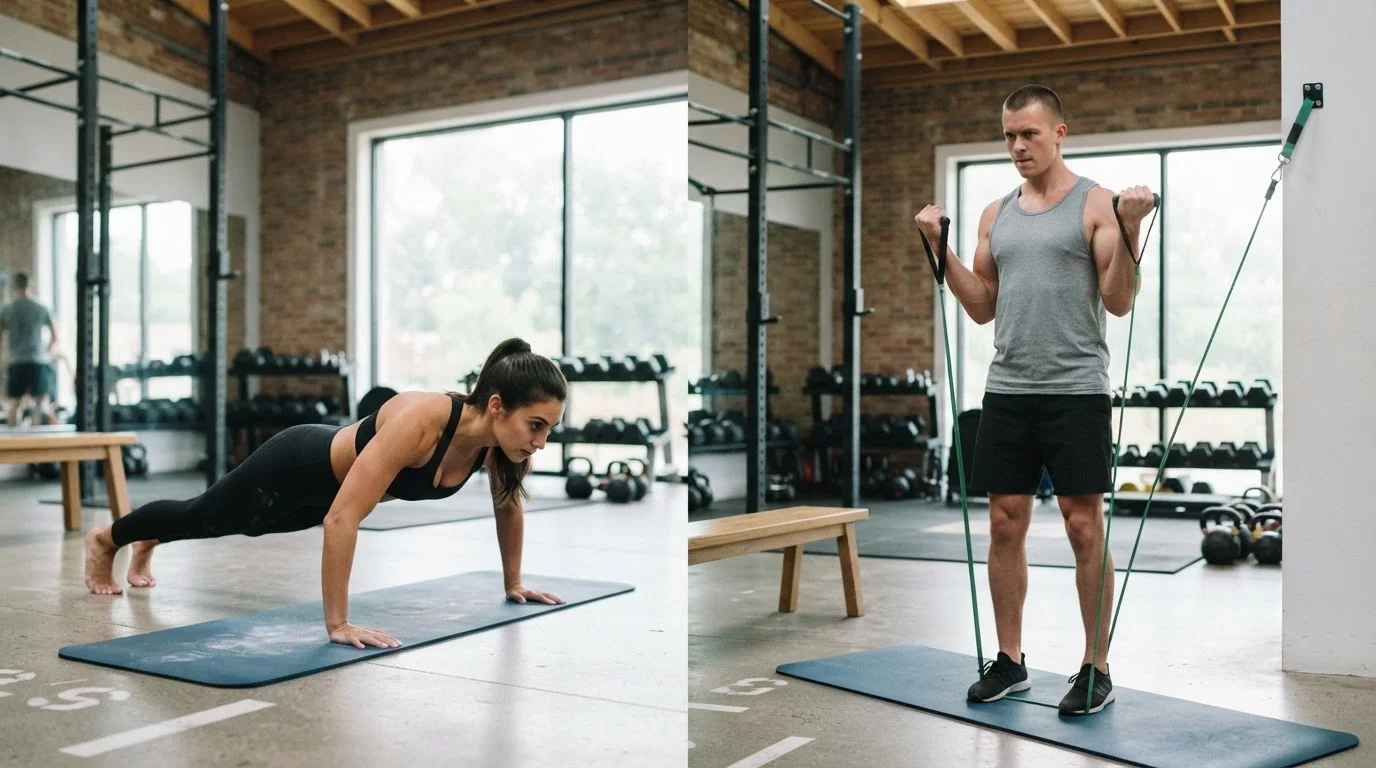
Neither bodyweight training nor resistance equipment is universally superior - each develops strength through distinct mechanisms with real advantages. Bodyweight training excels for relative strength, movement quality, and accessibility, while equipment-based training offers unmatched control over progressive overload. Most people benefit from understanding both and incorporating elements of each into their routine.
| Best for | Recommended |
|---|---|
| Those who train at home or travel frequently | Bodyweight Training |
| Those focused on measurable, long-term strength progression | Resistance Equipment |
| Beginners building a movement foundation | Bodyweight Training |
| Those with specific muscle-building or rehabilitation goals | Resistance Equipment |
How Bodyweight Training Builds Strength
Bodyweight training develops strength by challenging muscles to control, stabilize, and move the body itself through space. Rather than adding external weight, progression comes from manipulating leverage, range of motion, tempo, and movement complexity.
A push-up, for example, can be regressed to an incline variation or progressed toward a single-arm variation - each iteration changes the mechanical demand on the muscles involved. This makes bodyweight training highly scalable, though it requires deliberate programming to continue advancing.
Research in exercise physiology consistently shows that muscle fiber recruitment and hypertrophy (muscle growth) follow tension and mechanical load - and bodyweight exercises can produce meaningful tension, particularly in intermediate and advanced progressions. Exercises like pull-ups, dips, pistol squats, and handstand push-ups place substantial demand on the neuromuscular system.
One notable advantage is the development of relative strength - the ability to move and control your own body weight efficiently. This transfers well to everyday function and athletic movement. For a practical framework on getting started without any equipment, see Building a Home Movement Routine Without Equipment.
Progress Bodyweight Training Intentionally
The most common mistake in bodyweight training is staying at the same difficulty level too long. Once an exercise feels manageable for 3 sets of 12-15 reps with controlled form, consider advancing the leverage or complexity - such as elevating your feet during a push-up or slowing the tempo. Deliberate progression is what drives continued strength adaptation, regardless of whether you're using a barbell or just your body.
How Resistance Equipment Builds Strength
Resistance equipment - including free weights, cable machines, resistance bands, and weight machines - builds strength primarily through progressive overload: systematically increasing the load placed on muscles over time. This is widely recognized as one of the most reliable mechanisms for driving strength and muscle adaptations.
The key distinction is precision. With equipment, you can increase resistance in small, measurable increments - adding 5 pounds to a barbell or moving one notch on a cable stack. This granular control makes it easier to track progress and ensure muscles are consistently exposed to new challenges.
Equipment-based training also allows for greater isolation of specific muscle groups. Exercises like cable rows, leg presses, or dumbbell flyes can target muscles at specific joint angles and tension curves that are difficult to replicate with bodyweight alone. This has practical value for rehabilitation, muscle imbalance correction, and hypertrophy-focused training.
The tradeoff is access and cost. Gym memberships and home equipment require financial investment, and Home Workouts vs. Gym Training explores those practical considerations in depth.
| Bodyweight Training | Resistance Equipment | |
|---|---|---|
| Primary strength mechanism | Leverage, stability, and movement complexity | Progressive overload with measurable load increments |
| Ease of progression | Requires creative variation and skill | Simple, incremental load increases |
| Muscle isolation ability | Limited; mostly compound movements | High; isolates specific muscles and angles |
| Accessibility and cost | No equipment needed; train anywhere | Requires gym access or home equipment investment |
| Relative strength development | Excellent; directly trains body control | Moderate; may not reflect bodyweight efficiency |
| Suitability for beginners | High; low barrier to entry | Moderate; technique guidance recommended |
Practical Considerations for All Fitness Levels
For most people, the most sustainable training approach is one that fits their lifestyle, access, and preferences. Both methods produce real results when applied with consistency and appropriate challenge.
~2-3x/week
Recommended strength training frequency
The U.S. Department of Health and Human Services Physical Activity Guidelines recommend muscle-strengthening activities at least two days per week for adults.
Similar gains
Bodyweight vs. weight training muscle outcomes
A 2017 review in the Journal of Human Kinetics found that bodyweight resistance training can produce comparable muscle strength and endurance gains to traditional resistance training under matched conditions.
Beginners often benefit from starting with bodyweight movements to develop coordination, joint stability, and movement patterns before adding external load. Intermediate and advanced trainees typically need the precise overload that equipment provides to continue making meaningful strength gains - though advanced bodyweight progressions remain a legitimate path.
It's also worth noting that exercise order and structure matter regardless of the tools you use. Cardio or Strength Training First? examines how sequencing affects performance and results. And if you're weighing whether training alone or with others fits you better, Group Exercise vs. Solo Training covers how environment shapes long-term adherence.
The most important variable in any strength training approach isn't the equipment - it's consistent application of progressive challenge over time. Both bodyweight and resistance equipment can deliver that when programmed thoughtfully.
This article is for general informational and educational purposes only. It is not medical or exercise advice. Consult a qualified healthcare provider or certified fitness professional before beginning any new training program, particularly if you have existing health conditions or injuries.
The content on this site is for informational purposes only and is not a substitute for professional advice. Always consult a qualified professional for guidance specific to your situation.