

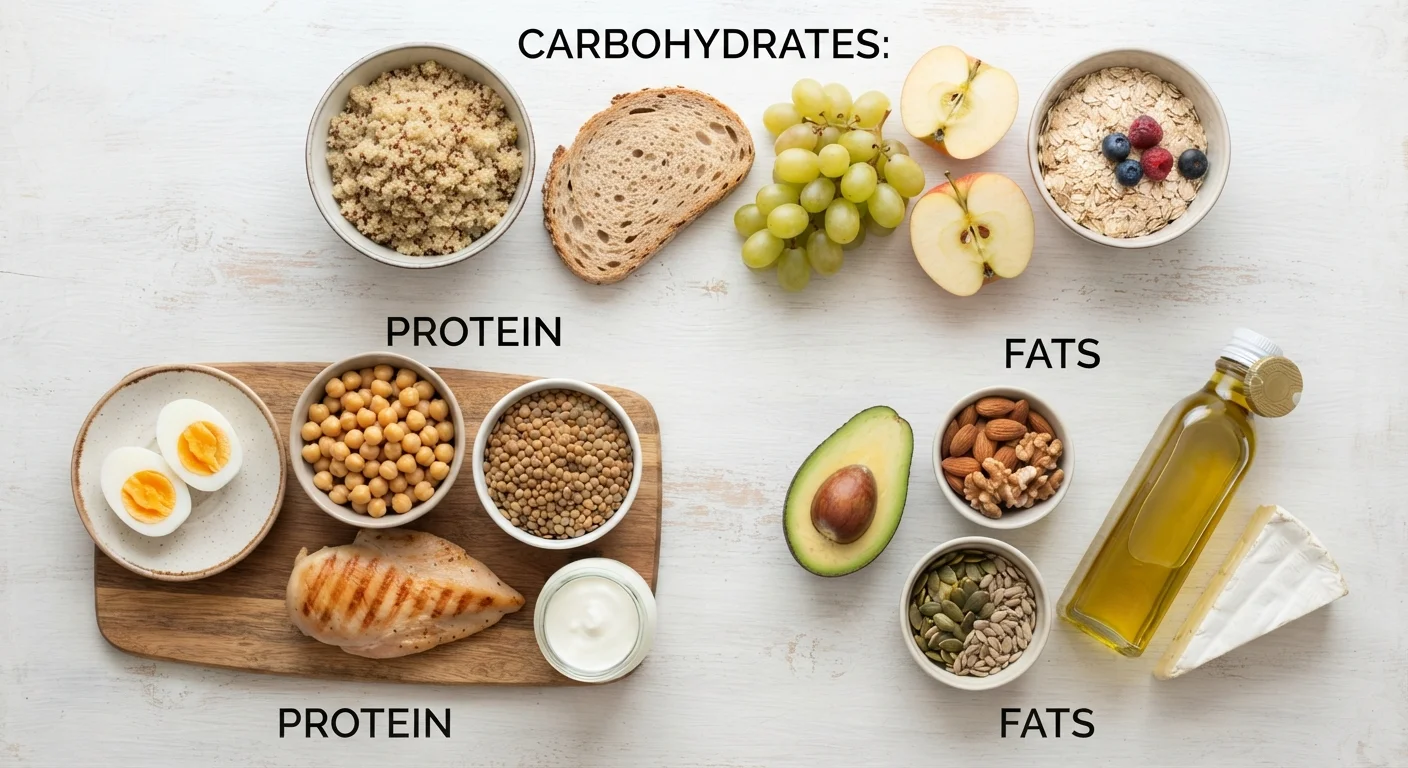
Carbohydrates: Your Body's Preferred Fuel
Carbohydrates are the body's fastest and most readily available energy source. When you eat carbs - whether from oats, beans, fruit, or bread - your digestive system breaks them down into glucose. That glucose enters the bloodstream and is used by cells for energy, with any surplus stored in the liver and muscles as glycogen for later use.
The brain is especially dependent on glucose; it uses roughly 20% of the body's total energy and has a strong preference for this fuel. This is why very low-carbohydrate diets can initially cause mental fogginess in some people as the body adapts.
Not all carbohydrates behave the same way. Simple carbohydrates - found in table sugar and many processed foods - are digested quickly, causing faster rises in blood sugar. Complex carbohydrates - found in whole grains, legumes, and vegetables - digest more slowly, providing more sustained energy and contributing dietary fiber. Fiber supports digestive health, helps regulate blood sugar, and is associated with reduced risk of several chronic diseases.
Choose Fiber-Rich Carbohydrate Sources
When building meals around carbohydrates, whole foods like vegetables, legumes, fruit, and intact whole grains provide fiber that refined versions lack. Fiber slows digestion, supports gut health, and helps you feel full longer. Reading ingredient labels can help you distinguish whole-grain products from those that are simply dyed brown or labeled 'wheat.'
Protein: Building and Repairing Every System
Protein does far more than build muscle. It provides the amino acids your body uses to construct and repair virtually every tissue - from skin and hair to enzymes, hormones, and immune cells. Of the 20 amino acids the body uses, nine are classified as essential, meaning the body cannot synthesize them and must obtain them from food.
Complete protein sources - such as eggs, poultry, fish, dairy, and soy - contain all nine essential amino acids. Plant-based sources like legumes, nuts, and grains are often incomplete individually, but eating a variety of plant foods across the day can reliably meet amino acid needs without animal products.
Protein also plays a role in satiety. It is generally the most filling macronutrient gram for gram, which is one reason higher-protein meals are often associated with reduced hunger between eating occasions - though individual responses vary.
4 kcal
Energy per gram of carbohydrate or protein
Established by the Atwater general factors used in standard nutrition labeling - both macronutrients yield the same caloric density.
9 kcal
Energy per gram of dietary fat
Fat is more than twice as calorie-dense as carbohydrates or protein, which explains its outsized role as a long-term energy reserve.
9
Essential amino acids humans must obtain from food
According to the National Institutes of Health, the body cannot synthesize these amino acids and relies entirely on dietary intake to meet its needs.
Dietary Fat: Much More Than an Energy Reserve
Fat has a complicated reputation, but it is essential to human health. It serves as a concentrated energy source, provides structural material for every cell membrane in the body, and is required for the absorption of fat-soluble vitamins A, D, E, and K. Fat also supports the production of hormones, including sex hormones and those that regulate inflammation.
The type of fat matters considerably. Unsaturated fats - found in olive oil, avocados, nuts, and fatty fish - are associated with cardiovascular benefits in a large body of research. Saturated fats - found in red meat and full-fat dairy - have a more complex relationship with heart health. Trans fats, largely from partially hydrogenated oils, are associated with increased cardiovascular risk and have been substantially removed from the US food supply through regulatory action. For a detailed breakdown, see our guide to dietary fat types.
“The evidence consistently shows that the overall dietary pattern matters more than any single nutrient in isolation. Diets built around a variety of whole foods - with all three macronutrients represented - tend to support the best long-term health outcomes.”
— Walter Willett, Professor of Epidemiology and Nutrition, Harvard T.H. Chan School of Public Health
How the Three Macronutrients Work Together
No single macronutrient works in isolation. A meal that combines carbohydrates, protein, and fat tends to digest more slowly than a carbohydrate-only meal, helping moderate blood sugar response and prolong satiety. Fat and protein essentially act as a buffer, slowing the rate at which glucose enters the bloodstream.
Macronutrients also work alongside micronutrients - the vitamins and minerals your body needs in smaller amounts - to support metabolism, immunity, and cellular repair. Nutrition science consistently shows that dietary patterns matter more than fixating on any single nutrient. Varied, whole-food diets that include all three macronutrients in reasonable proportions are associated with better long-term health outcomes across multiple population studies.
If you have specific health goals, medical conditions, or dietary restrictions, a registered dietitian can provide guidance tailored to your circumstances. General population-level guidelines, such as those from the Dietary Guidelines for Americans, offer a useful starting point for most adults.
This article is for general informational and educational purposes only and is not a substitute for professional medical or nutritional advice. Always consult a qualified healthcare provider before making significant changes to your diet.
Frequently Asked Questions
Most people do not need to track macronutrients precisely. Focusing on whole, minimally processed foods across all three categories is an evidence-supported approach for general health. Tracking may be useful for specific goals, but it isn't necessary for everyone - consult a registered dietitian if you want personalized guidance.
All three are essential - your body cannot function optimally without adequate carbohydrates, protein, and fat. Eliminating any one macronutrient entirely is generally not supported by mainstream nutrition science. The balance that works best can vary by individual and health status.
No. Carbohydrates range from fiber-rich vegetables, legumes, and whole grains to refined sugars and processed starches. The source and fiber content of carbohydrates significantly affect how they impact blood sugar and overall health. Most dietary guidelines recommend prioritizing complex, fiber-rich carbohydrates.
General guidance from nutrition bodies suggests roughly 0.8 grams of protein per kilogram of body weight per day for sedentary adults, though needs can increase with physical activity, age, or certain health conditions. A healthcare provider or registered dietitian can help determine what's appropriate for your situation.
Fat is calorie-dense, but eating fat does not automatically cause weight gain - overall calorie balance, food quality, and lifestyle factors all play a role. Healthy fat sources like nuts, fish, and avocado are associated with favorable health outcomes in many studies.
Macronutrients are consumed in gram-level quantities and provide energy; micronutrients (vitamins and minerals) are needed in much smaller amounts and do not directly supply calories but are critical for countless body processes. See our <a href="/health-wellness/nutrition-basics/micronutrients-the-vitamins-and-minerals-your-body-cant-make-on-its-own">guide to micronutrients</a> for a deeper look.
The content on this site is for informational purposes only and is not a substitute for professional advice. Always consult a qualified professional for guidance specific to your situation.