

Why Waterproofing Fails Quietly
Water intrusion doesn't usually announce itself with a sudden flood. More often, it works slowly - seeping through microscopic cracks, bypassing degraded sealants, and saturating materials over months or years before visible damage appears. By the time you notice a water stain on drywall or a buckled floor, the underlying problem may already be well established.
Understanding the subtler signals that precede obvious damage is one of the most valuable skills a homeowner can develop. As part of broader home maintenance awareness, recognising these early warning signs gives you the opportunity to act before repair costs escalate. The list below covers the most common - and commonly ignored - indicators that your home's waterproofing system may be compromised.
Inspect After Heavy Rain or Snowmelt
The best time to look for waterproofing warning signs is within 24-48 hours after significant rainfall or spring snowmelt, when moisture-related symptoms are most visible. Walk your basement perimeter, check crawl space access points, and look along foundation walls inside and out. Seasonal inspections catch problems when they are most apparent and easiest to diagnose.
7 Signs Your Waterproofing May Be Failing
Efflorescence on masonry or concrete surfaces
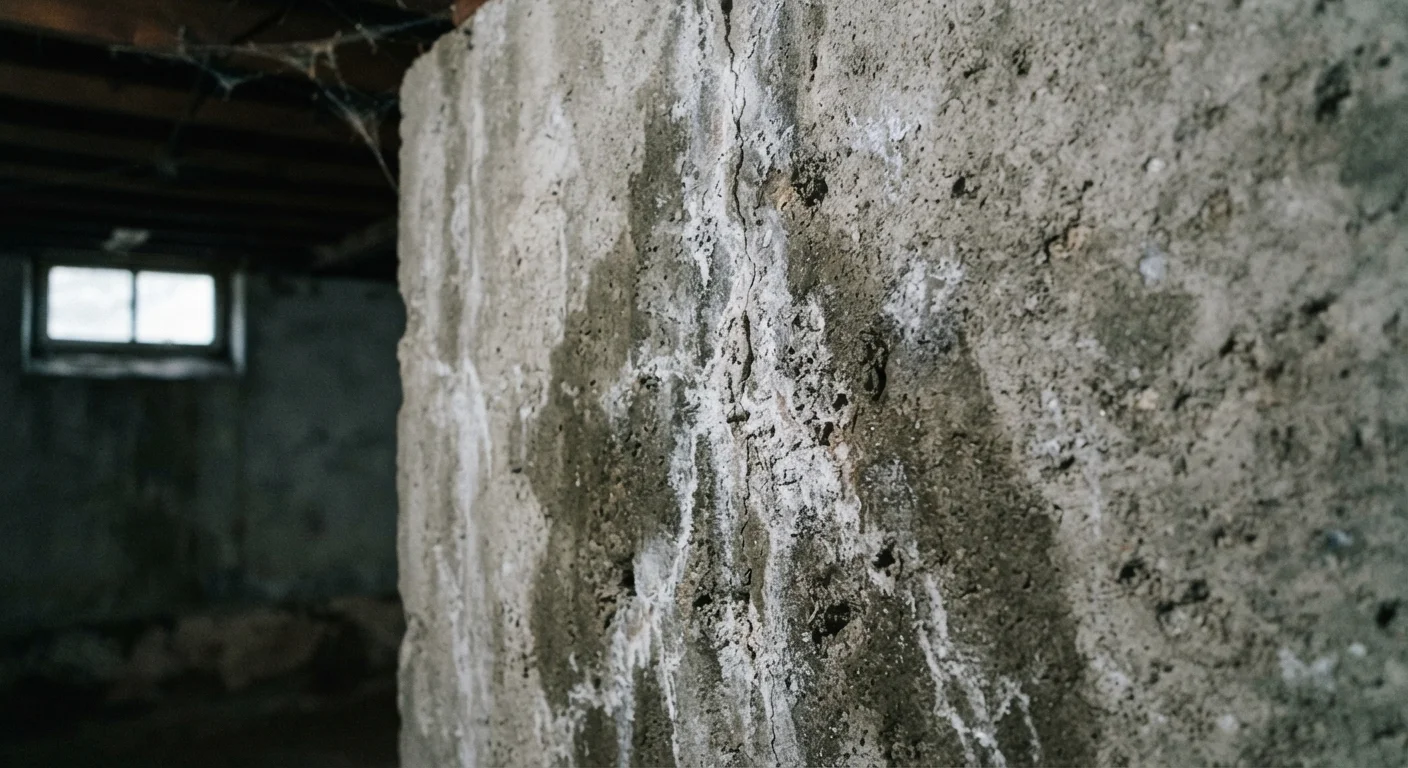
Efflorescence is the white, chalky or crystalline residue that appears on concrete, brick, or block walls. It forms when water moves through masonry, dissolves soluble salts within the material, and then deposits them on the surface as the water evaporates. While efflorescence itself is not structurally dangerous, it is direct physical evidence that liquid water is moving through your walls - a clear sign the waterproofing barrier has been breached or was never fully effective.
Look for it in basements, crawl spaces, foundation walls, and around window wells. A small patch that appears after a single rain event warrants monitoring; recurring or spreading deposits warrant professional evaluation.
Efflorescence is proof that liquid water is actively moving through your masonry walls.
Persistent musty or earthy odours
A musty smell in a basement, crawl space, or ground-floor room - especially one that intensifies after rain - strongly suggests elevated moisture levels and likely mould or mildew growth. Moulds that thrive in wet environments produce volatile organic compounds (VOCs) responsible for that distinctive earthy scent, often before any visible growth is apparent.
This sign is particularly easy to dismiss or attribute to old furniture or poor ventilation. But if the odour returns after airing out a space, water intrusion rather than simple stuffiness is the more probable cause. The guide to reading your home's warning signs covers how musty smells rank in urgency alongside other common symptoms.
A musty odour that returns after ventilation is more likely a moisture problem than a simple air quality issue.
Hairline cracks in foundation walls or floors
Not all foundation cracks are structural emergencies, but all of them deserve attention from a waterproofing perspective. Hairline cracks - thin, surface-level fractures in poured concrete or block walls - can allow water to wick through even when they appear cosmetically minor. Horizontal cracks, stair-step cracks in block foundations, and cracks that are wider at one end than the other may indicate more serious movement and should be assessed by a structural engineer or licensed contractor.
Monitor any crack you find by marking its ends with pencil and dating your mark. If the crack grows in length or width over several months, that progression indicates ongoing movement that needs professional diagnosis - not just sealant.
Hairline cracks may look minor but can act as direct water pathways into your home's structure.
Peeling paint or bubbling on basement walls
Paint on interior masonry walls bubbles or peels when moisture migrates through the wall from outside, accumulating behind the paint film. Many homeowners respond by scraping and repainting - which addresses the appearance but not the source. If the new paint shows the same blistering within a season or two, that cycle is a reliable indicator of ongoing moisture intrusion rather than a painting quality issue.
This symptom is especially common in basements where waterproof paint was applied directly to the interior surface as a standalone solution. Interior coatings can reduce minor dampness but are not substitutes for exterior drainage and membrane systems when genuine hydrostatic pressure is present.
Recurring paint blistering on basement walls signals a moisture problem that repainting alone cannot solve.
Rust stains or staining around fasteners
Orange or brown rust streaks running down a concrete or masonry wall often originate from embedded metal - rebar, tie rods, or anchor bolts - that have been reached by moisture. When water penetrates to the level of steel reinforcement, the metal oxidises and expands, which can eventually cause the surrounding concrete to crack or spall (chip and flake away).
Rust staining that appears suddenly, or that is accompanied by concrete surface flaking, indicates that water has already infiltrated beyond the surface layer. This condition warrants prompt professional assessment, as deteriorating reinforcement can compromise structural integrity over time.
Rust streaks on concrete walls suggest water has reached embedded metal, potentially threatening structural integrity.
Damp or cold spots on interior walls
Running your hand along a basement or lower-level wall and finding areas that feel noticeably cooler or damp to the touch - without any visible moisture - can point to water behind or within the wall assembly. Thermal bridging through wet insulation or saturated masonry creates these cool zones. In some cases, a thermal imaging camera (available through professionals) can map moisture distribution invisibly within wall cavities.
Pay particular attention to areas below grade, around pipe penetrations, and near corners where two walls meet - locations where waterproofing membranes or sealants are more likely to have gaps, tears, or inadequate lapping.
Cool, damp wall patches invisible to the eye can indicate hidden moisture accumulation behind the surface.
Water pooling near the foundation after rain
Exterior grading that directs water toward the house - rather than away from it - is one of the most common contributors to basement and crawl space moisture problems. If you notice puddles forming against your foundation wall after rain, or soil that stays saturated close to the house for days, your drainage and grading may be directing water pressure against your waterproofing system repeatedly with every storm.
Ideally, the ground should slope away from the foundation at least six inches over the first ten horizontal feet. Gutters that discharge near the foundation, clogged downspout extensions, and compacted soil that doesn't drain well all compound the problem. These exterior conditions accelerate waterproofing wear from the outside in.
Water pooling against your foundation after rain puts sustained pressure on waterproofing systems with every storm.
When to Call a Professional
Several of the signs listed here - particularly foundation cracks, rust staining on concrete, and recurring moisture despite surface treatments - require assessment by a licensed waterproofing contractor or structural engineer. Attempting to seal active water intrusion from the interior without understanding the source can trap moisture within wall assemblies and worsen conditions. Always verify whether your local jurisdiction requires permits for drainage system installation or foundation work before any remediation begins.
What to Do When You Spot These Signs
Identifying a warning sign is only the first step. Once you suspect waterproofing failure, avoid the temptation to paint over stains or apply surface sealers without addressing the source - a mistake explored in our article on home maintenance myths. Surface treatments rarely stop active water movement from outside the building envelope.
Instead, document the location, photograph the affected area, and note whether the symptom worsens after rain or humid weather. This information helps a licensed waterproofing contractor diagnose the source accurately. For issues that may also involve your roof or upper structure, our guide on how small roof leaks escalate explains how water can travel significant distances from its entry point before surfacing indoors.
When in doubt, consult a qualified professional. Waterproofing work that involves excavation, drainage systems, or structural elements typically requires permits and licensed trades - always verify your local code requirements before any remediation begins.
The content on this site is for informational purposes only and is not a substitute for professional advice. Always consult a qualified professional for guidance specific to your situation.