

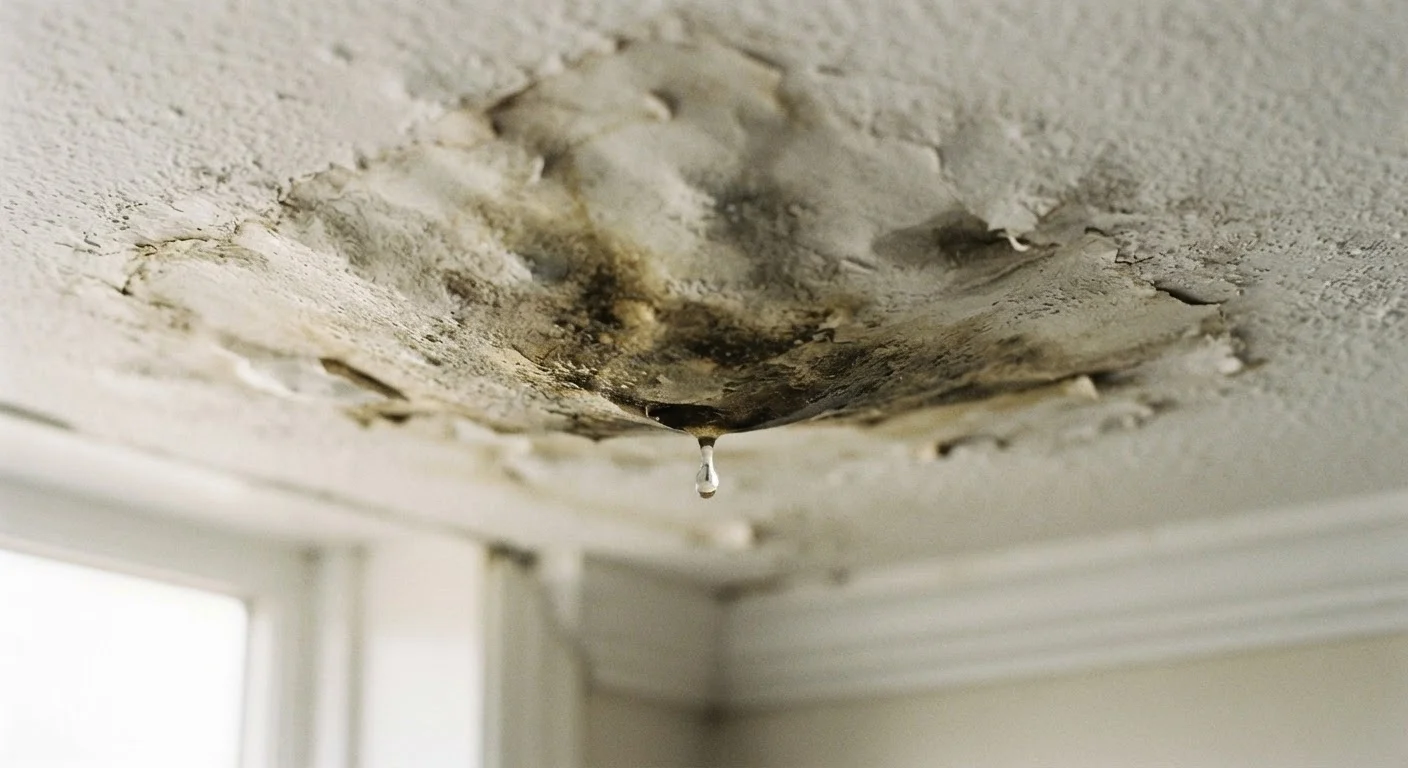
How a Drip Becomes a Disaster
Water is patient. A hairline crack in flashing or a single missing shingle may admit only a small amount of moisture during each rain event - but that moisture doesn't stay put. It wicks into roof decking, travels along rafters, and saturates insulation long before it produces any interior sign. By the time a ceiling stain appears, a structural cascade has often already begun.
The journey typically follows three stages. First, the roof membrane or protective layer is compromised. Second, water saturates the underlying decking and framing. Third, interior materials - drywall, insulation, ceiling joists - absorb enough moisture to show visible or olfactory symptoms. Each stage compounds the next, and the gap between stages one and three can span an entire season.
The Leak Source Is Rarely Where You Think
Because water flows along framing and sheathing before dripping into living space, the interior stain or drip point is almost never directly below the actual roof penetration. A stain above a bedroom window might trace back to failed flashing on a chimney several feet upslope. Professional inspection with moisture meters is the most reliable way to pinpoint the true source.
Understanding how moisture spreads through a home's upper structure is closely related to how ventilation and insulation interact. See our article on ventilation, insulation, and damp in your roof space for the full picture.
The Structural Consequences of Sustained Moisture
Wood is the primary structural material in most American roofs, and it has a direct vulnerability to prolonged moisture: rot. Wood rot degrades the fibres that give lumber its load-bearing strength. Once rot establishes itself in rafters or ridge boards, those members can no longer safely carry the weight of the roof assembly above them. A roof that appears intact from the street may be quietly losing its structural integrity from within.
Alongside rot, mould is a near-certain companion to sustained dampness. Mould spores are present in most homes at background levels, but they need moisture and an organic surface - both of which a wet rafter provides - to colonise. Once established, mould can spread through insulation batts and into wall cavities, creating an air-quality problem that extends well beyond the roofline.
Insulation is the third casualty. Saturated fiberglass or cellulose insulation loses most of its thermal resistance and becomes a sponge that holds moisture against framing for extended periods, accelerating rot rather than preventing it. This contributes to higher energy bills - often one of the first measurable symptoms a homeowner notices. For a broader view of how neglected maintenance costs compound, see the true cost of skipping routine home maintenance.
24-48 hrs
Time for mould to begin colonising damp materials
The EPA notes that mould can begin growing on wet building materials within one to two days under the right temperature and humidity conditions.
~40%
Thermal resistance lost by saturated insulation
Building science research consistently shows that water-logged fiberglass batts can lose the majority of their R-value, significantly reducing a home's energy efficiency.
Top 3
Ranking of water damage among homeowners insurance claims
Water damage and freezing consistently rank among the most frequent and costly categories of homeowners insurance claims, according to industry loss data.
Common Entry Points Most Homeowners Overlook
Shingles themselves rarely fail first. The most frequent entry points for roof leaks are the transitional zones where roofing materials meet other elements: chimney flashing, step flashing along dormers, pipe boot seals around plumbing vents, and the valleys where two roof planes meet. These areas involve multiple materials and sealants that degrade at different rates, creating gaps that are invisible from ground level.
Gutters also play a direct role. When gutters are clogged or pulling away from the fascia, water backs up under the first course of shingles - a condition called ice damming in cold climates, or simply overflow infiltration in warmer ones. Our companion article on why gutters matter more than most homeowners realise covers exactly how this mechanism works and what it costs when ignored.
Schedule a Roof Check Every Autumn
A brief annual inspection - either by a licensed roofer or a careful self-inspection from ground level with binoculars - catches failing flashing, cracked pipe boots, and lifted shingles before winter precipitation exploits them. Pay particular attention to all penetrations and valleys, as these are statistically the most common failure points. Pair this with a gutter cleanout to eliminate overflow risk.
When to Call a Professional - and What to Do in the Meantime
If you spot a water stain on your ceiling or detect a musty smell in an upper room, the priority is limiting further water entry while you arrange a professional inspection. Placing a bucket is a temporary measure; tarping an accessible, low-slope section of roof with weighted-down plastic sheeting can limit additional infiltration until help arrives. Do not attempt to access steep-pitch roofs, and be aware that wet roof surfaces are extremely slick.
A licensed roofing contractor can trace the true leak source using attic inspection and moisture meters, assess whether decking or framing has been compromised, and advise on whether a repair or partial replacement is appropriate. For widespread waterproofing concerns that go beyond the roof itself, signs your home's waterproofing is failing outlines the broader signals worth knowing. Always verify whether your local jurisdiction requires permits for structural roof repairs before work begins.
Frequently Asked Questions
Damage timelines vary by leak size and climate, but wood rot can begin within days of sustained moisture exposure. Mould colonies can establish within 24 to 48 hours in warm, damp conditions. What feels like a slow drip can cause significant hidden damage within a single season.
Minor tasks like replacing a few damaged shingles or resealing flashing may be manageable for a confident DIYer on a low-slope roof. However, work on steep pitches, near electrical components, or involving structural members should be handled by a licensed roofing contractor. Always prioritise safety and verify whether local permits are required.
Because water travels along framing before dripping, the stain on your ceiling is rarely directly below the entry point. Start by inspecting flashing around chimneys, vents, and skylights, as these are the most common failure points. A professional can use moisture meters and attic inspection to trace the true source.
Coverage depends heavily on your specific policy and the cause of the leak. Sudden damage from a storm event is often covered, while damage attributed to long-term neglect or gradual deterioration typically is not. Review your policy carefully and consult your insurer before making assumptions about what's covered.
Early signs include water stains or discoloration on ceilings, peeling paint near exterior walls, musty odours in upper rooms or the attic, and unexplained spikes in heating or cooling costs. Catching these signals early dramatically limits repair scope.
The content on this site is for informational purposes only and is not a substitute for professional advice. Always consult a qualified professional for guidance specific to your situation.