

Why Radiators Trap Air - and Why It Matters
Over time, small amounts of air naturally enter a central heating system through the water supply or minor leaks. That air rises and collects at the highest point inside each radiator, creating a pocket that prevents hot water from filling the whole panel. The result is a radiator that feels warm at the bottom but cold across the top - a common and fixable problem.
Leaving trapped air unaddressed forces your boiler to work harder to maintain room temperature, which can increase energy consumption and wear on the system. In some cases, persistent cold spots can also contribute to internal corrosion over many heating seasons. Bleeding radiators once a year - typically at the start of the heating season - is a simple habit that supports the long-term health of your system.
If you're building your broader home upkeep knowledge, this task is also covered in our first-time homeowner maintenance guide, which puts seasonal checks like this in helpful context. And if you're curious about other DIY-friendly plumbing tasks, see our guide on plumbing maintenance you can reasonably do yourself.
Radiator bleed key
Fits into the square bleed valve socket to open and close it in controlled increments.
Old cloth or small towel
Placed under and around the bleed valve to catch water and protect flooring.
Small bowl or tray
Collects the water that flows out once all trapped air has been released.
Rubber gloves
Protects hands from any residual heat or discoloured system water.
How to Bleed Your Radiators: Step-by-Step
Work through each radiator in the house - starting on the ground floor and moving upward. This sequence helps push air out of the system more efficiently. Before you begin, confirm your heating has been off long enough for all radiators to be cool to the touch.
What you will need
Turn off your central heating
Switch off your central heating system and allow all radiators to cool completely - usually 30 to 60 minutes. Working on a hot radiator risks burns from escaping steam or scalding water.
Identify which radiators need bleeding
Before the system cools, turn the heating on briefly and feel across each radiator. Any that are significantly cooler at the top than the bottom are likely holding trapped air and should be added to your list. Then turn the heating off again and wait for them to cool.
Prepare your workspace
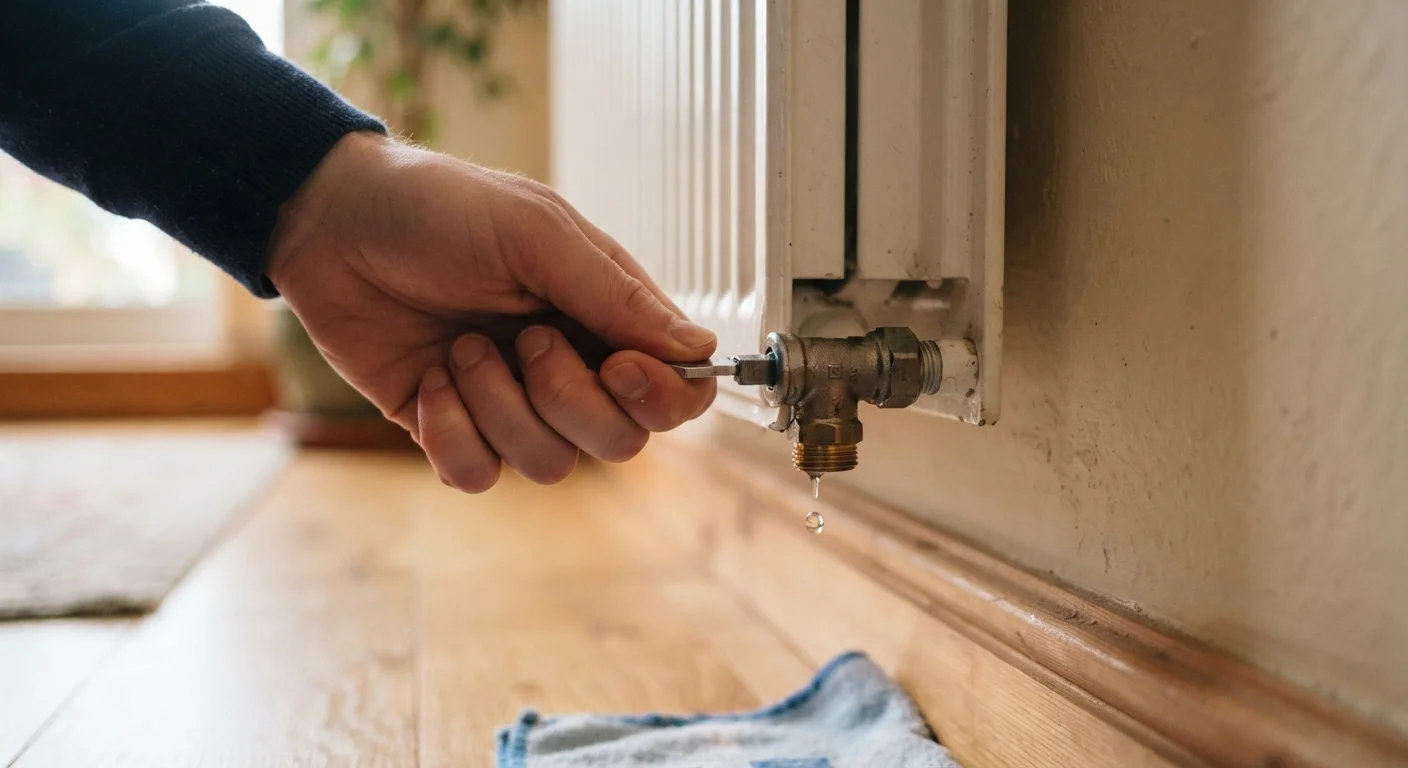
Place an old cloth or small tray under the bleed valve of the first radiator. The bleed valve is a small square-headed fitting, usually located at one of the top corners of the radiator panel. Have your bleed key ready.
Open the bleed valve slowly
Insert the bleed key into the valve socket and turn it counterclockwise - a quarter to half a turn is usually enough. You should hear a hissing sound as air escapes. Keep the key in the valve and hold your cloth close to catch any drips.
Wait for water to flow steadily
Allow air to escape until a thin, steady stream of water begins to flow - this signals that all trapped air in that radiator has been released. The water may appear slightly discoloured or rusty, which is normal for an older system.
Close the valve firmly
Once water flows steadily, turn the bleed key clockwise to close the valve. Tighten it until snug - do not over-tighten, as the valve seat can be damaged. Wipe away any drips with your cloth and check the area for leaks before moving on.
Repeat for all remaining radiators
Move to the next radiator on your list, working from the ground floor upward. Repeat steps 3 through 6 for each one. Having a consistent routine across all radiators ensures the whole system benefits.
Annual Bleeding Keeps Your System Efficient
Most heating engineers recommend bleeding radiators at least once a year, ideally before cold weather arrives. Making it part of a seasonal checklist - alongside checking smoke alarms and inspecting door seals - means the task rarely gets overlooked. A well-maintained system distributes heat more evenly and places less strain on the boiler over time.
Discoloured Water Is Normal - Extensive Rust Is Not
A small amount of dark or brownish water when bleeding is typical and does not indicate a serious problem on its own. However, if you notice heavy black sludge, the system may have significant corrosion build-up. In that case, a professional power flush - carried out by a qualified heating engineer - may be needed to restore performance and protect the boiler.
After Bleeding: Checking Boiler Pressure
Once you have bled all the radiators, check your boiler's pressure gauge. Releasing air from the system reduces the water volume slightly, which can cause pressure to drop below the normal operating range - typically between 1 and 1.5 bar when the system is cold, though you should consult your boiler's manual for the exact recommended range.
If pressure has fallen below the minimum, you will need to top it up using the boiler's filling loop - a small flexible hose that connects the mains cold water supply to the heating circuit. The process varies slightly by boiler model, so refer to your manual or the label on the boiler casing. If you are unsure or the pressure continues to drop repeatedly after bleeding, contact a Gas Safe registered engineer to inspect the system.
It is also worth noting that a boiler that needs frequent pressure top-ups, or radiators that seem to fill with air again quickly, may point to an underlying issue such as a leak or a faulty pressure relief valve. These go beyond bleeding and should be assessed by a qualified professional. For perspective on how common maintenance misunderstandings can quietly cause harm, see our article on home maintenance myths that lead to avoidable damage.
The content on this site is for informational purposes only and is not a substitute for professional advice. Always consult a qualified professional for guidance specific to your situation.