

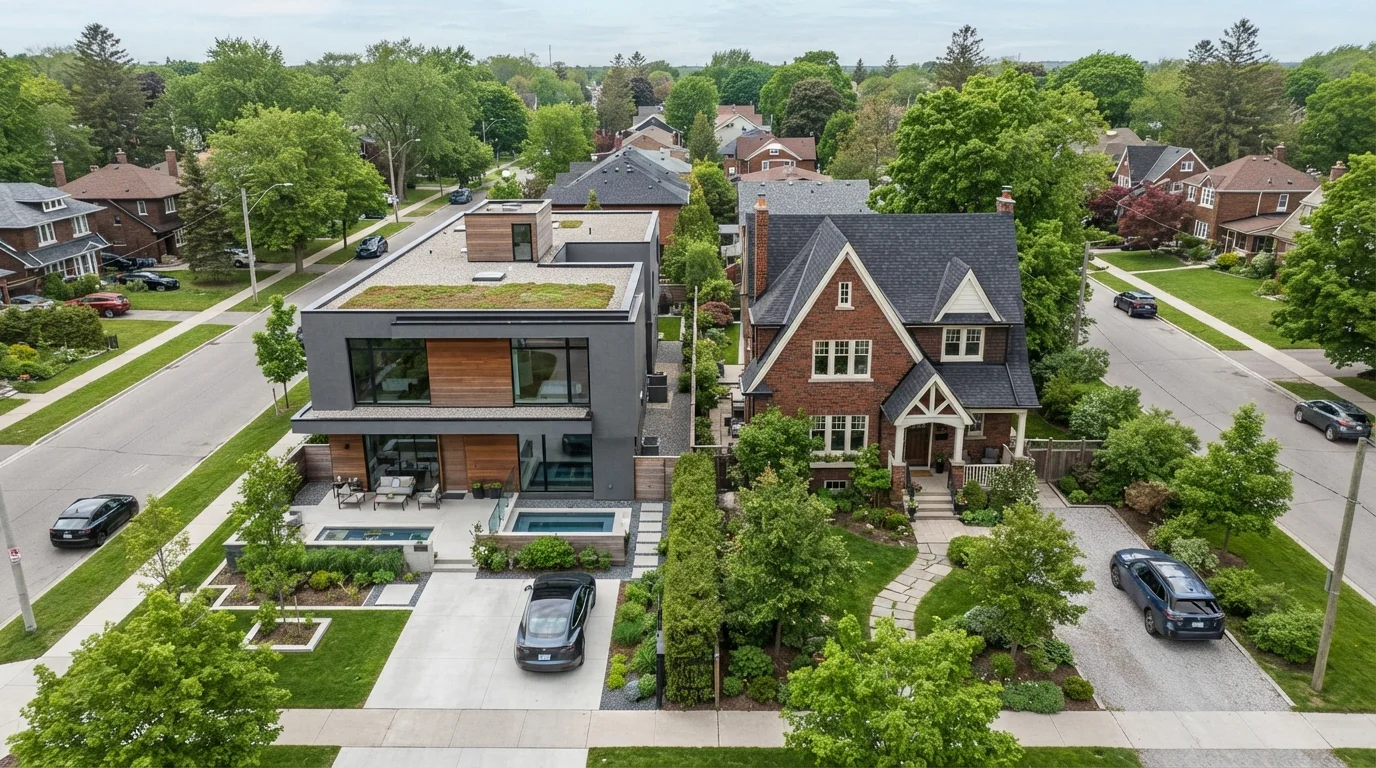
Our Verdict
Neither roof type is universally lower-maintenance - each demands attention in different areas. Flat roofs require vigilant drainage monitoring and membrane care, while pitched roofs need consistent attention to shingles, flashing, and attic ventilation. Understanding your specific roof's vulnerabilities is the foundation of effective upkeep.
| Best for | Recommended |
|---|---|
| Homeowners who prefer straightforward surface access for inspections | Flat Roof |
| Those in regions with heavy rain or snowfall seeking efficient water shedding | Pitched Roof |
| Homeowners wanting lower long-term membrane replacement costs | Pitched Roof |
| Urban or modern homes where rooftop space is a design priority | Flat Roof |
How Each Roof Type Handles Water
Water management is where flat and pitched roofs diverge most sharply. A pitched roof uses gravity to move rain and snowmelt quickly toward gutters and downspouts. The steeper the slope, the faster water clears the surface. This makes pitched roofs naturally resilient against standing water - a primary cause of roof deterioration.
Flat roofs are not truly flat; they typically have a slight slope (called a fall) of around 1:80 or more to encourage drainage toward internal drains or scuppers. However, even small obstructions - debris, a sunken section, or a clogged drain - can cause water to pool. Standing water accelerates membrane wear, adds structural load, and increases leak risk significantly.
For flat-roof homeowners, keeping drains and scuppers clear is a non-negotiable maintenance task. See our guide to gutters and drainage for related context on what happens when water management fails.
| Flat Roof | Pitched Roof | |
|---|---|---|
| Water drainage | Relies on drains/scuppers; pooling risk | Gravity-fed; efficient runoff |
| Inspection frequency | Biannual minimum; after storms | Biannual; after severe weather |
| Primary failure point | Membrane seams and ponding | Shingles and flashing joints |
| Ventilation requirements | Minimal roof space; critical insulation design | Attic ventilation essential |
| Typical material lifespan | 10-25 years (membrane dependent) | 20-30 years (shingle dependent) |
| DIY inspection access | Relatively accessible surface | Requires caution; slope hazard |
| Snow load risk | Higher; removal may be needed | Lower; snow sheds naturally |
Inspection Priorities by Roof Type
Knowing what to look for - and how often - is essential for both roof types. Biannual inspections, typically in spring and fall, form the backbone of a sound maintenance routine. Our seasonal home maintenance guide can help you integrate roof checks into a broader annual schedule.
Flat Roof Inspection Focus Areas
- Membrane condition: Look for blistering, cracking, or seam separation in materials such as EPDM (ethylene propylene diene monomer rubber), TPO (thermoplastic polyolefin), or built-up roofing.
- Drainage points: Confirm drains and scuppers are unobstructed before and after heavy rainfall seasons.
- Flashings around penetrations: HVAC units, vents, and skylights are common leak entry points.
- Ponding water signs: Water stains or algae growth indicate persistent pooling.
Pitched Roof Inspection Focus Areas
- Shingle integrity: Check for cracked, curled, missing, or granule-shedding shingles.
- Flashing at valleys and joints: Deteriorated flashing around chimneys, dormers, and roof-wall junctions is a leading cause of leaks.
- Ridge and hip condition: These high-exposure areas weather quickly.
- Soffit and fascia: Rot or damage here often signals moisture intrusion from the roof edge.
Inspect After Every Significant Storm
Both flat and pitched roofs are most vulnerable immediately after heavy rain, hail, or high winds. A quick visual check from the ground - looking for displaced materials, debris buildup near drains, or visible sagging - can catch issues before they worsen. Follow up with an interior attic or ceiling check for new staining or moisture.
Ventilation, Insulation, and Long-Term Wear
Pitched roofs have an attic or roof space that, when properly ventilated, dramatically extends roof life. Without adequate airflow, heat and moisture build up beneath the roof deck - causing sheathing to rot, insulation to lose effectiveness, and shingles to age prematurely from below. Our article on ventilation, insulation, and damp explores exactly how these factors interact.
Flat roofs face a different challenge: because insulation is often laid within or directly beneath the roof assembly, moisture trapped in the system can degrade insulation performance and cause the membrane to delaminate. This is why flat roof materials and their installation quality matter enormously at the outset.
In terms of lifespan, pitched roofs with quality asphalt shingles typically last 20-30 years with consistent maintenance. Flat roof membranes generally range from 10-25 years depending on material and maintenance history. Both types benefit significantly from prompt attention to minor issues before they escalate. For a broader look at exterior upkeep considerations, see keeping your home's exterior in good shape.
Don't Ignore Ponding Water on Flat Roofs
Water that remains on a flat roof for more than 48 hours after rainfall is considered ponding and should be investigated. Over time, even small amounts of standing water accelerate membrane degradation and add significant weight load to the structure. If you notice persistent pooling, have a qualified roofer assess the drainage slope and membrane integrity - do not assume it will resolve on its own.
Maintenance Costs and When to Call a Professional
Routine maintenance costs for both roof types are modest compared to the expense of water damage remediation or full replacement. However, repair unit costs differ. Flat roof membrane patching, re-sealing, or full replacement tends to be labour-intensive due to the precision required with seams and penetrations. Pitched roof repairs - replacing individual shingles or reflashing a chimney - are often more straightforward and can be completed by an experienced roofer in a shorter timeframe.
Some tasks on either roof type are firmly in professional territory. Work involving structural elements, electrical penetrations, gas flues, or any task requiring you to be on a roof without appropriate fall protection should always be handled by a licensed, insured roofing contractor. Permits may also be required for significant repairs or replacement depending on your local building code - always verify with your local authority before proceeding with major work.
As a general principle: inspect yourself from the ground and interior when possible; hire a qualified professional for any hands-on repair or closer assessment of membrane or shingle condition at height.
40%
Of building water damage linked to roofs
Water intrusion through the roof is consistently cited as one of the most common sources of structural water damage in residential buildings.
10-25 yrs
Typical flat roof membrane lifespan
Membrane longevity varies widely based on material type, installation quality, and how consistently drainage and surface issues are addressed.
The content on this site is for informational purposes only and is not a substitute for professional advice. Always consult a qualified professional for guidance specific to your situation.