

How Gutters Actually Work
A gutter system is straightforward in concept but precise in execution. Channels run horizontally along the roof's lower edge, catching water that runs off the roof surface. That water travels toward one or more downspouts - vertical pipes that carry it down and away from the home, ideally depositing it several feet from the foundation.
For this system to work properly, every component must be correctly sized, pitched, and connected. Gutters need a consistent downward slope toward each downspout - too flat and water sits; too steep and it rushes past debris rather than carrying it. Downspout extensions and splash blocks at ground level complete the path, directing water into the yard or a drainage system rather than straight down against the footing.
Why gutters matter more than most homeowners realise is a question worth sitting with - the system does invisible work every time it rains, and its failure tends to be equally invisible until the damage is already done.
$4,000-$10,000+
Average cost to repair foundation water damage
According to estimates from home repair cost databases, foundation repairs driven by water intrusion frequently run into the thousands - far exceeding years of routine gutter maintenance.
2×/year
Recommended minimum gutter cleaning frequency
Home maintenance guidelines from building industry organizations generally recommend cleaning gutters at least twice annually for the average home.
$150-$300
Typical cost of professional gutter cleaning
Professional gutter cleaning for a standard single-story home generally falls in this range, making routine service far less expensive than the damage it prevents.
Why Gutters Fail: The Most Common Causes
Gutter failure rarely happens all at once. It's usually an accumulation of small problems that compound over months or years.
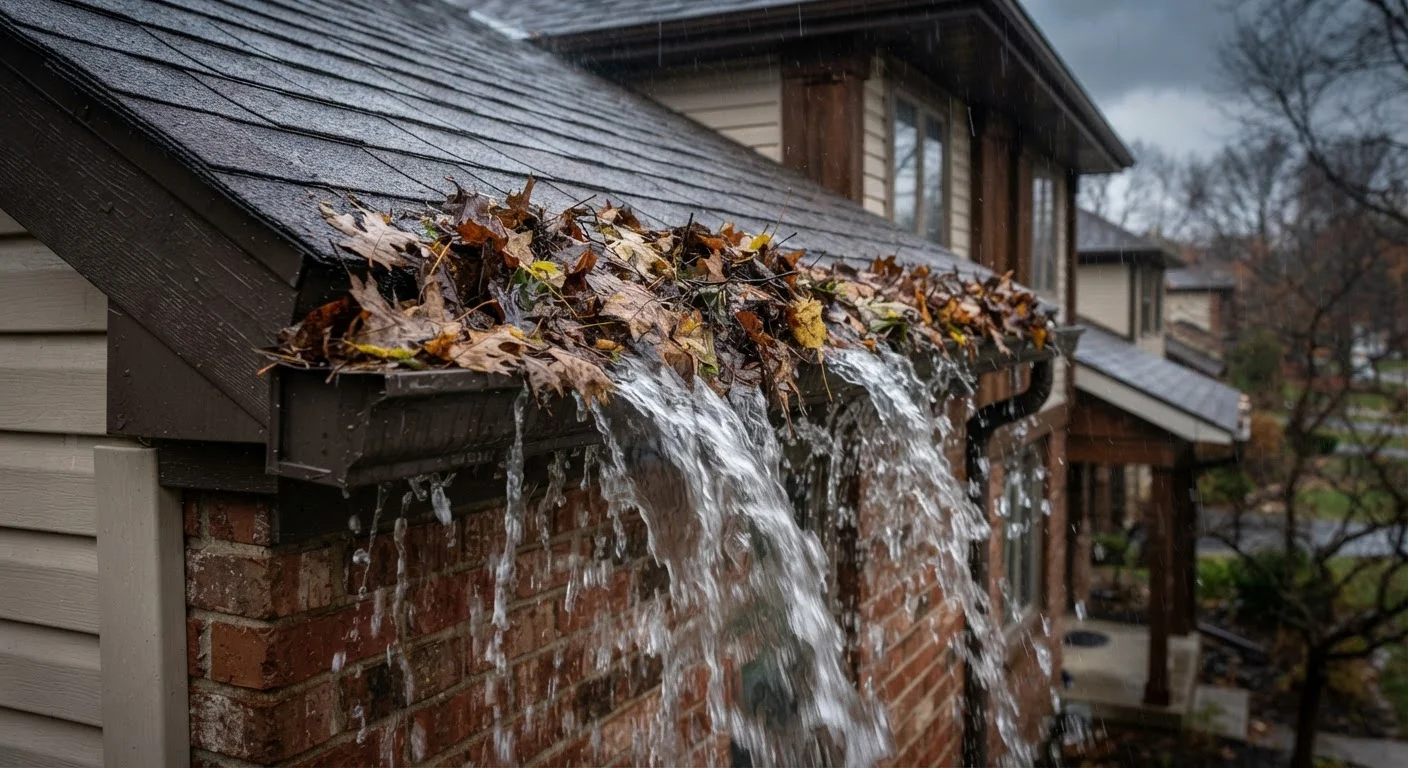
- Clogs: Leaves, twigs, shingle granules, and seed pods build up inside the channel, blocking flow. Water backs up and either overflows the front or seeps behind the gutter toward the fascia.
- Improper slope: Gutters that were installed without adequate pitch - or that have shifted over time - develop standing water zones. This accelerates corrosion in metal gutters and creates freeze-thaw stress in cold climates.
- Loose or failing fasteners: Spikes and hangers loosen with age and thermal expansion. A sagging gutter section doesn't drain correctly and puts mechanical stress on adjacent sections.
- Joint leaks: Sectional gutters joined with sealant eventually crack at the seams. Water drips steadily behind or below the gutter rather than reaching the downspout.
- Downspout blockages: A clear gutter channel means nothing if the downspout is blocked. Water backs up and the overflow lands directly against the foundation.
Understanding these failure points is central to how deferred home maintenance adds up - each overlooked issue quietly widens the repair bill.
Check Downspout Discharge, Not Just the Channel
Many homeowners clean the gutter channel but forget to verify that water is actually exiting the downspout and landing away from the home. Run a garden hose into the top of the downspout and watch where the water exits at ground level. It should discharge at least 4-6 feet from the foundation, ideally onto a splash block or into a drainage swale.
What Neglect Actually Costs You
The damage cascading from failed gutters moves in stages, and each stage is more expensive than the one before it.
Fascia and soffit rot is often the first casualty. Water that spills behind a clogged gutter saturates the fascia board - the horizontal trim the gutter is mounted to - and the soffit underneath. Wood rot here can spread to roof sheathing, turning a gutter repair into a partial roof repair. This connects directly to how small roof problems escalate into structural ones.
Foundation and basement issues follow when water pools at the base of the home repeatedly. Soil pressure from saturated ground pushes against foundation walls. Cracks form. Basement moisture or flooding becomes a recurring event rather than a one-off incident.
Landscape erosion is less catastrophic but cumulative. Concentrated water runoff carves channels through garden beds, washes away mulch, and can undermine patios and walkways near the house perimeter.
Exterior wall damage results when overflow runs down siding repeatedly. Paint peels, wood siding absorbs moisture and warps, and in some cases water finds its way into wall cavities - creating mold conditions that require professional remediation.
Ice Dams and Gutters in Cold Climates
In regions with sustained freezing temperatures, gutters can contribute to ice dam formation - a condition where meltwater from the upper roof refreezes at the cold eave and backs up under shingles. Gutters themselves don't cause ice dams (inadequate attic insulation and ventilation are the root cause), but debris-filled gutters can worsen the problem by trapping ice and adding weight to the roofline. If you live in a cold-weather region, clean gutters before winter and consult a roofing professional about your attic's thermal performance.
A Seasonal Maintenance Framework
Gutters don't need complicated care - they need consistent care. A twice-yearly routine catches the vast majority of problems before they develop into damage.
- Late spring: Clear out pollen, seed pods, and any debris that accumulated over winter. Check for freeze-thaw damage - sections that pulled loose, joints that cracked, or downspouts that separated from the wall.
- Late fall: After most leaves have dropped, remove debris and flush the system with a hose. Confirm water flows freely through every downspout. Check that downspout extensions are positioned to direct water away from the foundation.
- After major storms: A quick visual inspection takes minutes. Look for overflowing sections, standing water in channels, or sections visibly pulling away from the fascia.
If your home is surrounded by trees or you live in a region with heavy rainfall, consider increasing inspection frequency. It's also worth knowing how your roof type affects drainage behavior - flat and pitched roofs have meaningfully different maintenance profiles that can influence how gutters are sized and loaded.
Sealing minor joint leaks with appropriate gutter sealant is a reasonable DIY task. Anything involving fascia replacement, re-pitching the entire gutter run, or working at height on a two-story home is work better entrusted to a licensed professional. Always prioritize safety over cost savings when ladder height or structural work is involved.
Frequently Asked Questions
Most homes benefit from gutter cleaning twice a year - once in late spring and once in late fall after leaves have dropped. Homes surrounded by mature trees may need cleaning three or four times annually. Always inspect gutters after major storms as well.
Watch for water spilling over the sides during rain, sagging or pulling away from the fascia, peeling paint or rust stains on exterior walls, pooling water near the foundation, or visible plant growth inside the gutter channel. Any of these signals a maintenance need.
Yes. When gutters overflow, water pools directly against the foundation rather than being diverted away. Over time, this saturates the soil around the footing, which can lead to cracks, settling, and basement water intrusion - all expensive to repair.
Simple tasks like clearing debris or resealing a leaking joint are manageable DIY projects for confident homeowners. However, work involving ladder heights above one story, fascia replacement, or full system re-pitching is safer handled by a licensed professional.
Gutter guards significantly reduce how often debris accumulates, but they don't eliminate maintenance entirely. Fine particles, shingle grit, and small seeds can still build up over time. Inspect guarded gutters at least once a year.
Sagging gutters create low spots where water pools instead of flowing toward the downspout. Standing water accelerates rust in steel gutters, attracts mosquitoes, and adds weight that can pull the gutter away from the fascia board - eventually damaging the roofline.
The content on this site is for informational purposes only and is not a substitute for professional advice. Always consult a qualified professional for guidance specific to your situation.