

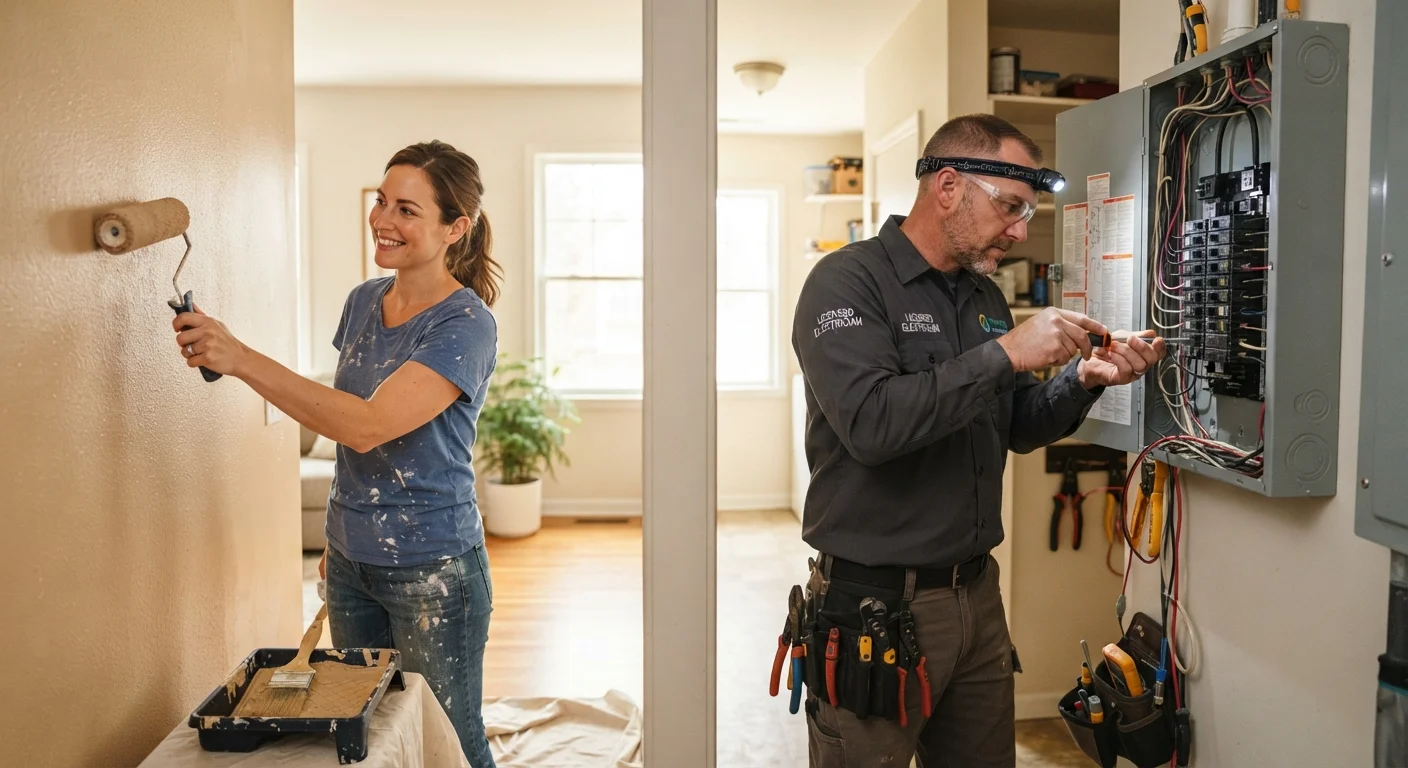
The Core Question: Risk, Regulation, and Skill
Every homeowner faces the same recurring decision: roll up your sleeves or pick up the phone? The answer depends on three overlapping factors - the physical risk of the task, whether local codes require a licensed trade, and whether you have the skill and tools to do the job correctly the first time.
Low-risk, non-regulated tasks that require common tools are generally fair game for DIY. Think painting interior walls, replacing a faucet washer, installing a ceiling fan where the circuit already exists, or patching drywall. These jobs have a manageable learning curve, modest consequences if you make a minor error, and no permit requirement in most jurisdictions.
Once a project crosses into electrical panels, gas lines, load-bearing structures, or mains plumbing, the calculus changes entirely. Errors in these systems can cause fires, flooding, structural collapse, or carbon monoxide exposure - outcomes no YouTube tutorial can adequately prepare you for. See our framework for evaluating any project for a structured way to think through the decision.
Tasks That Are Generally Safe for Homeowners
The following categories of work are commonly handled by motivated, careful homeowners without professional assistance:
- Interior painting and wallpaper removal - minimal hazard, reversible mistakes
- Replacing fixtures - light switches (with power off at the breaker), faucets, showerheads, and toilet flappers
- Caulking and weatherstripping - seasonal maintenance that saves energy
- Basic landscaping - planting, mulching, lawn care, and minor grading away from the foundation
- Gutter cleaning and minor roof inspection - provided you are comfortable and safe on a ladder
- Cabinet hardware and trim work - cosmetic improvements with low structural impact
Even on safe tasks, read the relevant local building code summary before you start. Some municipalities require permits for work that seems straightforward - such as adding a new circuit, even if you feel qualified. Our guide to when permits are required can help you avoid costly surprises.
When the Phone Call Is Non-Negotiable
Certain categories of work carry risks or legal requirements that put them firmly in professional territory for most homeowners:
Always hire a licensed electrician for panel work, new circuits, and wiring changes.
Electrical faults are a leading cause of house fires in the US. Panel work involves live wiring at high amperage that can cause electrocution or fire even when the main breaker appears off. Most jurisdictions require permits and licensed labor for this work.
Leave all gas line work - connections, extensions, and appliance hookups - to a licensed plumber or gas technician.
A gas leak can cause explosions, fires, or carbon monoxide poisoning. Even a small improper connection at a fitting can go undetected until it becomes catastrophic. Most states require licensed contractors and inspections for gas work.
Do not remove or modify load-bearing walls without a structural engineer's assessment.
Load-bearing walls carry the weight of the floors and roof above them. Removing one without proper support can cause partial or full structural collapse. Identifying which walls are load-bearing is not always intuitive, especially in older or remodeled homes.
Call a licensed plumber for anything that connects to or modifies the main supply or drain stack.
Errors in main supply plumbing can cause water damage that affects multiple rooms or even neighboring units. Improper drain connections create sewer gas hazards and code violations that must be disclosed when selling a home.
Treat any suspected asbestos or lead paint as a professional remediation job, not a DIY project.
Disturbing asbestos-containing materials releases fibers that cause serious lung disease. Lead paint dust is a health hazard, particularly for children. Federal and many state laws regulate how these materials must be tested, contained, and removed.
Older homes add another layer of caution. If your home was built before 1980, disturbing walls, floors, or insulation without testing first is genuinely hazardous. Our article on working safely around older homes explains how to identify risk areas and what to do before you lift a tool.
Some projects look manageable but routinely catch homeowners off guard. For a closer look at common DIY traps, see the DIY jobs that regularly go wrong.
Permits Protect You, Not Just Inspectors
A permit creates an official record that the work was reviewed and meets current safety codes. This matters when you sell your home, file an insurance claim after damage, or need to verify the work years later. Skipping a required permit to save time or money can result in fines, mandatory tear-out, or sale complications. When a trade or contractor tells you a permit isn't necessary for regulated work, treat that as a warning sign.
Making the Call Confidently
If you're on the fence, consider two quick tests. First, ask: "What is the worst realistic outcome if this goes wrong?" A botched paint job costs an afternoon to redo; a faulty gas connection risks lives. Second, ask: "Does my municipality require a permit and licensed contractor for this work?" If yes, DIY is not a legal option regardless of your skill level.
~170,000
Home fires annually attributed to electrical failure
According to the U.S. Fire Administration, electrical fires account for a significant share of residential structure fires each year, underlining why panel and wiring work demands professional oversight.
Up to 30%
Potential home value impact from unpermitted work
Real estate professionals commonly note that unpermitted structural or systems work can complicate appraisals, trigger required remediation, and reduce a home's marketable value at sale.
For larger projects where you've decided professional help is the right call, understanding how contractors organize and price work will help you make informed decisions. Our guide to hiring a general contractor versus managing trades yourself walks through the real tradeoffs of each path.
DIY is a genuine and rewarding part of homeownership - but it works best when the scope is honest. Knowing where your skills and safety margin end is itself the most valuable skill a homeowner can develop.
The content on this site is for informational purposes only and is not a substitute for professional advice. Always consult a qualified professional for guidance specific to your situation.