

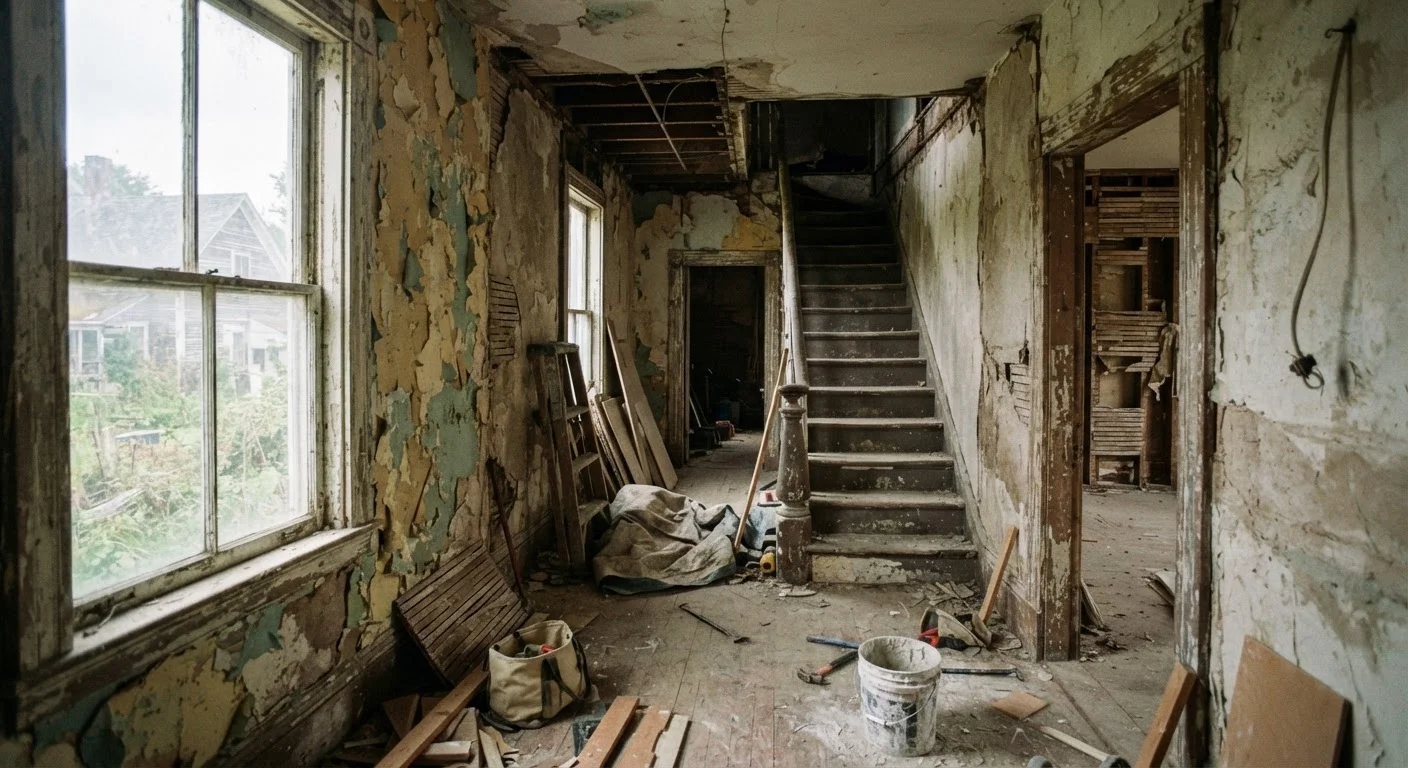
Why Older Homes Carry Hidden Risks
If your home was built before 1980, it may contain building materials that were later found to be hazardous to human health. Two of the most common are asbestos - a fibrous mineral once prized for fireproofing and insulation - and lead-based paint, which was widely used in residential construction until it was banned for that use in 1978.
These materials are not necessarily dangerous when left undisturbed. The risk arises when they are sanded, drilled, cut, or demolished - actions that release fine particles or dust into the air. Understanding where these materials are most likely to be found, and what to do before you pick up a tool, is the foundation of safe renovation work in an older home.
For a broader look at how your home signals problems that need attention, see Reading Your Home's Warning Signs Before They Become Emergencies.
Age Alone Is Not Proof - But It Is a Signal
The presence of asbestos or lead paint cannot be confirmed by visual inspection alone. A home built in 1965 might have had materials replaced over the decades, while a home built in 1979 may still have original hazardous materials intact. Age is a useful threshold for triggering caution, but only laboratory testing can confirm or rule out the presence of these substances.
Where Asbestos and Lead Paint Are Commonly Found
Asbestos was used in a surprisingly wide range of materials. Common locations include:
- Pipe and duct insulation (often gray or white wrapping)
- Floor tiles, especially 9×9 inch vinyl tiles and their adhesives
- Textured ceiling coatings ("popcorn" ceilings)
- Roofing shingles and siding (particularly cement-fiber products)
- Joint compound used in drywall finishing before the late 1970s
Lead paint is most likely present on:
- Window frames and sills, where friction surfaces wear paint down
- Door frames and baseboards
- Exterior siding and trim
- Stair railings and balusters
Exterior paint is particularly worth noting if you are planning any scraping or sanding work. The article Exterior Paintwork, Render, and Masonry: Knowing When Each Needs Attention covers how to recognize when paint problems require professional intervention.
~87%
US homes built before 1940 with lead paint
According to the U.S. Department of Housing and Urban Development, the vast majority of homes built before 1940 are estimated to contain lead-based paint.
1978
Year lead paint was banned in US housing
The Consumer Product Safety Commission banned lead-based paint for residential use in 1978; homes built at or before that date warrant testing before any surface disturbance.
Best Practices Before and During Any Renovation
Following a deliberate, step-by-step approach before disturbing any surfaces in an older home significantly reduces your health and legal risk.
Test before you touch - have suspect materials professionally sampled before any disturbance.
Visual identification of asbestos is unreliable; the only way to confirm its presence is through laboratory analysis of a physical sample. DIY lead test swabs can provide a quick preliminary screen for lead paint, but professional sampling is more accurate and may be required for regulated work. Starting work on an untested surface is the single highest-risk action a homeowner can take.
Contain the work area and prevent dust from spreading to other rooms.
Even when hazardous materials are not confirmed, older homes can release dust containing unknown contaminants. Plastic sheeting over doorways and HVAC vents, combined with negative air pressure when possible, limits contamination of living spaces during any demolition or sanding work.
Use appropriate personal protective equipment (PPE) rated for the specific hazard.
Standard dust masks (N95 or lower) are not adequate protection for asbestos fibers, which require a minimum of a half-face respirator with P100 filters. Lead dust requires at minimum an N100 or P100 respirator. Wearing the wrong protective gear can create a false sense of security while providing inadequate protection.
Dispose of hazardous renovation debris according to local regulations - never through regular trash.
Asbestos-containing waste and lead-contaminated materials are classified as hazardous in most jurisdictions and cannot be placed in standard household trash or recycling. Improper disposal can result in fines and environmental harm. Local waste management authorities or your abatement contractor can advise on approved disposal procedures.
Keep children and pregnant individuals out of renovation areas at all times.
Children are significantly more vulnerable to lead exposure than adults - even low-level exposure can affect neurological development. Pregnant individuals face heightened risks as well. No renovation timeline is worth the health consequences of exposure for these groups, and their exclusion from the work zone and any areas sharing ventilation should be treated as non-negotiable.
Quick Wins You Can Act on Today
Not every safety step requires a contractor or a major commitment of time. Several protective actions can be taken immediately to reduce risk in an older home.
If you are new to managing a home's maintenance needs, First Home, First Year: Building a Maintenance Routine From Scratch offers a practical starting framework. For guidance on when a project falls outside DIY territory entirely, see When to Call a Professional and When DIY Is Safe.
Wet Methods Reduce Dust Significantly
When limited disturbance of a painted surface is unavoidable and materials have tested negative for asbestos, lightly misting the work area with water before scraping or sanding can significantly reduce airborne dust. This technique is commonly recommended by occupational safety guidance for lead paint work. It does not eliminate risk but meaningfully lowers it when combined with appropriate PPE and containment.
Permits, Regulations, and Professional Abatement
In many jurisdictions, the removal of asbestos-containing materials above a certain quantity is legally required to be performed by a licensed abatement contractor. Work on lead paint in homes with young children or during certain types of renovation may also trigger federal EPA Renovation, Repair, and Painting (RRP) Rule requirements - meaning certified contractors must be used.
Before starting any project that may disturb these materials, check with your local building department. Unpermitted or improperly handled hazardous material work can result in fines, create problems when selling your home, and - most importantly - create ongoing exposure risks for your family. Home Improvement Permits: When You Need One and What Happens If You Skip It explains when permits are typically required and what the process involves.
“The most dangerous renovation is one where the homeowner doesn't know what's in the wall before they open it up. Older homes can be wonderful to restore - but they require a different level of preparation than new construction.”
— Environmental Health & Safety Professional, Licensed industrial hygienist with expertise in residential hazardous materials assessment
This article is for general informational purposes only and does not constitute professional health, legal, or regulatory advice. Always consult a licensed professional and verify local regulations before beginning renovation work in a home that may contain hazardous materials.
The content on this site is for informational purposes only and is not a substitute for professional advice. Always consult a qualified professional for guidance specific to your situation.