

Our Verdict
No single irrigation method suits every garden. Drip systems excel for water efficiency in vegetable and flower beds; sprinklers serve expansive lawns and large open areas best; hand watering remains ideal for small plots, containers, and gardeners who enjoy close interaction with their plants. Many gardeners find a hybrid approach most practical.
| Best for | Recommended |
|---|---|
| Water-conscious gardeners with established beds or rows | Drip irrigation |
| Homeowners with large lawns or open garden areas | Sprinkler systems |
| Small-space, container, or budget-focused gardeners | Hand watering |
| Mixed gardens with lawns, beds, and containers | Combination of all three methods |
Why Your Irrigation Method Matters
Water is one of the most critical inputs in any garden, yet how you deliver it matters just as much as how much you use. Watering at the wrong time, in the wrong place, or in the wrong volume can weaken plants, invite disease, and waste a limited resource. Before committing to an irrigation approach, it helps to understand what each method actually does - and where it falls short.
The three most common options for home gardeners are drip irrigation, sprinkler systems, and hand watering. Each has a distinct set of strengths, limitations, and ideal use cases. Your choice should reflect your garden's layout, the types of plants you're growing, your available time, and your willingness to invest in setup. See our guide to harmful lawn watering habits for a useful overview of common mistakes that apply across irrigation methods.
| Drip Irrigation | Sprinkler System | Hand Watering | |
|---|---|---|---|
| Water efficiency | High - minimal evaporation loss | Moderate - significant evaporation possible | Variable - depends on technique and consistency |
| Upfront cost | Moderate - tubing, emitters, timer | Higher - in-ground requires installation | Low - hose or watering can only |
| Daily time required | Minimal once automated | Minimal with a controller | High - manual effort every session |
| Best garden type | Beds, rows, raised beds | Lawns, large open areas | Containers, small plots, seedlings |
| Disease risk from wet foliage | Low - water stays at root zone | Higher - overhead wetting | Low if applied at base carefully |
| Ease of adjustment | Moderate - requires repositioning emitters | Limited - fixed heads need reconfiguring | High - fully flexible in real time |
| Scalability | Good - expandable with more tubing | Good - zone-based expansion possible | Poor - labour increases with garden size |
Drip Irrigation: Precision at the Root Zone
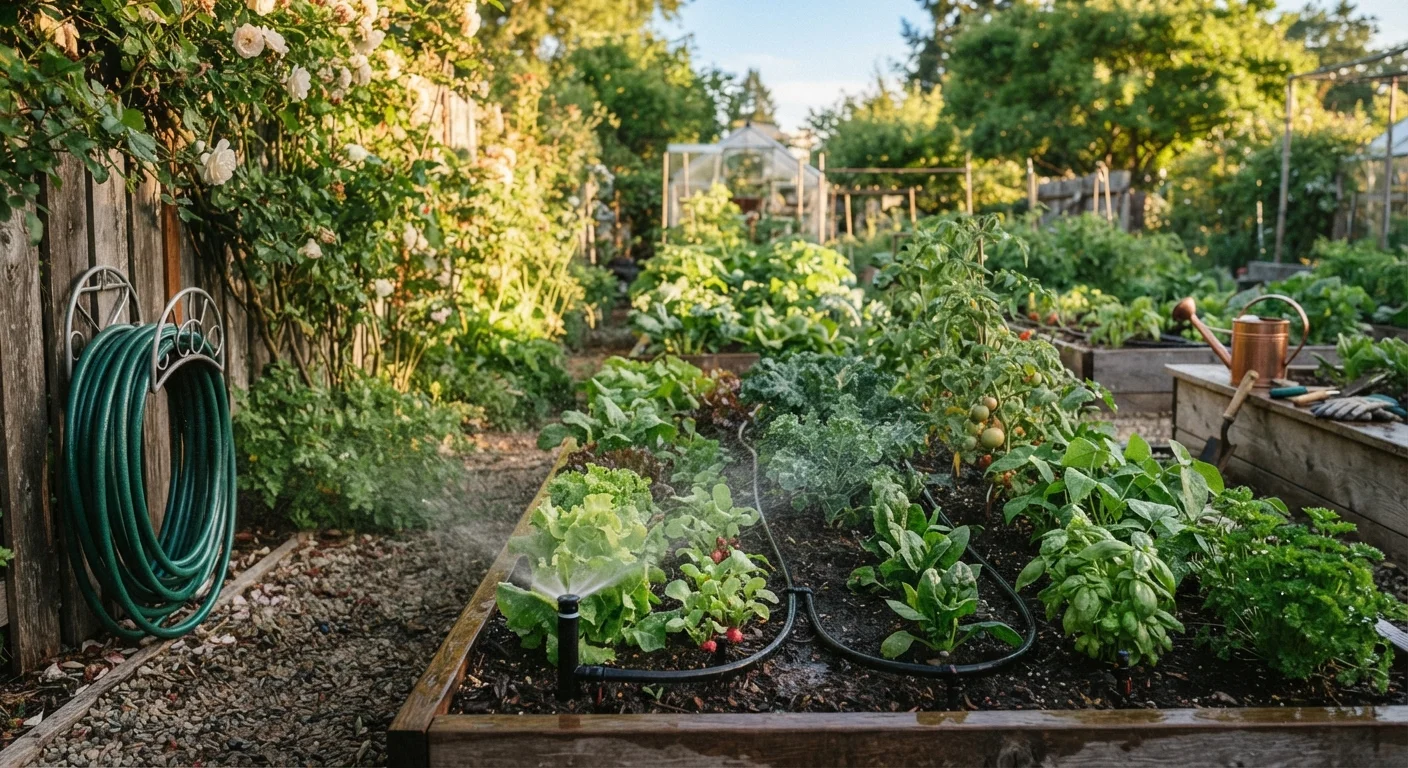
Drip systems deliver water slowly and directly to the base of individual plants through a network of tubing and emitters. Because water goes straight to the root zone, very little is lost to evaporation or runoff. This efficiency makes drip irrigation well-suited to vegetable gardens, raised beds, and flower borders where plants are spaced in defined rows or clusters.
Setup involves laying out main supply tubing, attaching smaller-diameter emitter lines, and connecting the system to a spigot - often through a timer for automated scheduling. Once installed, a drip system requires minimal daily attention. On the downside, emitters can clog with mineral deposits or debris, and tubing can be damaged by digging or pests. Annual inspection and occasional flushing keep the system running reliably.
Pair a Timer with Your Drip System
Adding an inexpensive battery-operated timer to your drip system's spigot connection means watering happens consistently, even when you're away. Set it to run early in the morning when evaporation rates are lowest and water pressure tends to be more stable. Start with short run times and adjust based on how quickly your soil dries out.
Drip irrigation is one of the most water-efficient options available, making it especially valuable in regions with seasonal water restrictions or drought-prone summers. It also keeps foliage dry, which reduces the likelihood of fungal problems like powdery mildew.
Sprinkler Systems: Broad Coverage for Open Areas
Sprinklers distribute water through the air in a wide arc or rotating pattern, mimicking rainfall over a large area. In-ground systems with pop-up heads are common in established landscapes and are typically connected to a programmable controller. Portable oscillating or impact sprinklers offer similar coverage without permanent installation.
Sprinklers are most effective for lawns, ground covers, and large open garden spaces where blanket coverage is more practical than targeting individual plants. However, overhead watering wets foliage and can encourage fungal disease in humid climates, particularly if watering occurs in the evening. Sprinkler systems also lose more water to evaporation than drip systems - up to 30-50% more under warm or windy conditions, according to general irrigation efficiency estimates. Scheduling irrigation for early morning helps minimize these losses.
If your garden includes both a lawn and planting beds, pairing a sprinkler zone for turf with a drip zone for beds can address both areas more efficiently. The habits behind ineffective lawn watering are worth reviewing before setting up any automated sprinkler schedule.
Hand Watering: Low Cost, High Attention
Watering by hand - using a hose, watering can, or wand - requires no special equipment beyond what most gardeners already own. It demands the most time of any method, but offers something the others do not: direct observation. Each watering session is an opportunity to spot pest damage, wilting, soil dryness, or early disease before it spreads.
Hand watering works well for container gardens, seedling trays, houseplants moved outdoors, or small raised beds. It becomes impractical for large gardens, especially during heat waves when consistent daily watering is essential. Inconsistency - the most common pitfall of hand watering - can stress plants more than underwatering alone, since erratic soil moisture disrupts root development.
For gardeners just starting out, hand watering alongside a simple drip setup for main beds offers a manageable middle ground. If you're also weighing how your growing method affects watering needs, our article on raised beds versus in-ground planting explores how container type and soil depth influence water retention and irrigation choices.
Inconsistent Hand Watering Can Stress Plants
Irregular watering - thoroughly one day, skipping the next - is one of the most common causes of blossom end rot in tomatoes and tip burn in lettuce. If your schedule makes consistent hand watering difficult, consider automating at least part of your garden. Even a simple soaker hose on a timer can provide far more reliable soil moisture than manual watering alone.
The content on this site is for informational purposes only and is not a substitute for professional advice. Always consult a qualified professional for guidance specific to your situation.