

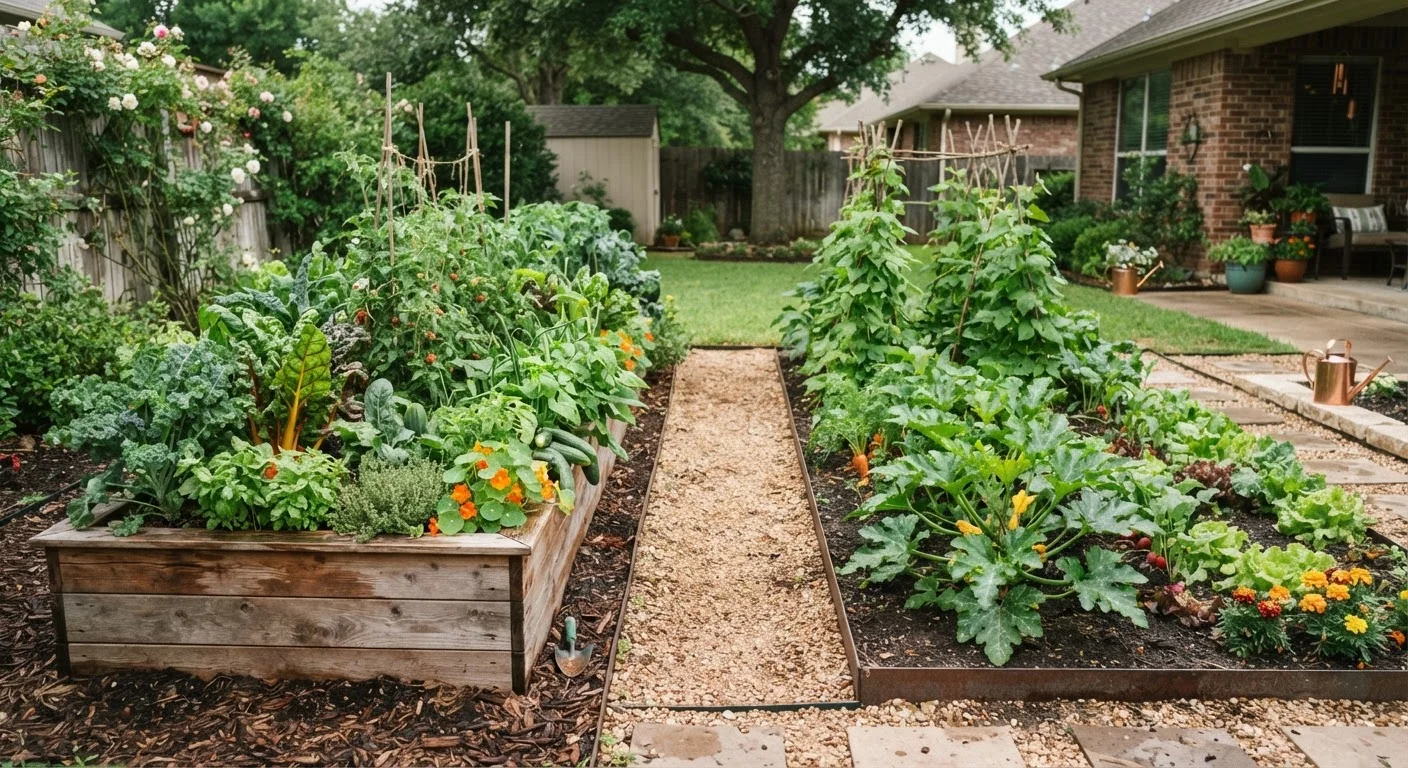
Option A
Raised Beds
The controlled, accessible gardening environment.
Best for: Gardeners dealing with poor native soil, limited mobility, or compact spaces who want fast results and clean growing conditions.
Option B
In-Ground Planting
The traditional, scalable approach to garden growing.
Best for: Gardeners with good existing soil, larger spaces, or deep-rooted crops like trees, shrubs, and sprawling vegetables.
What Sets These Two Methods Apart
Raised beds are contained growing structures - typically built from wood, metal, or composite materials - filled with imported soil or a custom growing mix. In-ground planting means working directly with the native soil in your yard, amending it as needed and cultivating plants where the ground already exists.
Both methods can produce excellent results, but they operate under very different conditions. Understanding those differences is the first step toward matching the method to your specific space and goals. For guidance on how your planting choices interact with your home's structure and surroundings, see our article on garden-to-house boundaries.
| Criterion | Raised Beds | In-Ground Planting |
|---|---|---|
| Startup cost | Moderate to high (materials + fill) | Low (labor and amendments) |
| Soil control | Complete - custom fill | Dependent on native soil quality |
| Drainage | Excellent, especially in wet climates | Varies by site and soil type |
| Root depth | Limited by bed height (typically 8-24 in) | Unrestricted |
| Accessibility | High - reduces bending and kneeling | Low - requires kneeling or stooping |
| Scalability | Costly to expand significantly | Easy to scale across large areas |
| Season length | Longer - warms up earlier in spring | Standard for your climate zone |
| Maintenance over time | Soil top-up; frame repairs eventually | Ongoing amendment; weed management |
Soil Control, Drainage, and Seasonal Advantages
One of the clearest advantages of raised beds is the ability to define your growing medium from the start. If your yard has clay-heavy, sandy, or compacted soil, a raised bed lets you sidestep years of amendment work by filling with a purpose-built mix of topsoil, compost, and aeration materials.
Raised beds also drain more readily than flat ground, which helps prevent root rot in wet climates. They warm up earlier in spring - sometimes several weeks ahead of in-ground soil - which can extend the growing season for cool-season crops. In-ground gardens, however, hold moisture more consistently in dry conditions, which can benefit drought-sensitive plants and reduce irrigation frequency during summer.
8-12 in
Minimum raised bed depth for most vegetables
Most cooperative extension programs recommend at least 8 inches of growing medium for productive vegetable crops; root vegetables benefit from 12 or more.
2-4 weeks
Earlier spring warm-up for raised bed soil
Raised beds can warm up several weeks ahead of in-ground soil in spring, giving cool-season crops a meaningful head start in many US climate zones.
Up to 50%
Water savings possible with drip irrigation in raised beds
Pairing raised beds with targeted drip irrigation can significantly reduce water use compared to overhead watering of in-ground rows, according to general horticultural guidance.
For gardeners planning their watering approach alongside this decision, our guide to garden irrigation methods breaks down how drip systems, sprinklers, and hand watering perform differently across garden types.
Cost, Labor, and Long-Term Maintenance
Getting started with raised beds requires an upfront investment: materials for the frame, bulk soil to fill it, and any hardware needed for assembly. Cedar and redwood frames tend to resist decay well but carry a higher price. Metal and composite options can also last for many seasons. In-ground planting, by contrast, has minimal startup costs - the primary investment is labor, amendments, and seeds or transplants.
Over time, raised beds may need soil topping-up as organic matter breaks down, and wooden frames will eventually need repair or replacement. In-ground beds, once properly established, tend to become self-sustaining ecosystems with regular composting and mulching. If you're also thinking about what to grow, our comparison of growing from seed vs. buying transplants can help you plan your plant sourcing strategy alongside your bed choice.
A Note on Wood Treatment and Safety
If you're building wooden raised beds, avoid lumber treated with older preservatives that may leach harmful chemicals into soil. Modern pressure-treated wood uses different compounds, but many gardeners still prefer naturally rot-resistant woods like cedar or redwood for food gardens. Check current guidance from your local cooperative extension office for the most up-to-date recommendations on materials safe for edible crops.
Matching the Method to Your Plants and Space
Crop type matters significantly. Shallow-rooted plants - lettuce, herbs, radishes, strawberries - thrive in raised beds. Deep-rooted vegetables like tomatoes, squash, and carrots do well in either setting, provided the bed is at least 12 inches deep. For perennial vegetables, fruit trees, large shrubs, or sprawling crops like pumpkins, in-ground planting almost always makes more practical sense.
Space constraints also shape the decision. A narrow urban backyard, a rooftop, a balcony, or a patio with poor drainage are all scenarios where raised beds expand what's possible. Larger rural or suburban plots often have the room and soil depth to support in-ground growing at scale. You might also consider using ground cover plants in surrounding areas to suppress weeds and reduce erosion around both bed types. For pairing compatible crops together effectively, our article on companion planting combinations offers well-documented guidance regardless of which method you choose.
The content on this site is for informational purposes only and is not a substitute for professional advice. Always consult a qualified professional for guidance specific to your situation.