

Start here
Choosing the Right Spot
Next
Preparing Your Soil
Then
Deciding What to Grow
When you're ready
Planting, Watering, and Ongoing Care
Finish strong
Harvesting and What Comes Next
Choosing the Right Spot
Before you buy a single seed, observe your yard through the day. Most vegetables need a minimum of six hours of direct sunlight - and eight or more is better for fruiting crops like tomatoes and peppers. Walk your yard at mid-morning and again in the afternoon to identify which areas hold the most sun and which fall into shade from trees or structures.
Once you've identified a sunny candidate, consider proximity to water. Hauling a heavy hose across the yard every day gets old quickly, so a spot within easy reach of an outdoor spigot will make consistent watering far more likely. Also check that the area drains reasonably well - pooled water after rain is a sign of compaction or a low-lying spot that will stress roots.
Start Smaller Than You Think
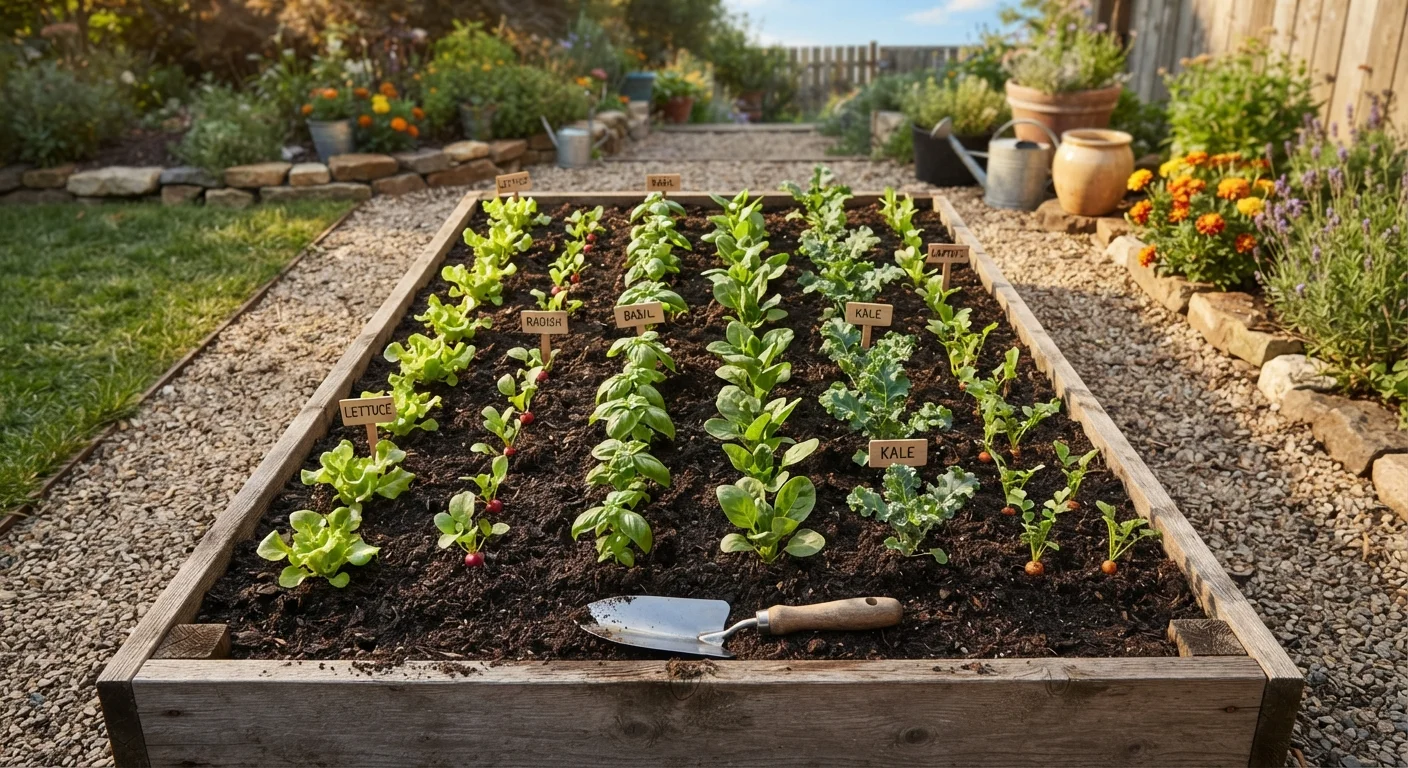
New gardeners routinely underestimate the time required for weeding, watering, and pest checks. A modest 4×8-foot bed is much easier to maintain consistently than a large plot that risks becoming neglected. A productive small garden is more satisfying than an ambitious one that struggles. You can always expand next season.
If you're comparing this hands-on outdoor project to getting settled somewhere new, our guide on starting fresh in a rental home takes a similar ground-up approach to a different kind of new beginning.
Preparing Your Soil
Soil is where the real work - and the real payoff - of gardening lives. Vegetables grown in loose, nutrient-rich soil consistently outperform those planted in compacted or depleted ground, even when everything else is done right.
Test Before You Amend
Adding fertilizers or pH adjusters without knowing your baseline soil chemistry can do more harm than good. An inexpensive soil test kit - available at most garden centers - gives you actual numbers to work from. Your local cooperative extension office may also offer low-cost soil testing with region-specific recommendations.
If a soil test shows your pH is out of range (vegetables generally prefer a pH of 6.0-7.0), you can adjust it with agricultural lime (to raise pH) or sulfur (to lower it). Work any amendments into the top 10-12 inches of soil using a garden fork, then let the bed settle for a week before planting if time allows.
Adding compost is almost always beneficial regardless of your test results. A 2-3 inch layer worked into the bed improves drainage in clay soils, boosts moisture retention in sandy soils, and feeds the microbial life that makes nutrients available to plants. Our guide to composting at home explains exactly how to build your own supply.
Frost date
The average calendar date for the last spring frost or first fall frost in your area. It determines when it's safe to plant cold-sensitive crops outdoors.
Loamy soil
A balanced soil type that contains a mix of sand, silt, and clay. It drains well while still holding enough moisture and nutrients for healthy plant roots.
Hardening off
The process of gradually exposing seedlings grown indoors to outdoor conditions over one to two weeks so they adjust without going into shock.
Succession planting
Sowing seeds of the same crop every few weeks rather than all at once, so harvests are spread out instead of arriving in one large, hard-to-use flush.
Soil amendment
Any material - compost, aged manure, perlite - mixed into existing soil to improve its structure, drainage, or nutrient content.
Deciding What to Grow
For a first garden, the most important filter is honesty about what you'll actually eat. Growing a crop you're excited to harvest keeps motivation high through the less glamorous tasks of weeding and watering.
Beyond personal preference, match your selections to your season length and available space. Cool-season crops - lettuce, spinach, radishes, peas - thrive in spring and fall when temperatures are mild. Warm-season crops - tomatoes, cucumbers, zucchini, green beans - need settled warmth and go in after your area's last frost date. Mixing a few of each stretches your harvest window considerably.
Seeds vs. Transplants: Both Are Valid
Some crops like carrots and beans are best direct-sown because they dislike having their roots disturbed. Others, like tomatoes and peppers, are commonly started from transplants because they need a long growing season. You don't have to choose one approach for your whole garden. For a deeper look, see our guide on growing from seed vs. buying transplants.
For a complete pre-season checklist, including how to organize seed ordering and tool prep, that companion resource walks through the full readiness process before your first planting day.
Planting, Watering, and Ongoing Care
Follow seed packet or transplant tag spacing guidelines closely - crowded plants compete for light, air, and nutrients, and are more vulnerable to disease. When setting out transplants, water them in well immediately after planting to settle soil around the roots and reduce transplant stress.
Water deeply and at the base of plants rather than overhead when possible. Wet foliage left overnight is an invitation for fungal problems. Most gardens need about one inch of water per week; a simple rain gauge takes the guesswork out of how much nature is contributing. Mulching around plants with a 2-inch layer of straw or wood chips conserves moisture, suppresses weeds, and moderates soil temperature.
Check plants every couple of days for signs of pest damage or disease. Catching problems early - a handful of aphids, early blight spots on tomato leaves - is far easier than managing a full-blown infestation. Remove affected leaves promptly and dispose of them away from the garden bed.
Harvesting and What Comes Next
One of the most counterintuitive lessons for new gardeners is that harvesting more frequently leads to more production. Zucchini left on the vine too long signals the plant to slow down; beans picked young encourage new flower set. Get into the habit of checking for harvest-ready produce every day or two during peak season.
As the season winds down, note what worked well and what you'd change. Which varieties produced more than you expected? Where did spacing feel too tight? A brief end-of-season record - even just notes in a phone app - pays dividends when you plan next year's garden. Many gardeners also use the fall to begin composting spent plant material and kitchen scraps to have rich amendment ready for spring.
Your first vegetable garden is a learning experience as much as a food source. Approach it with curiosity, accept that some things won't go as planned, and know that each season builds the practical knowledge that no guide can fully replace.
Frequently Asked Questions
A 4×8-foot raised bed or a 10×10-foot in-ground plot is plenty for a beginner. Starting small makes it easier to manage watering, weeding, and soil care without feeling overwhelmed. You can always expand once you've got one season under your belt.
Lettuce, radishes, green beans, zucchini, and cherry tomatoes are widely regarded as forgiving starter crops. They germinate reliably, mature relatively quickly, and give you visible progress that keeps motivation high.
Timing depends on your climate zone and the crops you're growing. Most cool-season vegetables (lettuce, peas, spinach) go in 4-6 weeks before the last expected frost; warm-season crops (tomatoes, peppers, squash) go in after frost risk passes. Check a local extension service for your area's frost dates.
Either works well. Raised beds give you control over soil quality and drain more freely, which is helpful in heavy clay soils. In-ground beds cost less to set up and work fine if your native soil is in reasonable condition. The choice comes down to your budget, existing soil, and physical preference.
Most vegetable gardens need roughly one inch of water per week from rain or irrigation combined. Water deeply and less frequently rather than lightly every day - this encourages roots to grow deeper. Check soil moisture an inch below the surface; if it's dry there, it's time to water.
Each crop has different readiness cues. Zucchini is best at 6-8 inches long; lettuce leaves can be cut once they're palm-sized; tomatoes should give slightly when gently squeezed. Seed packets and transplant tags typically list days to maturity, which gives you a helpful target window.
The content on this site is for informational purposes only and is not a substitute for professional advice. Always consult a qualified professional for guidance specific to your situation.