

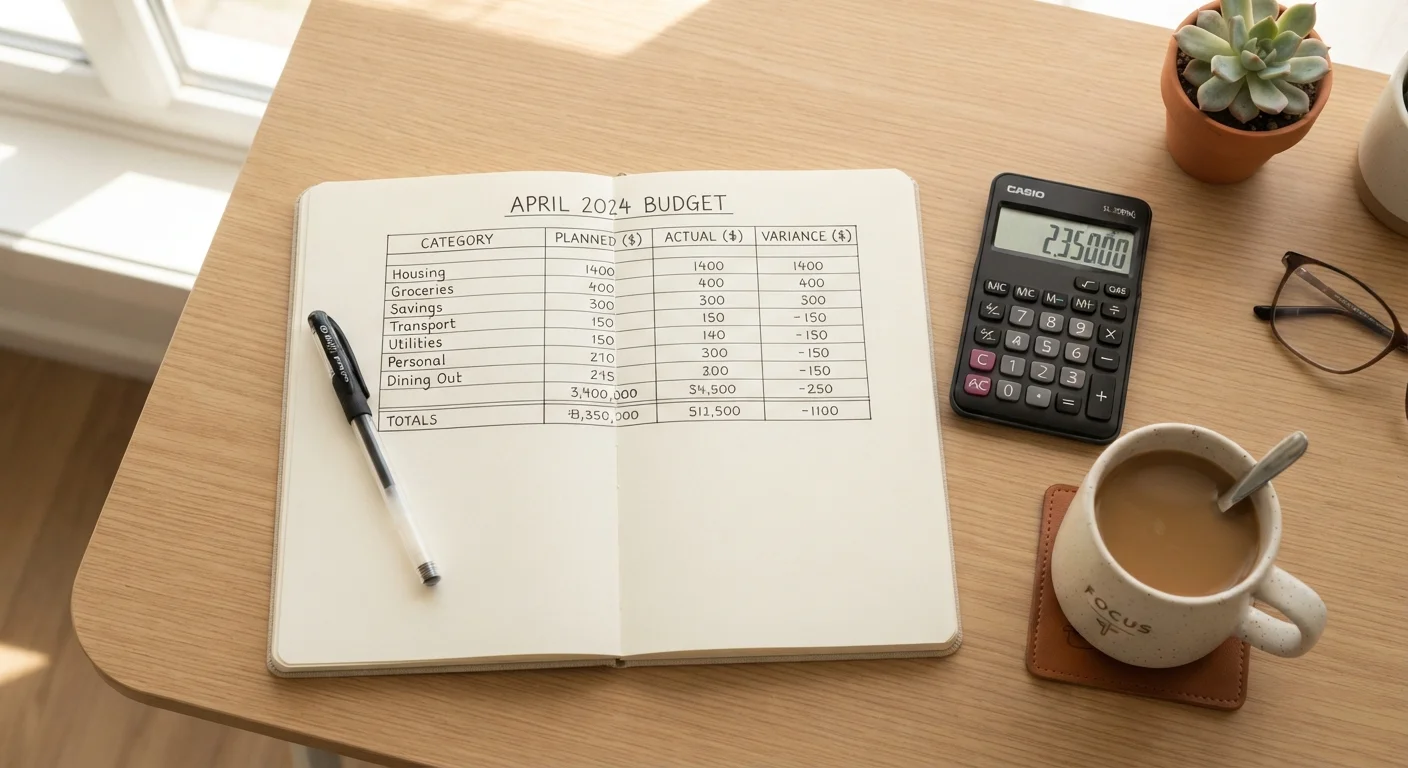
Why a Written Budget Changes Everything
Most people have a rough sense of what they earn and spend - but a rough sense isn't enough to make progress toward financial goals. Writing a budget forces you to confront the gap between what you think you spend and what the numbers actually show. Research from the Consumer Financial Protection Bureau (CFPB) consistently finds that people who track spending and set written plans are better positioned to handle financial shocks and reach savings goals.
A monthly budget also creates a clear feedback loop. When you can see exactly where your money went, you can make deliberate choices next month rather than reacting to whatever's left in your account. For a deeper overview of how budgeting systems work and which methods might suit your situation, the complete personal budgeting resource covers the full landscape.
Bank or credit card statements
Provides an accurate record of what you actually spent over recent months.
Spreadsheet or budgeting app
Used to organize income and expense categories and track your plan month to month.
Pay stubs or income records
Confirms your actual take-home pay after taxes and deductions.
Calculator
Helps total income and expenses quickly when working on paper.
Before You Start: What You'll Need
Gathering the right materials before you begin saves time and ensures your numbers are grounded in reality rather than guesswork. You don't need specialized software - a notebook works fine - but having actual account statements in front of you is essential.
What you will need
If you've never tracked your spending before, this process may surface some surprises. That's the point. The goal at this stage is accuracy, not judgment.
The Six Steps to Your First Monthly Budget
Follow these steps in order. Each builds on the one before, so skipping ahead tends to produce an unbalanced plan that's hard to maintain. If you've attempted budgeting before and struggled to make it stick, the ground-up monthly budget walkthrough offers an alternative framing that may resonate differently.
Calculate your total monthly take-home income
Write down every source of income you receive in a typical month - wages, freelance pay, side income, alimony, or government benefits. Use your net income (after taxes and payroll deductions), not your gross salary. If your income varies, use an average of the past three months as a conservative baseline. If you're a gig worker or freelancer, see strategies for budgeting on irregular income for additional guidance.
List all your fixed monthly expenses
Fixed expenses are costs that stay the same every month: rent or mortgage, car payments, insurance premiums, and minimum debt payments. Pull these directly from your statements and list each one with its exact dollar amount. These are non-negotiable commitments that must be funded before anything else is allocated.
Estimate your variable monthly expenses
Variable expenses change month to month - groceries, dining out, gas, entertainment, clothing, and personal care. Review two to three months of statements and calculate an average for each category. Round up slightly to give yourself a realistic cushion. This step is where most first-time budgeters discover spending patterns they weren't aware of.
Set savings and debt payoff targets
Before you balance the budget, decide how much you intend to save and how much extra you'll put toward debt each month. Treat these as mandatory line items - not what's left over. A common starting point is to aim for at least one month of expenses in an emergency fund before aggressively paying down debt. For a broader framework on managing both goals simultaneously, explore the Saving & Debt hub.
Assign every dollar a job
Add up your fixed expenses, variable expenses, and savings and debt targets. Subtract the total from your monthly take-home income. The goal is to reach zero - meaning every dollar has a designated purpose. If you have money left over, assign it intentionally (more savings, extra debt payoff, a specific goal fund). If you're over budget, identify which variable categories can be trimmed.
Review and adjust at the end of each month
At month's end, compare what you planned to spend against what you actually spent. Most people need two to three cycles before their budget reflects real behavior accurately. Make small, honest adjustments rather than abandoning the budget entirely. Over time, this review habit is what turns a one-time plan into a durable financial practice. For guidance on keeping your budget functional through real-life disruptions, see Building a Budget That Survives Real Life.
Give Your Budget Two to Three Months
The first month of budgeting is almost always imperfect - and that's expected. Real spending patterns take a couple of cycles to emerge clearly. Treat month one as a data-gathering exercise, not a pass-or-fail test. Adjust categories based on what you actually spent, and keep going.
Common Pitfalls and How to Avoid Them
Even well-intentioned budgets break down for predictable reasons. The most frequent issues are underestimating variable expenses, forgetting irregular costs like annual subscriptions or quarterly insurance premiums, and treating savings as optional. Build a small buffer - typically 5-10% of your income - into your variable categories to absorb minor surprises without derailing the plan.
Another common mistake is creating a budget that's too restrictive too quickly. Slashing every discretionary category in month one tends to produce short-lived compliance followed by abandonment. Gradual reductions are more sustainable. For strategies on keeping a budget functional through unexpected income changes, job transitions, and life events, see how to build a budget that survives real life.
Don't Skip the Income Verification Step
Using your gross (pre-tax) salary instead of your net take-home pay is one of the most common first-time budgeting mistakes. It creates a false sense of available money and leads to a plan that simply won't work in practice. Always base your budget on the amount that actually lands in your bank account.
This Is General Education, Not Personalized Advice
This article provides general financial information for educational purposes only. It is not personalized financial, tax, or legal advice. Every person's financial situation is different. For guidance tailored to your specific circumstances, consult a qualified financial adviser or licensed professional.
This article is for general informational and educational purposes only and does not constitute personalized financial, tax, or legal advice. Consult a qualified financial professional for guidance specific to your situation.
The content on this site is for informational purposes only and is not a substitute for professional advice. Always consult a qualified professional for guidance specific to your situation.