

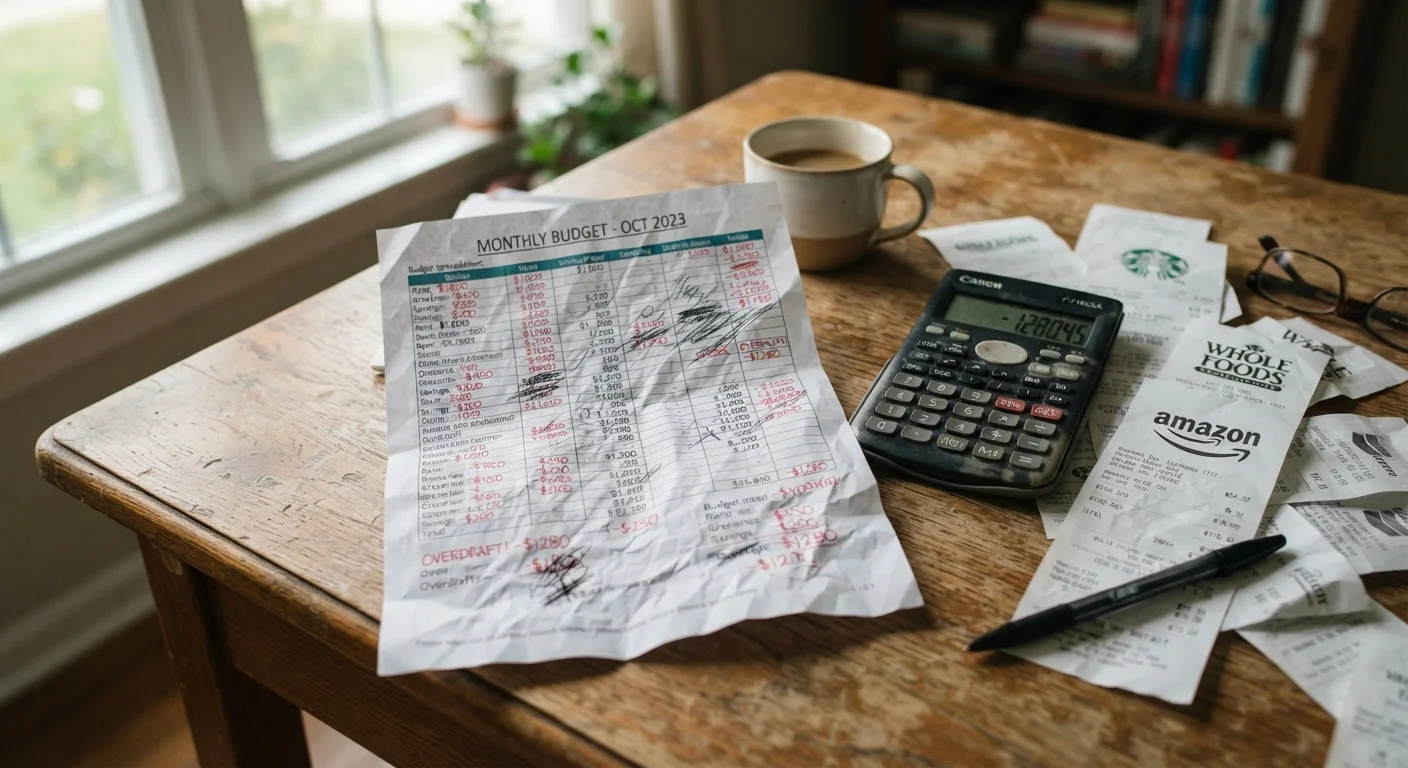
The Budget That Looked Fine on Paper
Every failed budget starts the same way: with good intentions and numbers that add up. Income goes in one column, expenses go in another, and the math checks out. Then life happens - an unexpected car repair, a birthday dinner, a week of takeout - and the plan quietly unravels.
The frustrating truth is that most budget failures aren't random. They follow recognizable patterns rooted in how people estimate costs, respond to stress, and structure (or fail to structure) their financial systems. Understanding those patterns is far more useful than simply trying harder next month.
This article walks through the most common breakdown points, why they happen, and what actually fixes them. For a complementary perspective on behavioral derailment specifically, see why budgets fall apart after week two.
Budgeting only for recurring monthly expenses while ignoring irregular ones.
Why it happens: Monthly bills are visible and predictable, so they feel like the whole picture. Irregular costs - annual fees, car repairs, medical copays - are easy to mentally set aside because they aren't due right now.
Setting spending limits based on ideal behavior rather than actual spending history.
Why it happens: When starting a budget, most people estimate what they should spend on groceries or dining out - not what they actually spend. The result is a plan that requires behavioral change before it can even function.
Treating a budget as a one-time setup rather than an ongoing system.
Why it happens: Building a budget feels like completing a task. Once it's done, many people file it away and only revisit it when something goes wrong - by which point overruns have already compounded.
Abandoning the entire budget after one category goes over.
Why it happens: Many people apply all-or-nothing thinking to budgeting: if one category fails, the whole month is written off. This often leads to uncontrolled spending for the remainder of the period.
Leaving no buffer for discretionary or unplanned spending.
Why it happens: Tight budgets that allocate every dollar to necessities leave no room for the small, spontaneous expenses that are a normal part of life. When those expenses occur - and they will - the plan breaks.
What the Data Tells Us About Budget Failure
Research in behavioral economics consistently shows that people are poor predictors of their own spending - a phenomenon sometimes called the planning fallacy. We tend to budget for the month we wish we'll have rather than the month we're likely to have. Irregular costs - annual subscriptions, quarterly insurance premiums, seasonal expenses - are routinely left out of monthly plans, even though they are entirely predictable.
~33%
Americans with a written monthly budget
Surveys by the National Foundation for Credit Counseling have consistently found that fewer than one in three Americans maintains a detailed monthly budget.
~$1,000+
Median unexpected annual expense
Federal Reserve data on household financial wellbeing suggests a significant share of American families face unexpected expenses of $400 or more that strain their monthly plans.
The structural problem compounds the behavioral one. A budget built in a spreadsheet that isn't reviewed regularly becomes a historical document, not a living tool. Without a short feedback loop, small overruns in one category go unnoticed until they've cascaded across the whole plan.
If you recognize these patterns in your own spending history, the budget that actually reflects real life offers a practical framework for building around them rather than ignoring them.
Building Habits That Hold
Fixing a broken budget isn't primarily about finding the right app or category system. It's about closing the gap between what you planned and what actually happens - and doing that requires two things: a realistic structure and a lightweight review habit.
A realistic structure means accounting for irregular expenses upfront. List every non-monthly cost you expect in the next 12 months - car registration, holiday gifts, annual subscriptions, back-to-school supplies - total them, and divide by 12. That figure belongs in your monthly budget as a dedicated line item, often called a sinking fund contribution.
Sinking Funds Prevent the Biggest Surprises
The single most high-impact change most people can make to their budget is setting aside money each month for expenses they know will come - just not every month. Car maintenance, insurance premiums, and holiday spending are not true emergencies; they're predictable costs without a monthly due date. Treating them as surprises is the structural flaw that breaks otherwise solid budgets.
A review habit means checking in briefly every week - not to judge yourself, but to update your numbers. Even five minutes reviewing actual versus planned spending will surface problems early enough to course-correct. For readers whose savings goals are tied to their budget, where savings plans break down before they start shows how the same structural gaps that sink budgets also derail saving. Once your monthly plan is stable, building a budget that survives real life provides a comprehensive next step.
This article is for general informational and educational purposes only. It does not constitute personalized financial, tax, or investment advice. Consult a qualified financial professional for guidance specific to your situation.
The content on this site is for informational purposes only and is not a substitute for professional advice. Always consult a qualified professional for guidance specific to your situation.