

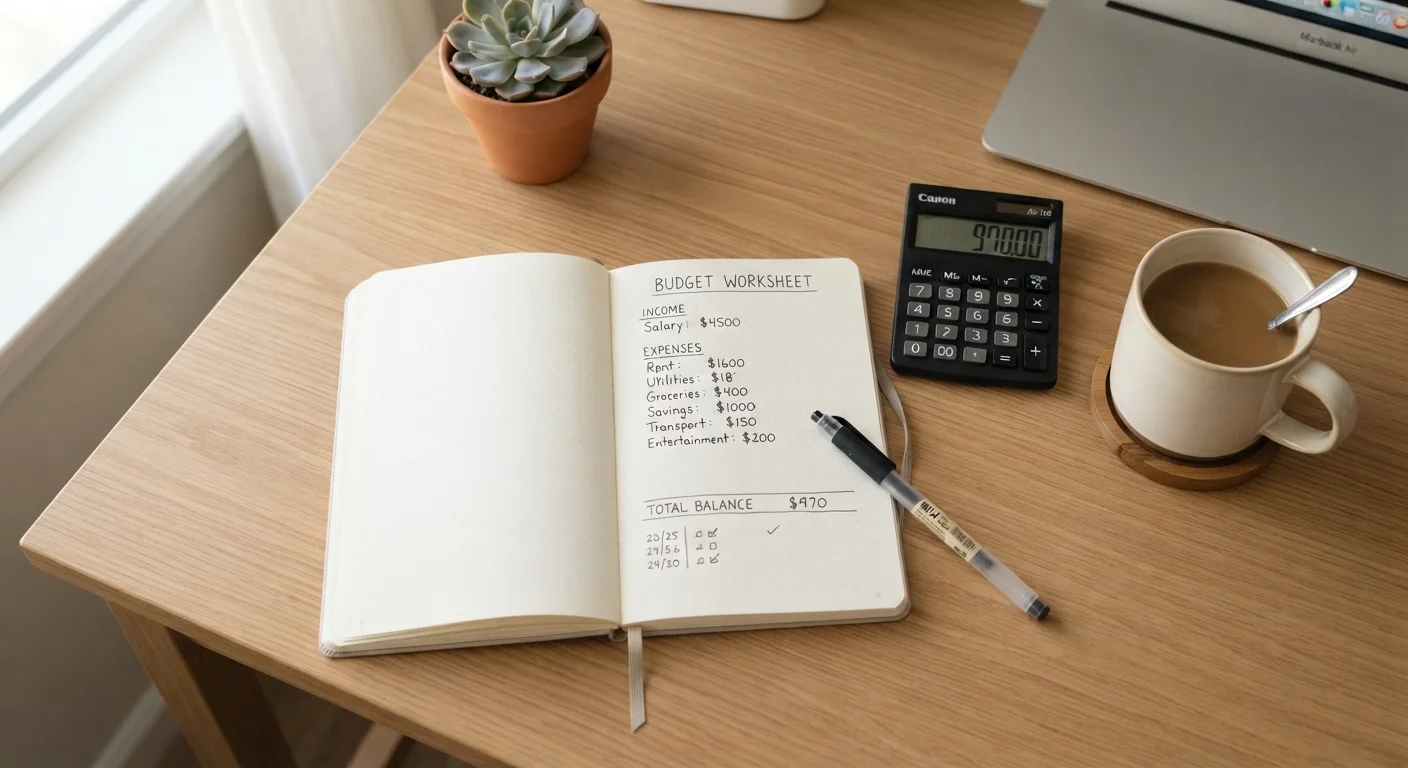
Why Starting from Zero Matters
Most people who struggle with money don't lack income - they lack a clear picture of where it goes. A budget built from zero forces that picture into focus. Rather than estimating or guessing, you work from real numbers: actual take-home pay and actual spending pulled from statements. This approach removes the comfortable fiction that money is "just disappearing" and replaces it with precise, actionable information.
The process also reveals the structure of your spending. Most household budgets divide naturally into three types of costs: fixed (same every month, hard to change quickly), variable (fluctuate but are predictable in category), and irregular (infrequent but real). Understanding which category each expense falls into tells you where flexibility exists and where it doesn't.
For a plain-English foundation on how income, expenses, and balance work together, see our beginner's starting point. This how-to guide then picks up from there with a concrete, numbered process you can follow in a single sitting.
What you will need
What You Need Before You Start
Gathering your materials before you begin prevents the most common early dropout: stopping mid-process to find a missing statement. You don't need any specialised financial knowledge - only recent records of money in and money out.
Bank and credit card statements
Provide a factual record of actual spending to categorise and total.
Spreadsheet (e.g., Google Sheets or Excel)
Organise income, expense categories, and monthly totals in a flexible, reusable format.
Pen and notebook
A low-friction way to draft your first budget by hand before moving to digital tools.
Calculator
Quickly total income and expenses to check whether the budget balances.
Pick the Simplest Tool You'll Actually Use
A paper notebook used consistently beats a sophisticated app abandoned after a week. Compare spreadsheets, apps, and pen-and-paper to find the approach that fits your habits before committing.
Once you have your materials ready, work through the steps below in order. Each step builds on the previous one, and skipping ahead tends to produce a budget that doesn't balance accurately.
The Seven Steps to Your First Budget
Follow these steps sequentially. The first time through will take longer as you gather and categorise data; subsequent months take a fraction of the time because the structure is already in place.
Calculate your real monthly take-home income
Start with what actually lands in your bank account - not gross salary. Add every reliable income source: wages, freelance payments, side income, benefits. If your income varies month to month, use a conservative average based on the past three months. This number is your budget's ceiling.
List and total all fixed monthly expenses
Fixed expenses are the same amount every month and non-negotiable in the short term: rent or mortgage, loan repayments, insurance premiums, subscriptions with set fees. Write each one down with its exact amount. Total them and subtract from your take-home income. What remains is available for everything else.
Track and categorise variable spending
Pull out two to three months of statements and go through every transaction. Group spending into categories: groceries, dining out, transportation, utilities, personal care, entertainment, clothing. Total each category for each month, then average across the months you reviewed. These averages become your baseline variable expenses.
Account for irregular and annual expenses
Scan your statements for expenses that don't appear monthly: car registration, annual subscriptions, dental visits, school fees, holiday gifts, home maintenance. Add them up annually, then divide by 12. Include that monthly average as a separate budget line called something like "Irregular Expenses" or "Sinking Fund."
Assign a savings and debt-paydown line
Before finalising spending categories, designate a line for savings and one for any extra debt repayment. Even a small, consistent savings amount builds an emergency buffer over time. Financial educators commonly suggest aiming to save something each month, however modest - the habit matters as much as the amount.
Balance the budget - income minus all outflows
Add every category total: fixed expenses + variable expenses + irregular allowance + savings. Subtract this from your take-home income. If the result is zero or positive, your budget is balanced. If it is negative, you are spending more than you earn, and you need to reduce spending in at least one category. Start with variable and discretionary spending before touching fixed commitments.
Review and adjust after the first month
At the end of your first budget month, compare actual spending in each category against what you planned. Most first budgets will be off in several places - that is expected and useful information. Adjust category amounts to better reflect reality, and keep reviewing monthly. Budgets improve through iteration, not perfection on the first try.
Don't Skip Irregular Expenses
Annual costs like car registration, insurance premiums, and holiday spending derail more budgets than daily lattes ever do. Divide each annual or semi-annual cost by 12 and treat that amount as a monthly line item. See a full category reference for expenses that are easy to overlook.
For a deeper look at how to structure spending categories - including household expenses many people overlook - this category reference covers the full range. And if you want to compare how different budgeting methods handle the same numbers, this six-step walkthrough offers a complementary perspective.
Keeping the Budget Working Over Time
A budget is not a one-time document - it's a monthly practice. Life changes: income shifts, expenses appear, priorities evolve. A budget that no longer reflects reality stops being useful and gets abandoned. The fix is simple: treat monthly review as a non-negotiable step, not an optional check-in.
Common reasons first budgets fail include setting spending targets that are too optimistic, ignoring irregular costs until they hit (see Step 4 above), and using a tracking tool that creates more friction than it resolves. Choosing the right tracking tool for your habits is a meaningful decision worth making deliberately.
This Is Education, Not Personalised Advice
This article provides general financial information and education only. It is not personalised financial, tax, or legal advice. Your specific circumstances - income, debt, dependents, goals - vary. For decisions about your own finances, consult a licensed financial professional.
Once your budget is stable and consistently balanced, the logical next focus is building savings and managing any existing debt more aggressively. The Saving & Debt hub covers both in depth. For the complete arc - from first budget through long-term financial habits - this comprehensive resource brings it all together in one place.
This article is for general informational and educational purposes only and does not constitute personalised financial, tax, or legal advice. Consult a qualified financial professional for guidance specific to your situation.
The content on this site is for informational purposes only and is not a substitute for professional advice. Always consult a qualified professional for guidance specific to your situation.