

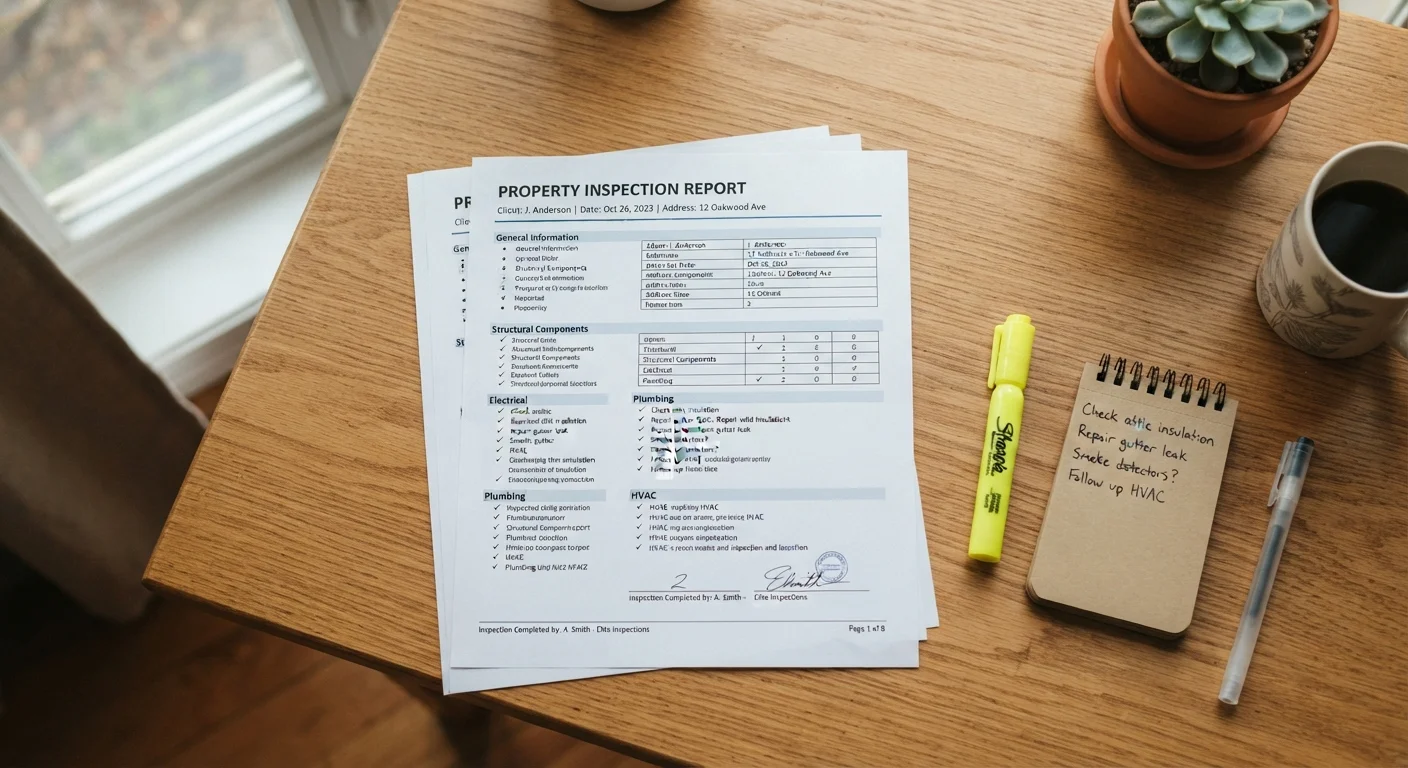
What a Home Inspection Report Actually Contains
A home inspection report is a licensed inspector's written account of a property's visible, accessible condition at a single point in time. Reports routinely run 40-60 pages and cover dozens of systems - roof, foundation, electrical, plumbing, HVAC, insulation, windows, and more. The sheer volume can feel overwhelming, but the structure is consistent and learnable.
Most reports organize findings into categories and assign each item a status - typically something like safety concern, major defect, minor defect, or maintenance item. Inspectors document conditions with photos and plain descriptions. They are not required to estimate repair costs, and their findings reflect what was visible the day of the inspection, not a prediction of future performance.
Before you dive into the steps below, it helps to know that the goal isn't a perfect report - no house, new or old, gets one. The goal is understanding what you're buying. For a complementary perspective on evaluating market conditions alongside your inspection findings, see how to read a housing market report.
What you will need
Step-by-Step: Reading the Report With Confidence
Work through the report systematically rather than skimming for red flags. The steps below give you a repeatable process.
Read the Summary Page First
Most inspection reports include a summary section at the front that lists only the items the inspector considers most significant. Start here to get a high-level picture before reading the full report. This prevents the volume of minor items from distorting your sense of the home's overall condition.
Sort Findings by Severity
Go through the full report and mentally - or physically - group items into three buckets: safety hazards (e.g., exposed wiring, carbon monoxide risks), major defects (e.g., failing roof, cracked foundation, broken HVAC), and maintenance items (e.g., worn caulking, minor grading issues). Your energy and negotiating capital belong on the first two categories.
Look at Every Photo
Inspection reports are photo-heavy for a reason. Each image documents a specific condition at a specific location. Review photos alongside the written description - sometimes the photo shows that a crack is hairline and superficial; other times it reveals something the text alone doesn't convey. Note the room and location for any item you want to revisit.
Flag Items Requiring a Specialist
General home inspectors are generalists. When they note something like recommend evaluation by a licensed structural engineer or further assessment by a licensed electrician advised, take that recommendation seriously. Arrange specialist inspections before your contingency deadline so you have actual repair estimates, not guesses.
Estimate the Real Cost of Repairs
For items you plan to negotiate, get rough repair estimates from licensed contractors before submitting your request. Asking a seller to fix a vague "roof issue" is less effective than saying the roof inspection found damaged flashing and three missing shingles with an estimated repair cost. Concrete numbers make for cleaner negotiations.
Make a Final Go / No-Go Decision
After sorting findings, consulting specialists where needed, and estimating costs, assess the big picture: Does the home still make sense at the agreed price, adjusted for any repair credits or concessions? Is there anything that changes the fundamental value proposition? A thorough reading of the report gives you the information to answer these questions with confidence rather than anxiety.
Call Your Inspector With Questions
Licensed home inspectors expect follow-up calls. If a finding is unclear, ask the inspector to walk you through it verbally - they can often clarify whether something is a watch-and-wait situation or genuinely urgent. This one conversation can save hours of second-guessing.
What to Negotiate - and What to Let Go
Not every defect warrants a renegotiation request. As a general principle, focus your asks on items that affect safety, habitability, or the major mechanical systems of the home. Cosmetic issues - a cracked tile, a sticking door, faded paint - are rarely worth raising in a competitive market.
Items typically worth negotiating:
- Active roof leaks or significant remaining roof life issues
- Electrical panels with known safety risks (double-tapped breakers, outdated fuse boxes)
- Plumbing leaks or evidence of sewer line problems
- HVAC systems at or past expected service life
- Foundation cracks flagged for further evaluation
Items usually best left alone:
- General age-related wear consistent with the home's vintage
- Minor caulking or grout repairs
- Deferred cosmetic maintenance
For a deeper look at electrical systems you may encounter in an older home, this plain-language primer on electrical panels is a useful companion. Similarly, if the inspector flags plumbing concerns, this guide on what plumbing issues need a licensed plumber can help you gauge severity.
Safety Findings Are Non-Negotiable
Any finding classified as a safety hazard - exposed wiring, gas leaks, missing smoke or carbon monoxide detectors, structural instability - should be addressed before or immediately after closing, regardless of whether the seller agrees to cover it. These are not cosmetic issues and can pose real risks to occupants. Get licensed professional assessments for all safety-flagged items.
Don't Waive Your Inspection Contingency Lightly
In competitive markets, buyers are sometimes pressured to waive inspection contingencies to strengthen offers. Doing so removes your ability to renegotiate or exit the contract based on the report's findings. Understand the financial and legal implications fully before agreeing - this is a decision best made with guidance from a licensed real estate attorney or agent.
After You've Read the Report
Once you understand what the report says, you have four practical options: proceed as-is, request repairs, ask for a price reduction (or closing credit), or - in rare cases involving serious undisclosed defects - walk away if your contract includes an inspection contingency.
Document your concerns in writing and share them with your real estate agent. They can help you craft a reasonable repair request or credit ask based on local norms. Keep in mind that sellers are not obligated to fix everything - negotiation is a two-way process.
If you want to stay informed about broader market conditions as you finalize your decision, this checklist of signals to watch before buying or selling is worth reviewing. And for ongoing upkeep once you close, our home maintenance hub covers the essentials of keeping any property in good shape.
This article is for general informational and educational purposes only. It does not constitute legal, financial, or professional real estate advice. Consult a licensed real estate professional, attorney, or inspector for guidance specific to your situation.
The content on this site is for informational purposes only and is not a substitute for professional advice. Always consult a qualified professional for guidance specific to your situation.