

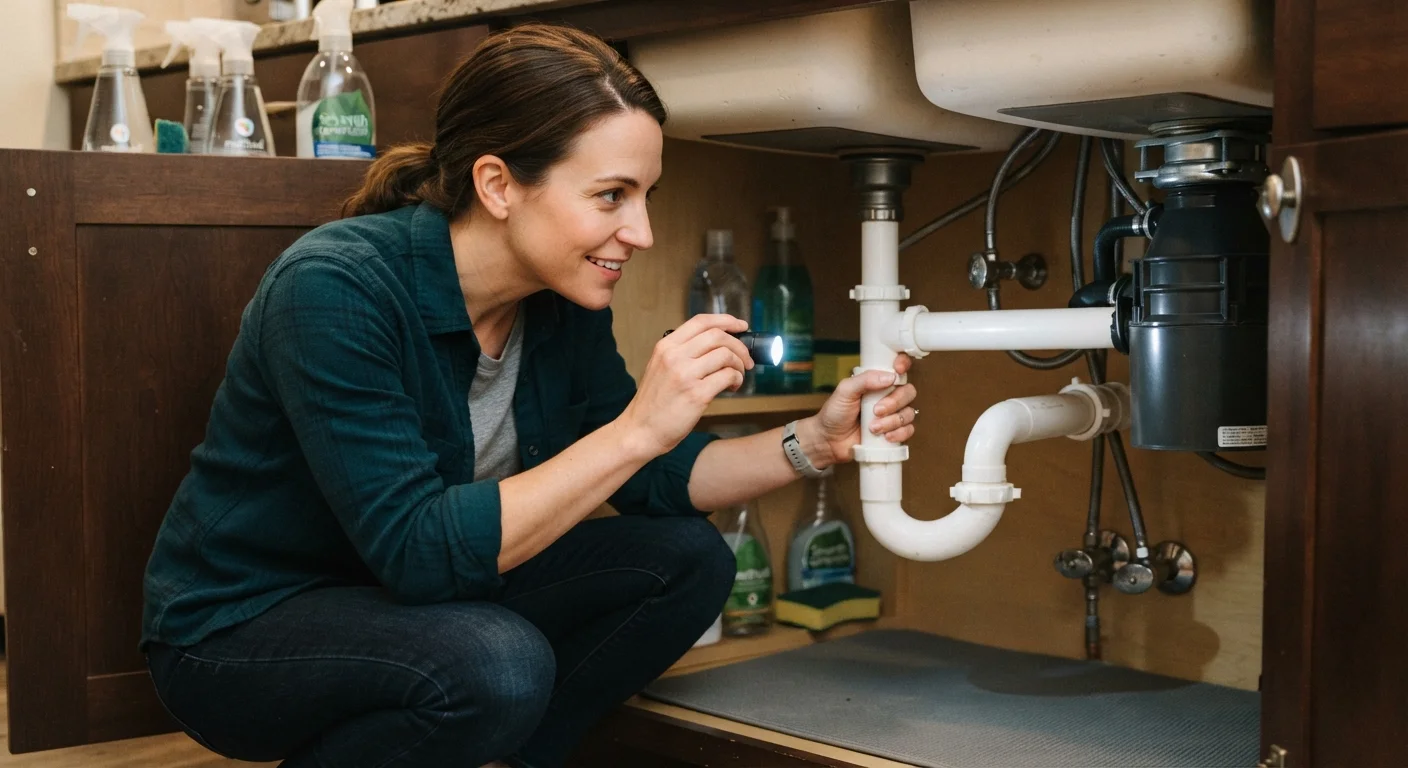
Option A
DIY Plumbing Inspections
Safe, routine checks any homeowner can perform confidently.
Best for: Homeowners who want to catch early warning signs, maintain fixtures, and avoid preventable repair bills.
Option B
Licensed Plumber Work
Regulated, code-governed tasks that require professional training and tools.
Best for: Any work involving mains-connected pipework, gas lines, permitted alterations, or hidden structural plumbing.
What Homeowners Can Safely Inspect and Maintain
A surprising amount of routine plumbing upkeep falls squarely within a homeowner's capability - no license required, no special tools beyond a flashlight and a few basic items. The key is staying on the surface: visible pipes, accessible fixtures, and simple drainage checks.
Here's what you can confidently do yourself:
- Check under sinks for drips or moisture. Use a flashlight to inspect P-traps (the curved section of pipe beneath your sink) and supply line connections. Soft cabinet floors, staining, or a musty smell often indicate a slow drip.
- Clear slow drains. A manual drain snake or a simple cup plunger handles most bathroom and kitchen slow drains. Avoid chemical drain cleaners repeatedly - they can degrade older pipes over time.
- Test and exercise isolation valves. The shutoff valves under sinks and behind toilets should turn freely. If they're stiff or corroded, that's a warning sign to note - though replacing one in an accessible location is a task many homeowners tackle without trouble.
- Inspect toilet internals. Lift the tank lid and check the flapper and fill valve for wear. A constantly running toilet is often just a worn flapper - a widely available, inexpensive part.
- Check exposed pipes before winter. Look for uninsulated pipes in crawl spaces, garages, or exterior walls. Adding foam pipe insulation is straightforward and can prevent freeze damage.
For a broader introduction to home upkeep routines that include these inspections, see what every first-time homeowner needs to know about maintenance. More detailed guidance on specific plumbing upkeep tasks is available in our plumbing maintenance you can reasonably do yourself.
| Criterion | DIY Plumbing Inspections | Licensed Plumber Work |
|---|---|---|
| Permit required | No | Usually yes |
| Typical tasks | Drain clearing, leak checks, valve testing | Main line work, pipe rerouting, water heaters |
| Tools needed | Flashlight, plunger, drain snake | Specialized trade tools and diagnostics |
| Insurance implications | No impact if done safely | Protects coverage; unpermitted work can void it |
| Code compliance | Not regulated for basic upkeep | Legally required for regulated work |
| Skill level required | Basic homeowner knowledge | Licensed trade training and certification |
| Risk level | Low when within scope | High if attempted without license |
Work That Always Requires a Licensed Plumber
Some plumbing tasks aren't a matter of skill level - they're governed by local building codes, and performing them without a license can have serious legal and financial consequences. Work that touches the water main, sewer line, or gas supply generally requires a permit, an inspection, and a licensed tradesperson.
Check Local Code Before You Start
Plumbing regulations vary by state, county, and municipality. What's permitted DIY in one jurisdiction may require a licensed plumber in another. Before any repair beyond basic maintenance, contact your local building department to confirm permit and licensing requirements. This step is free and can prevent costly code violations later.
Tasks that should always go to a licensed plumber include:
- Connecting to or modifying the water main. The supply line from the street to your home is regulated. Improper connections can introduce contamination into the potable water supply.
- Rerouting or extending drain lines. New pipe runs within walls or under slabs require permits in most jurisdictions and must meet slope, venting, and material code requirements.
- Water heater replacement or installation. Beyond the permit requirement, improper installation of gas water heaters poses a carbon monoxide risk. Even electric heater installations often require inspection.
- Sewer line repair or replacement. Sewer work involves excavation, health hazard exposure, and connection to municipal infrastructure - all regulated territory.
- Any work involving gas lines. Gas plumbing is never a DIY task. An improperly connected fitting can cause leaks, fires, or explosions.
Unpermitted work can void your homeowner's insurance coverage and create complications when you sell your home - a home inspector will flag unlicensed alterations. For a broader look at where the DIY line falls across home systems, our guide on when to call a professional and when DIY is safe is a practical reference.
~$5,000
Average cost of a slab leak repair
Industry estimates from licensed plumbing contractors suggest slab leak repairs typically range from $2,000 to over $5,000 depending on location and access difficulty.
65%
Home water damage traced to plumbing failures
According to the Insurance Information Institute, a significant share of homeowner insurance claims involving water damage originate from plumbing supply system failures.
Building a Plumbing Inspection Habit
The most effective approach is a simple seasonal rhythm. A quick walk-through of exposed pipes each fall, a check of visible connections twice a year, and prompt attention to any dripping fixture keeps small problems from compounding. If you're new to homeownership, our guide to building a maintenance routine from scratch offers a structured starting point.
When in doubt about whether a task crosses into licensed territory, contact your local building department - they can clarify permit requirements at no cost. And if a home inspector has flagged plumbing concerns in a report you're trying to interpret, our guide to reading a home inspection report can help you triage what's urgent versus what's manageable over time.
The goal isn't to do everything yourself - it's to know enough to catch problems early, understand your limits, and work with licensed professionals confidently when the job demands it.
The content on this site is for informational purposes only and is not a substitute for professional advice. Always consult a qualified professional for guidance specific to your situation.