

Why Housing Markets Follow the Calendar
Real estate doesn't operate in a vacuum - it responds to the rhythms of everyday life. School calendars push families to move in summer so children can start the new year settled. Tax refunds in early spring free up down payment funds for first-time buyers. Cold weather and holidays reduce the appetite for open houses. These behavioral patterns, repeated year after year across millions of households, create recognizable seasonal rhythms in housing supply and demand.
These patterns don't override fundamental market forces - inventory levels, mortgage rates, and local economic conditions all exert stronger influence over time. But within any given year, seasonality shapes the texture of the market: how many homes are available, how fast they sell, and how much leverage buyers or sellers hold at any given moment.
~40%
of annual home sales occur in spring and early summer
National Association of Realtors data consistently shows that April through July accounts for a disproportionate share of closed transactions in most U.S. markets.
10-15 days
faster median days on market in spring vs. winter
Seasonal analyses of MLS data typically show homes listed in spring sell significantly faster than those listed in December or January in Northern and Midwestern markets.
1-3%
typical seasonal price variation within a year
Research from housing economists suggests within-year price swings driven purely by season are modest - broader economic conditions generally drive larger price movements.
The Spring Surge: More Listings, More Competition
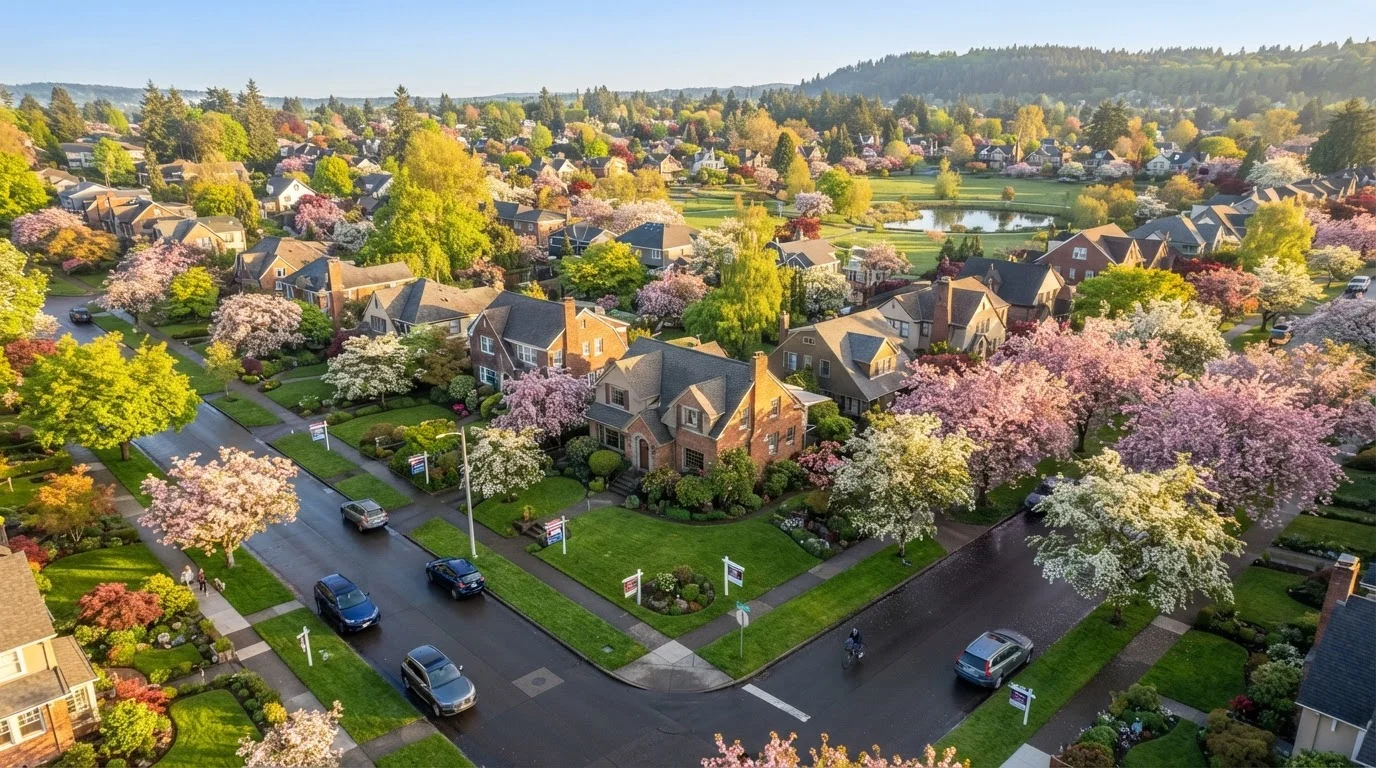
Spring - roughly March through June - is the most active period in most U.S. housing markets. Sellers who held off through winter bring their homes to market, and buyers who spent months preparing emerge simultaneously. The result is a surge in both supply and demand, though demand typically builds faster than supply, creating competitive conditions.
During peak spring weeks, homes in popular markets can receive multiple offers within days of listing. Prices often reflect this intensity. For buyers, the advantage is selection - more listings mean a better chance of finding a home that fits specific needs. The disadvantage is competition: bidding wars, escalation clauses, and waived contingencies become more common.
Sellers generally benefit from spring's energy. Motivated buyers, favorable weather for showings, and the psychological lift of blooming landscapes can all contribute to faster sales and stronger offers. That said, sellers are also competing with other listings - a crowded spring market isn't automatically an advantage if a home is priced or presented poorly.
Time Your Search Around Your Priorities
If maximizing selection is your top concern, searching in spring gives you the most options. If minimizing competition matters more - or if you need sellers to be flexible on terms or price - fall and winter often favor buyers. Neither timing is universally superior; match your strategy to what matters most in your specific situation.
Summer, Fall, and Winter: What Changes and What Doesn't
By mid-summer, some of the urgency fades. Families who needed to move before school starts have largely done so, and new listings taper. Activity remains solid but more measured. Fall - September through November - occupies a middle ground: listings decline but so does competition, and sellers who haven't sold may begin reducing prices.
Winter is the quietest season in most markets. Fewer homes are listed, fewer buyers are active, and transactions slow noticeably. Homes that do come to market in winter often represent more motivated sellers - job relocations, life changes, or financial pressures - which can open the door to negotiation. Buyers who search in winter face limited selection but encounter less competition for the homes they do find.
The four phases of a real estate market cycle interact with seasonal patterns in layered ways. A market already in a structural downturn will feel the winter slowdown more sharply; a market in a strong expansion phase may barely pause in December.
Regional Variations: One Country, Many Seasonal Clocks
The spring-peak model fits many Midwestern and Northeastern markets well, where harsh winters genuinely suppress activity. But it's a poor fit for markets where climate is mild year-round. In Florida, Arizona, and parts of Texas, winter months can actually be among the busiest - snowbirds arrive, retirees shop, and the weather is pleasant for house-hunting. These Sun Belt markets may see demand soften during hot, humid summers instead.
Mountain resort communities follow yet another pattern, often tied to ski seasons or summer tourism. Urban markets in cities with large student populations - Boston, Austin, Chicago - see rental demand spike sharply in late spring and summer, which can spill over into for-sale activity as well.
The practical takeaway: always calibrate your expectations to local norms rather than national averages. A real estate agent familiar with your specific market can tell you when listings historically peak, how long homes typically sit at different times of year, and what price trends look like month to month in your neighborhood.
Using Seasonal Awareness Without Over-Relying on It
Seasonal patterns are a useful lens - not a decision-making formula. Timing a purchase or sale to align with seasonal trends makes sense at the margin, but personal readiness, financial preparation, and local market conditions matter far more. Waiting for the 'perfect' season can mean missing the right home or the right opportunity.
It's also worth noting that in any given year, interest rates, economic news, or policy changes can disrupt typical seasonal rhythms entirely. The relationship between interest rates and housing affordability is one example of a force that can override seasonal tendencies - a sharp rate increase in spring can dampen what would otherwise be a competitive market.
Consumers who understand seasonal norms are better equipped to interpret what they're seeing: Is this a slow month because it's January, or because the market is softening? Is competition fierce because it's April, or because supply is chronically low? Those distinctions matter when setting price expectations, evaluating offers, and deciding when to act. For a broader view of how these patterns fit into longer market cycles, see our guide to economic signals worth watching before making a housing decision.
“Seasonality is real, but it's a rhythm, not a rule. The buyers and sellers who do best are those who understand the pattern well enough to know when local conditions are breaking from it.”
— Lawrence Yun, Chief Economist, National Association of Realtors
Frequently Asked Questions
Spring offers the most listings, which means more choices - but it also brings the most competition, which can push prices higher. Whether spring is 'best' depends on your priorities. If selection matters most, spring works. If you want less competition and a more motivated seller, fall or winter may serve you better. See also: <a href="/real-estate-basics/housing-markets/the-real-estate-market-assumptions-that-keep-leading-consumers-astray">common housing market assumptions worth questioning</a>.
Prices don't reliably drop in winter, but the pace of appreciation often slows and sellers may be more open to negotiation. Homes that sit on the market through fall into winter are more likely to see price reductions. However, local supply-and-demand conditions and interest rate environments can override seasonal tendencies.
In colder Northeastern and Midwestern markets, the seasonal swing is sharper - winters are slow, springs are active. In Sun Belt states like Florida, Arizona, and Texas, mild winters attract buyers year-round, often making winter a relatively busy season. Coastal markets and resort areas have their own distinct rhythms tied to tourism and local economies.
Listing in spring increases visibility and potential offer competition, which can benefit sellers. However, listing in a low-inventory winter market means less competition from other sellers, which can also produce strong results. The best timing depends on local conditions, personal circumstances, and how quickly you need to sell.
Compare current activity to the same time period in prior years - most real estate data providers publish year-over-year comparisons. If the slowdown is deeper than typical for the season, broader factors like rising mortgage rates or economic uncertainty are likely at play. Our guide on <a href="/real-estate-basics/housing-markets/understanding-real-estate-market-cycles">understanding real estate market cycles</a> covers how to distinguish these patterns.
Yes. Rental markets tend to peak in late spring and summer - especially in cities near universities, where lease cycles align with academic calendars. Renters who search in fall or winter often find more availability and landlords more willing to negotiate, though selection is narrower.
The content on this site is for informational purposes only and is not a substitute for professional advice. Always consult a qualified professional for guidance specific to your situation.