

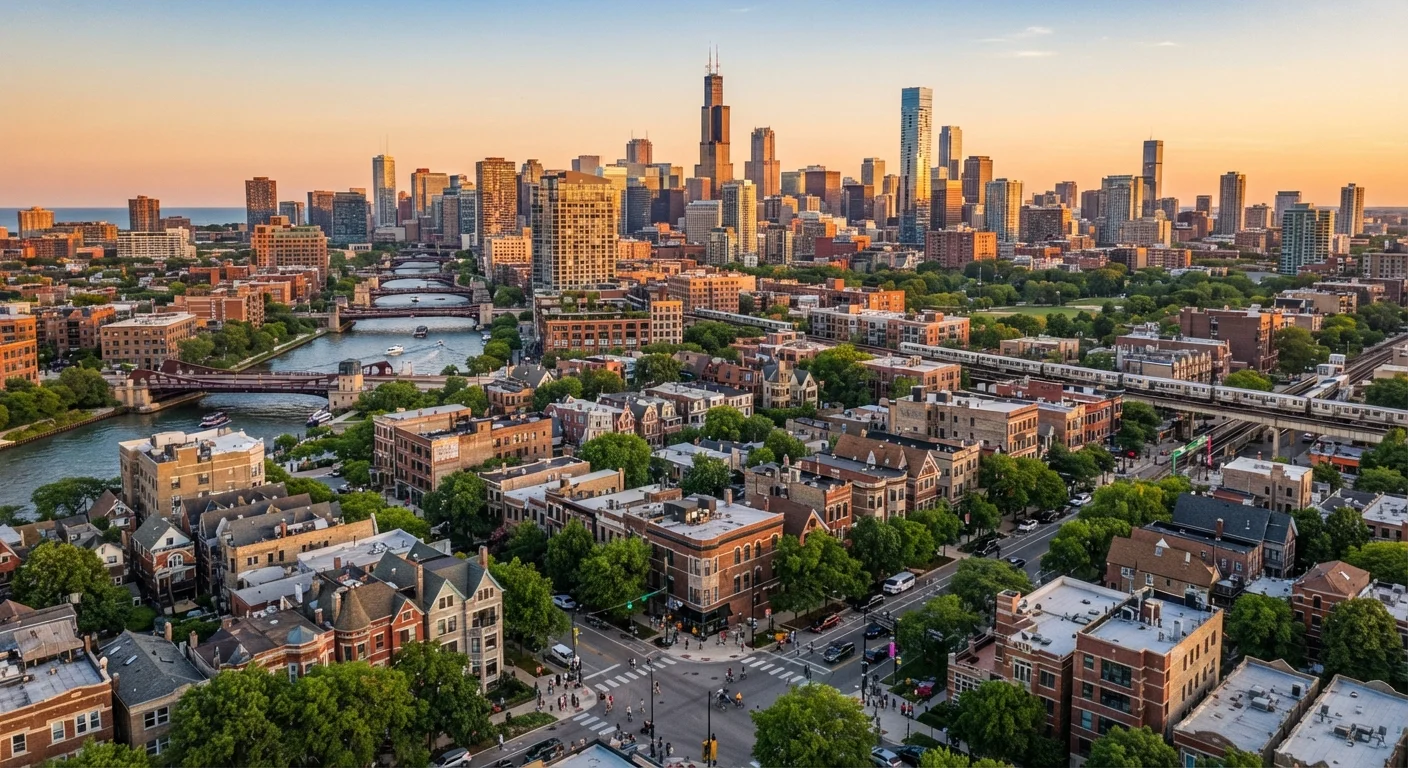
How to Actually Read a Chicago Neighborhood
Chicago is one of the few American cities where the phrase "it depends on the neighborhood" carries real weight. The city spans 77 officially recognized neighborhoods across roughly 234 square miles, and the difference between two areas separated by a mile can feel like crossing a cultural border. Visitors who book a hotel downtown and never venture beyond Michigan Avenue are technically seeing Chicago - they're just not seeing much of it.
The north side runs cool and walkable, packed with brunch spots and record stores. The south side holds some of the city's most important cultural institutions alongside residential blocks that most tourists never reach. The west side has attracted waves of creative energy over the past decade. And downtown remains the practical anchor: transit hub, skyline spectacle, and tourist infrastructure all in one dense corridor.
For a useful comparison of how another American city structures its neighborhoods around visitor experience, see our New Orleans neighborhood guide. Chicago and New Orleans share a certain candor - both reward the visitor willing to leave the main drag.
The neighborhoods below aren't ranked. They're matched to traveler types. Find your fit, then plan accordingly.
The Loop & River North - For the First-Timer Who Wants Everything Within Reach
If this is your first Chicago trip and you want walkable access to the Art Institute, Millennium Park, deep-dish restaurants, and the architectural boat tours that belong on every itinerary at least once, downtown delivers. River North adds a dense bar and restaurant scene just north of the Chicago River. The tradeoff is noise, tourist pricing, and a certain anonymity - you'll be surrounded by people who are also clearly visiting, which can flatten the city's texture.
Best for: travelers with limited time, those attending conventions or shows at large downtown venues, or anyone who simply needs frictionless orientation before heading elsewhere.
Downtown delivers frictionless access to Chicago's biggest landmarks - useful for first visits, but only a starting point.
Wicker Park & Bucktown - For the Independent-Minded, Culturally Curious Traveler
These two adjoining neighborhoods just northwest of downtown have been creative hubs since the 1980s and retain real edge despite significant gentrification. Milwaukee Avenue is the spine: vintage clothing, indie bookshops, live music venues, and restaurants that run from cheap tacos to serious tasting menus. The residential streets of Bucktown have gorgeous courtyard buildings and a quieter pace. This area rewards walkers and people who plan their days around eating and browsing rather than checking off landmarks.
Best for: younger travelers, solo visitors comfortable navigating a city on their own terms, and anyone whose ideal afternoon involves a record store and a neighborhood bar.
Wicker Park rewards slow, curious visitors who'd rather discover a neighborhood than photograph a landmark.
Pilsen - For Travelers Who Want Art, Food, and Authentic Chicago Culture
Pilsen, on the lower west side, has been Chicago's Mexican-American cultural heartbeat for decades. The neighborhood's streets are lined with murals, its taquerias and bakeries are the real thing, and the National Museum of Mexican Art - free to enter - is one of the most undervisited major museums in the city. Saturday mornings at the nearby Maxwell Street Market are worth waking up early for. Pilsen is a 15-minute ride from the Loop on the Pink Line, making it more accessible than its off-the-radar reputation suggests.
Best for: food-focused travelers, art lovers, families, and anyone who wants to engage with Chicago beyond its tourist infrastructure.
Pilsen's murals, taquerias, and free world-class museum make it one of Chicago's most rewarding and undervisited neighborhoods.
Hyde Park - For the Intellectually Curious or Museum-Obsessed Traveler
Hyde Park sits on the south lakefront, about 30 minutes from the Loop by express bus or Metra commuter rail. It's home to the University of Chicago, the Museum of Science and Industry (one of the largest in the Western Hemisphere), and the Robie House - a Frank Lloyd Wright masterwork. The neighborhood has a bookish, quietly confident character. It doesn't cater to tourists the way downtown does, which is precisely what makes it interesting. The lakefront path here is far less crowded than the stretches near Navy Pier.
Best for: architecture enthusiasts, families with older kids, travelers who want a quieter base with serious cultural density.
Hyde Park offers world-class museums and architecture in a neighborhood that feels genuinely lived-in rather than curated for visitors.
Andersonville & Ravenswood - For Travelers Who Want a Neighborhood That Feels Like Home
Andersonville, on the far north side, is the kind of place that makes people consider moving to Chicago. Clark Street anchors a walkable strip of independent restaurants, Swedish bakeries (a nod to the neighborhood's historic immigrant community), wine bars, and thoughtful gift shops. It's genuinely residential - children on bikes, regulars at the coffee shop counter, a Saturday farmers market that's not performing for anyone. Ravenswood, just to the west, adds an arts district and a growing cluster of small manufacturers and breweries. Both neighborhoods are quiet enough to restore energy after dense sightseeing days.
Best for: travelers who burn out quickly on tourist environments, couples, and anyone spending more than four or five days in the city who wants to feel located rather than just visiting.
Andersonville is the Chicago neighborhood that most easily makes visitors wish they lived there - unhurried, genuine, and quietly excellent.
Logan Square - For Travelers Who Want Chicago's Food Scene at Its Most Adventurous
Logan Square has emerged over the past fifteen years as one of the most talked-about dining neighborhoods in the country, with a density of ambitious restaurants and bars along Milwaukee Avenue and the grand Boulevard system around Logan Boulevard itself. The vibe skews younger and creative - this is where chefs open their first restaurants and bartenders experiment with the menu. The neighborhood also has a strong weekend farmers market and some of Chicago's most interesting vintage and design shops. It's about 20 minutes from downtown on the Blue Line.
Best for: food and drink-focused travelers, people who read restaurant reviews before planning trips, and anyone who wants the energy of a thriving local scene rather than tourist-facing dining.
Logan Square's restaurant density and culinary ambition make it essential for any serious food-focused trip to Chicago.
A Few Things Worth Knowing Before You Go
Chicago's CTA 'L' train is reliable and affordable for most north-side and downtown travel, but coverage thins considerably south of the Loop. If your itinerary leans south or west, budget for rideshares or plan routes carefully in advance. The city also changes significantly by season - outdoor dining, street festivals, and lakefront culture define summer, while winter demands layering and shorter distances between stops. Our Chicago season guide walks through those tradeoffs in detail.
Plan at least one full day outside downtown
Chicago's most memorable experiences - a meal in Pilsen, an afternoon in Hyde Park, a slow walk through Andersonville - happen away from the tourist corridor. If your itinerary is built entirely around the Loop and River North, consider swapping one downtown half-day for a dedicated neighborhood excursion. The CTA makes most of these reachable without a car.
One thing many visitors underestimate: Chicago's neighborhoods are closely tied to its housing geography. Areas that have seen rapid cultural investment often reflect broader patterns in urban real estate - rising rents, shifting demographics, new development. If you're curious about how city neighborhood dynamics connect to housing markets more generally, the urban housing markets explainer offers useful context.
Whatever neighborhood you land in, the best approach is the same: walk until something looks interesting, then walk a little farther. Chicago rewards that kind of curiosity in almost every direction.
The content on this site is for informational purposes only and is not a substitute for professional advice. Always consult a qualified professional for guidance specific to your situation.