

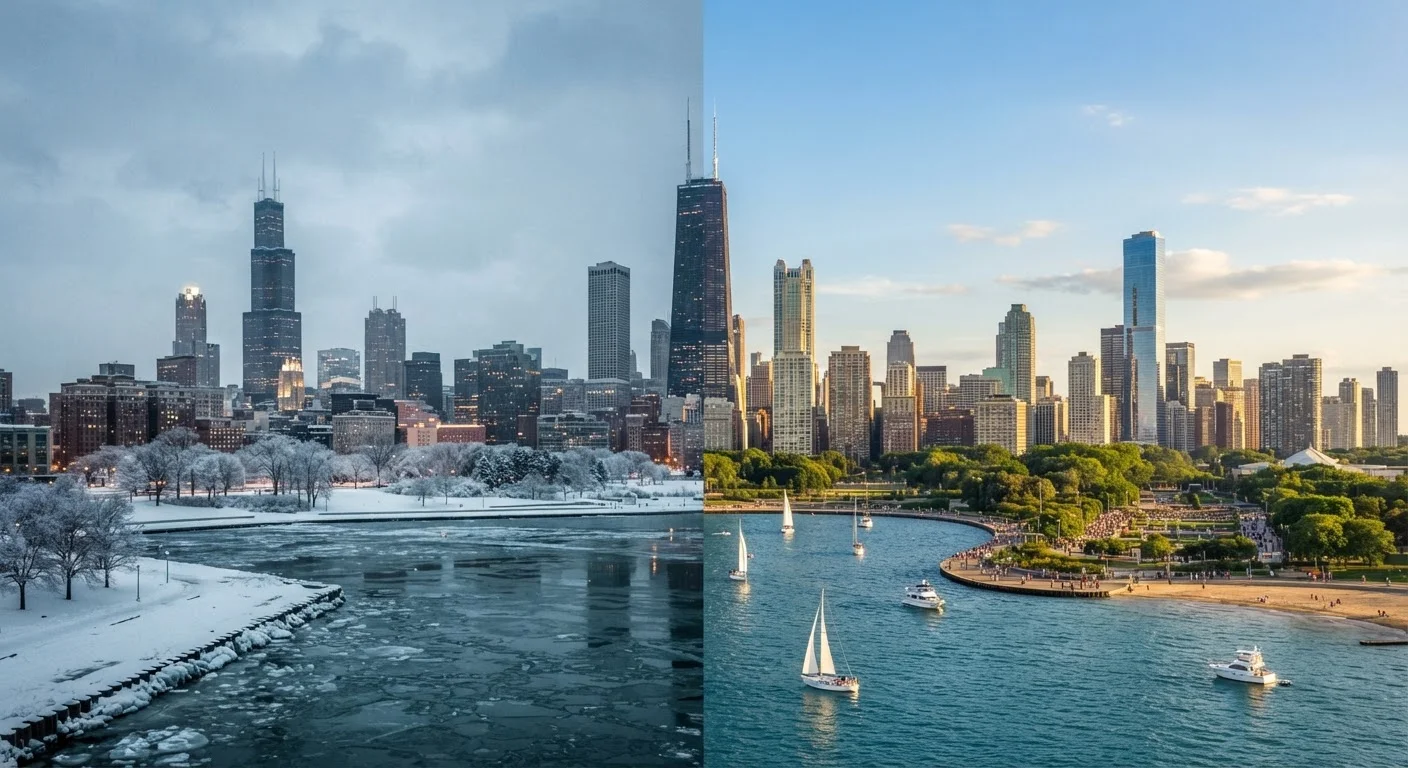
Option A
Chicago in Winter
The raw, unfiltered, locals-first city.
Best for: Budget-conscious travelers and culture seekers who don't mind cold in exchange for fewer crowds and lower prices.
Option B
Chicago in Summer
The city at full, electric, lakefront stride.
Best for: First-time visitors and outdoor enthusiasts who want festivals, beaches, and the full Chicago energy at peak form.
What the Weather Actually Means for Your Trip
Chicago's reputation for cold is entirely earned. Winter in the city - roughly December through February - regularly delivers temperatures between 15°F and 30°F, with wind chills that can push the felt temperature well below zero. The lakefront amplifies every gust. This isn't inconvenient cold; it's the kind that requires real planning: insulated boots, a wind-resistant outer layer, and an honest assessment of how much time you want to spend outdoors.
Summer, by contrast, sits mostly between 70°F and 85°F from June through August, with high humidity that makes the warmest days feel heavier than the thermometer suggests. Heat advisories are not uncommon in July. The lake provides genuine relief - breezes off Lake Michigan cool the Lakefront Trail considerably - but inland neighborhoods can feel muggy by afternoon.
Neither season is mild. Chicago's climate is one of the most dramatic of any major US city, which is exactly why the season you choose reshapes the trip entirely. For a broader look at how seasonal timing affects travel generally, see how peak and off-season timing affects travel decisions.
| Criterion | Chicago in Winter | Chicago in Summer |
|---|---|---|
| Typical temperature range | 15°F - 32°F (Dec-Feb) | 70°F - 85°F (Jun-Aug) |
| Hotel pricing | Generally lower demand | Peak rates, book early |
| Crowd levels | Low; museums near-empty | High; festivals and tourists |
| Lakefront access | Usable but icy and windswept | Fully open; beaches and trails |
| Performing arts | Full symphony/opera season | Outdoor concerts; some touring shows |
| Architecture boat tours | Typically unavailable | Fully operational |
| Restaurant reservations | Easier to secure | High demand; plan ahead |
Crowds, Costs, and What's Actually Open
Summer is Chicago's undisputed peak season. Lollapalooza, the Taste of Chicago, the Chicago Air and Water Show, and dozens of neighborhood festivals compress into a few months, drawing millions of visitors. Hotel rates in the River North and Loop areas reflect that demand. Reservations - for restaurants, tours, even lakefront bike rentals - become something you plan around rather than decide on the day.
Winter flips the equation. Museum campuses that feel shoulder-to-shoulder in July become genuinely spacious. The Art Institute of Chicago, the Shedd Aquarium, and the Field Museum are all operating in full form, and you may find yourself in gallery rooms that feel almost private. Performing arts - the Chicago Symphony Orchestra, Lyric Opera, Broadway in Chicago productions - are in peak season precisely when tourists are fewest.
~58M
Annual visitors to Chicago
Chicago consistently ranks among the most visited US cities, with the majority of leisure tourism concentrated in summer months, according to Choose Chicago estimates.
−16°F
Record low wind chill, Chicago winter
Chicago's lakefront location means wind chill temperatures can reach dangerous levels; the National Weather Service issues wind chill advisories multiple times each winter season.
One nuance worth flagging: some outdoor attractions scale back in winter. Architecture boat tours on the Chicago River typically run from spring through fall. The 606 trail is usable year-round but icy stretches require caution. Understanding what matters most to you - and verifying operating schedules directly with venues before you travel - is essential for either season.
For context on how these dynamics play out in general travel planning, the real trade-offs of peak vs. off-peak travel offers a useful framework.
Neighborhoods and the Seasonal Personality of the City
The city's neighborhoods shift personality with the seasons in ways that can genuinely surprise first-time visitors. Summer brings Chicago's famous block parties, open-air markets, and patio culture into full expression. Wicker Park and Pilsen see weekend street festivals. The Navy Pier lakefront buzzes. Millennium Park hosts free outdoor concerts under the Pritzker Pavilion nearly every evening.
Winter channels the city inward. The dive bars of Logan Square, the coffee shops of Andersonville, the jazz and blues venues of the South Side - these become the real engine of Chicago winter life. There's an intimacy to the city when the tourists are gone and residents hunker into their neighborhood anchors. If that's the version of Chicago you're drawn to, winter delivers it authentically.
Your choice of neighborhood also shapes how each season lands. Chicago's neighborhoods each offer a different version of the city - understanding the map before you book your accommodation can make either season work better for your particular style of travel.
Spring and Fall as Genuine Alternatives
May and September are widely considered Chicago's most temperate months, with temperatures in the 50s-60s°F and reduced crowds compared to peak summer. Spring brings cherry blossoms to Lincoln Park and the start of outdoor dining season. Fall delivers spectacular foliage and the Chicago Marathon in October. Neither season offers winter's pricing or summer's full energy, but both provide a balanced experience that avoids the extremes entirely. If your travel dates are flexible, these shoulder months are worth serious consideration. Slower itineraries particularly benefit from the shoulder season pace.
The content on this site is for informational purposes only and is not a substitute for professional advice. Always consult a qualified professional for guidance specific to your situation.