

Our Verdict
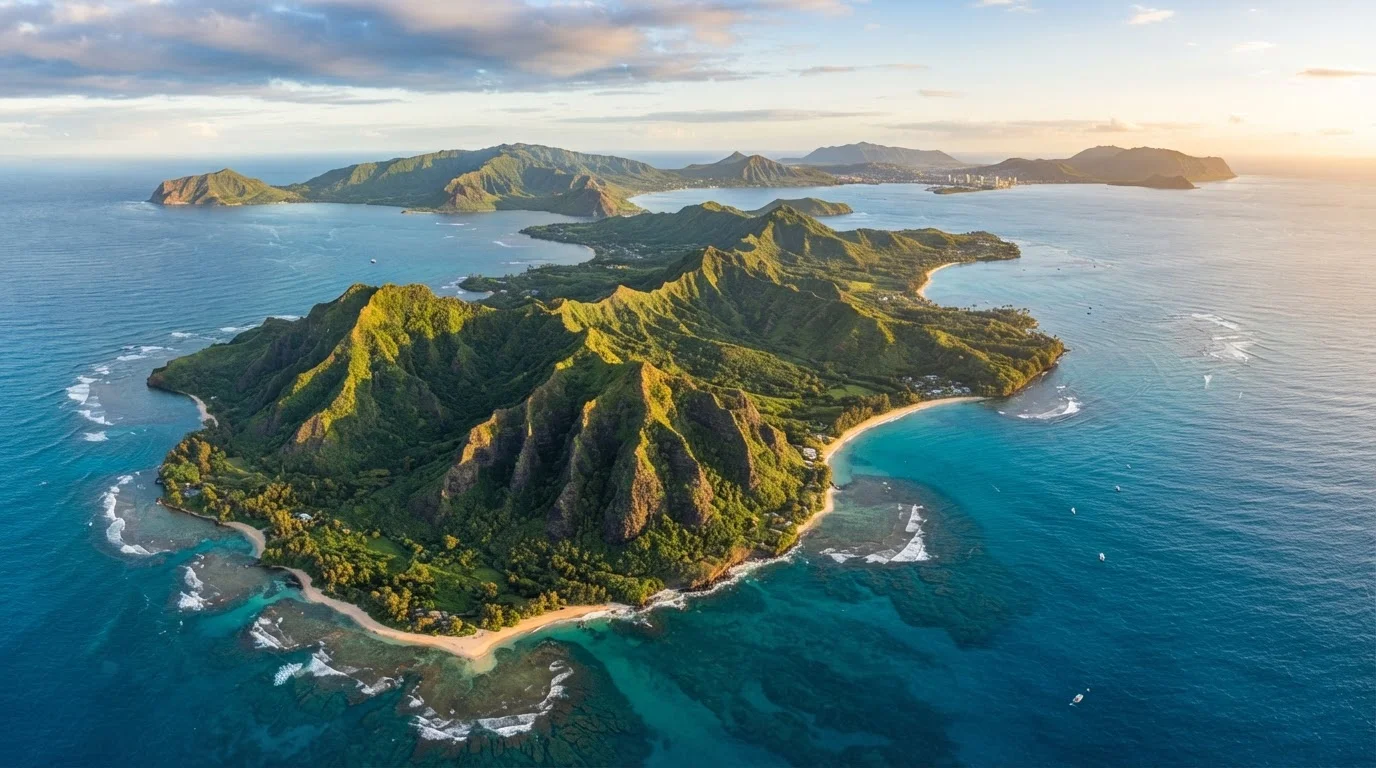
No single Hawaiian island is objectively better than the others - each has a character that fits a different kind of traveler. Oahu delivers the most complete infrastructure and cultural depth, Maui balances comfort with adventure, Kauai rewards those willing to slow down, and the Big Island is the only place on earth where you can stand on freshly formed land.
| Best for | Recommended |
|---|---|
| First-time visitors and those wanting city amenities alongside beaches | Oahu |
| Couples and families seeking resort comfort with scenic day-trip options | Maui |
| Hikers, nature lovers, and travelers wanting a quieter, uncrowded feel | Kauai |
| Adventurous travelers drawn to geology, stargazing, and raw landscapes | Big Island |
Why Each Island Tells a Different Story
Hawaii is often spoken of as a single destination, but arriving on Oahu and arriving on Kauai can feel like two entirely different countries. The chain stretches roughly 1,500 miles across the North Pacific, and the main islands - Oahu, Maui, the Big Island, and Kauai - formed at different points in geological time, shaped by distinct volcanic activity, rainfall patterns, and human settlement. What this means for travelers is that choosing the wrong island for your travel style isn't just an inconvenience; it can define whether a trip feels like a dream or a mismatch.
For a broader look at how these tradeoffs play out in trip planning, see our guide to the honest tradeoffs between islands. What follows are honest, ground-level snapshots of what each island actually offers.
Oahu: The Island That Does Everything
Oahu is home to Honolulu, Waikiki Beach, and Pearl Harbor - names that carry real cultural and historical weight. It's by far the most developed island, with the best public transit, the widest range of restaurants and lodging, and the most consistent infrastructure for first-time visitors. Waikiki itself is genuinely crowded, but it delivers on its promise: a walkable strip of hotels, gentle surf for beginners, and a beachfront that stays lively into the evening.
Away from the tourist corridor, Oahu shifts dramatically. The North Shore hosts some of the world's most powerful winter surf, and the windward side - towns like Kailua and Kaneohe - offers a quieter, more local-feeling Hawaii. Pearl Harbor's memorials are among the most sobering and important historical sites in the Pacific. Oahu also has the most frequent and affordable inter-island flight connections, making it a logical starting point for island-hopping.
| Oahu | Maui | Kauai | Big Island | |
|---|---|---|---|---|
| Overall vibe | Urban & historical | Resort & scenic | Wild & remote | Geological & vast |
| Best for | First-timers, history buffs | Couples, families | Hikers, nature lovers | Adventurers, stargazers |
| Top natural draw | North Shore surf, Diamond Head | Haleakalā, Road to Hana | Na Pali Coast, Waimea Canyon | Active volcanoes, Mauna Kea |
| Infrastructure & amenities | Extensive | Strong resort areas | Limited but adequate | Spread out, limited |
| Crowd levels | High in Waikiki | High in peak season | Moderate, feels quieter | Varies by region |
| Relative cost | Moderate-high | High | Moderate-high | Moderate |
Maui: Comfort Meets Drama
Maui is where a lot of travelers land when they want a polished resort experience without sacrificing natural wonder. The Road to Hana - a winding, cliff-hugging coastal drive - passes waterfalls, bamboo forests, and black sand beaches over about 52 miles of two-lane road. Haleakalā National Park lets you watch sunrise above the clouds from a 10,000-foot volcanic summit. And the calm, clear waters off West Maui and Wailea are well-suited to snorkeling, whale watching (humpback whales visit seasonally), and paddling.
The downside is that Maui's most popular spots can feel genuinely overwhelmed in peak season. Lahaina, which was a historic whaling town and arts district before the devastating 2023 wildfire, is slowly rebuilding - a reminder that travel plans in Maui should be checked against current conditions before any visit. Despite that, the island's diversity of terrain - desert on the leeward side, rainforest on the windward - makes it one of the most photographically compelling islands in the chain.
Check Conditions Before You Go
Road closures, trail conditions, and access to natural attractions in Hawaii can change with little notice due to weather events, volcanic activity, or ongoing recovery efforts. Before finalizing any itinerary - particularly for Maui's Lahaina area or Big Island volcanic zones - check current status through the National Park Service and Hawaii Tourism Authority websites. Booking refundable accommodations where possible gives you flexibility if conditions shift.
Kauai: The Wild One
Kauai is the oldest of the main islands geologically, and it looks the part. Millennia of erosion have carved the Na Pali Coast into cathedral-like green cliffs that drop straight into the sea - accessible only by kayak, trail, or boat tour. Waimea Canyon, sometimes called the Grand Canyon of the Pacific, cuts nearly 3,600 feet deep across the island's western interior. Rainfall on the north shore is among the heaviest anywhere in the United States, which explains the saturated, almost surreal greenery that greets visitors.
What Kauai doesn't have is the variety of resort infrastructure found on Oahu or Maui. There are no traffic lights on the island. Major chain hotels are limited. This is largely a feature for the travelers Kauai attracts - people who want to hike the Kalalau Trail, kayak the Wailua River, or simply sit on a quiet beach without a swim-up bar nearby. If you've enjoyed exploring less-developed island chains - the way the Florida Keys reward travelers who get off the main drag - Kauai operates on a similar principle of rewarding curiosity over convenience.
Big Island: Scale and Geology Unlike Anywhere Else
The Big Island of Hawaii is larger than all the other Hawaiian islands combined, and it's still growing. Kīlauea, one of the world's most continuously active volcanoes, has been reshaping the island's southeastern coastline for decades, and Hawaii Volcanoes National Park gives visitors safe, ranger-guided access to lava landscapes, lava tubes, and steam vents. At the opposite extreme, Mauna Kea - a dormant volcano at nearly 14,000 feet - hosts world-class astronomical observatories and can receive snow in winter.
The island's sheer size means the driving distances between attractions can be substantial - two to three hours from the Kohala Coast resorts to the volcano park is typical. But that same scale means genuine climate diversity: the Kona Coast is reliably sunny and dry, while Hilo on the east side averages over 140 inches of rain per year. The Big Island suits travelers who want to feel like they're exploring rather than sightseeing - those willing to cover ground in exchange for landscapes that feel genuinely otherworldly.
4,028 ft
Depth of Waimea Canyon, Kauai
Often called the Grand Canyon of the Pacific, Waimea Canyon is one of the largest canyons in the Pacific Basin.
~140 in
Average annual rainfall in Hilo, Big Island
Hilo is one of the wettest cities in the United States, illustrating the Big Island's dramatic climate variation.
52 miles
Length of the Road to Hana, Maui
The Road to Hana passes roughly 620 curves and 59 bridges along Maui's northeastern coastline.
Making the Call: What Kind of Trip Are You Planning?
The honest answer is that Hawaii's four main islands aren't interchangeable - they serve different traveler temperaments. If you're traveling with young children or elderly family members who need reliable amenities, Oahu and Maui offer the most support. If physical adventure - serious hiking, kayaking, or surfing - is your primary motivation, Kauai and the Big Island raise the ceiling considerably. Budget travelers will generally find Oahu and the Big Island more flexible on price than Maui, though costs across the archipelago are consistently higher than most US mainland destinations.
Multi-island trips are popular and logistically manageable - inter-island flights are short (under an hour between most pairs) - but trying to cover all four islands in less than two weeks often means spending more time in airports than in the landscape. Two islands, explored properly, typically deliver a more satisfying trip than four islands skimmed.
The content on this site is for informational purposes only and is not a substitute for professional advice. Always consult a qualified professional for guidance specific to your situation.