

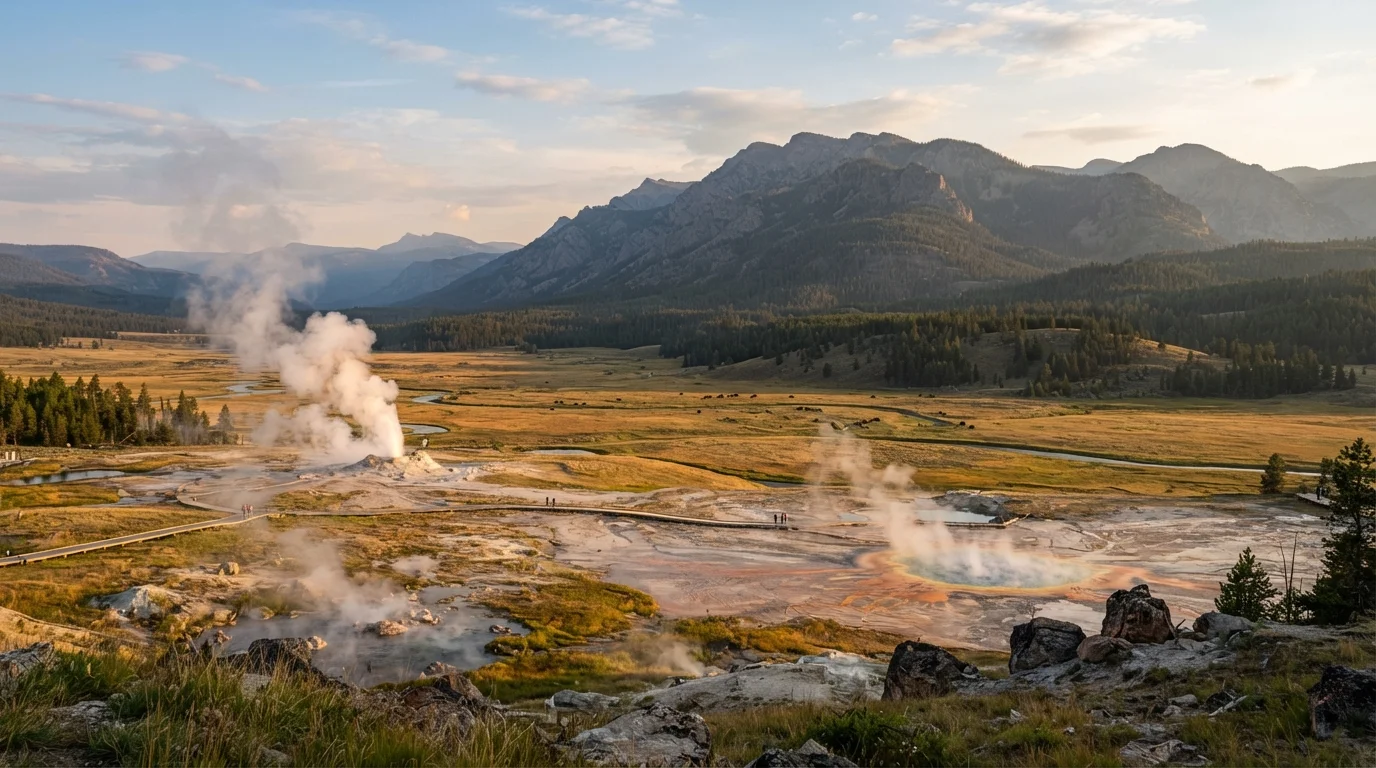
The Park Is Much Larger Than It Looks on a Screen
Most people pull up Yellowstone on a phone map and feel a surge of confidence. The roads look manageable, Old Faithful seems a short hop from the Grand Prismatic Spring, and Lamar Valley appears just around a bend from Mammoth Hot Springs. Then they arrive and spend two hours on a single stretch of road behind a bison jam.
Yellowstone covers roughly 2.2 million acres across three states. Its Grand Loop Road alone is about 142 miles, and that doesn't account for the wildlife stops, thermal basin walks, or the simple reality that you cannot safely rush through this place. First-timers routinely pack five or six major sites into a single day and end up seeing none of them properly. A more honest approach is to pick one region per day - the geyser basins, the canyon, or the wildlife corridors of Lamar - and explore it slowly.
If you're planning a broader Western trip and want perspective on how Yellowstone's demands compare to other parks, our guide to visiting a US national park for the first time covers entry logistics, permit systems, and what trail ratings actually mean across the system.
Common Mistakes That Catch Visitors Off Guard
The following errors show up repeatedly among first-time Yellowstone visitors. They're rarely reckless choices - they're usually the result of reasonable assumptions that simply don't hold up inside the park.
Booking accommodation after arrival or within a few weeks of the trip.
Why it happens: Many travelers assume that a national park, being public land, will always have space available. Yellowstone's in-park lodges and campgrounds operate on a reservation system that fills months in advance during summer.
Assuming cell service will be reliable enough for navigation and communication.
Why it happens: Smartphone dependency is so normalized that most travelers don't think twice about it until coverage disappears. Large sections of Yellowstone have no cell signal at all.
Visiting only Old Faithful and the Upper Geyser Basin, missing the park's broader geography.
Why it happens: Old Faithful is Yellowstone's most famous landmark and feels like a natural anchor point for an itinerary. It's easy to spend an entire day in that basin and leave thinking you've seen the park.
Underestimating physical demands of walks and hikes at elevation.
Why it happens: Many Yellowstone trails are rated as easy or moderate, and the boardwalk loops around thermal features don't look strenuous on paper. Altitude affects exertion significantly, especially for visitors arriving from sea level.
Arriving without a plan for the park's entrance fee and vehicle permit requirements.
Why it happens: Fee structures and America the Beautiful passes aren't widely discussed in general travel content, so many visitors arrive at the gate unprepared for the cost or the process.
2.2M
Acres in Yellowstone National Park
Yellowstone is larger than Rhode Island and Delaware combined, according to the National Park Service.
4M+
Annual park visitors
Yellowstone consistently records over four million visits per year, with peak congestion in July and August.
~7,500 ft
Average elevation across the park
Much of the Yellowstone plateau sits above 7,000 feet, meaningfully affecting physical exertion for visitors from lower elevations.
Planning Around Wildlife Sightings Without Understanding the Risks
Yellowstone's wildlife is genuinely spectacular, and the urge to get close is understandable. But the park's regulations exist for documented reasons: bison can sprint at 35 mph, and bears are unpredictable at any distance. The National Park Service requires visitors to stay at least 25 yards from bison and elk, and 100 yards from bears and wolves - distances that feel larger in practice than they sound on paper.
What catches people off guard isn't aggressive intent - it's the casual drift that happens when everyone around you is also inching closer. Bison in particular appear docile when grazing roadside, and the impulse to photograph them at arm's length has led to serious injuries. Carry bear spray in bear country, learn how to use it before you need it, and treat every sighting as a chance to observe rather than approach.
Never Approach Wildlife - Even Roadside Bison
Bison are involved in more visitor injuries at Yellowstone than any other animal. Their size creates a false impression of sluggishness, but they are fast, unpredictable, and protective of their space. The 25-yard minimum distance required by the park is a legal requirement, not a suggestion - and rangers can and do issue citations. Keep this distance even when others around you are drifting closer.
For a useful comparison of how wildlife protocols and entry rules differ across the West's major parks, the Glacier National Park planning guide covers a similarly demanding environment with different but equally strict considerations.
Underestimating Weather, Altitude, and the Thermal Hazards Underfoot
Yellowstone sits on a high plateau averaging around 7,500 feet in elevation. Even in July, afternoon thunderstorms roll through without much warning, and temperatures can swing 40 degrees between morning and evening. Visitors who pack only for warm weather frequently end up cold, wet, and exposed on an exposed ridgeline or boardwalk.
The thermal features present a separate, less obvious danger. The colorful hot springs look approachable, and the boardwalks feel like ordinary walkways. But the thin crust around many thermal areas can give way, and the water in many pools exceeds 180°F. Staying on designated boardwalks and trails isn't optional - it's the difference between a memorable trip and a medical emergency. If you enjoy the quieter, less geothermally charged landscapes of the American West, lesser-known Western parks offer equally rewarding scenery with fewer of these specific hazards.
Thermal Ground Can Collapse Without Warning
The colorful crust around Yellowstone's hot springs and geothermal features is deceptively fragile. Water temperatures in many pools are lethal. The National Park Service is explicit: stay on boardwalks and designated trails at all times, and never allow children to run ahead in thermal areas. No photograph is worth the risk of stepping off marked paths.
The content on this site is for informational purposes only and is not a substitute for professional advice. Always consult a qualified professional for guidance specific to your situation.