

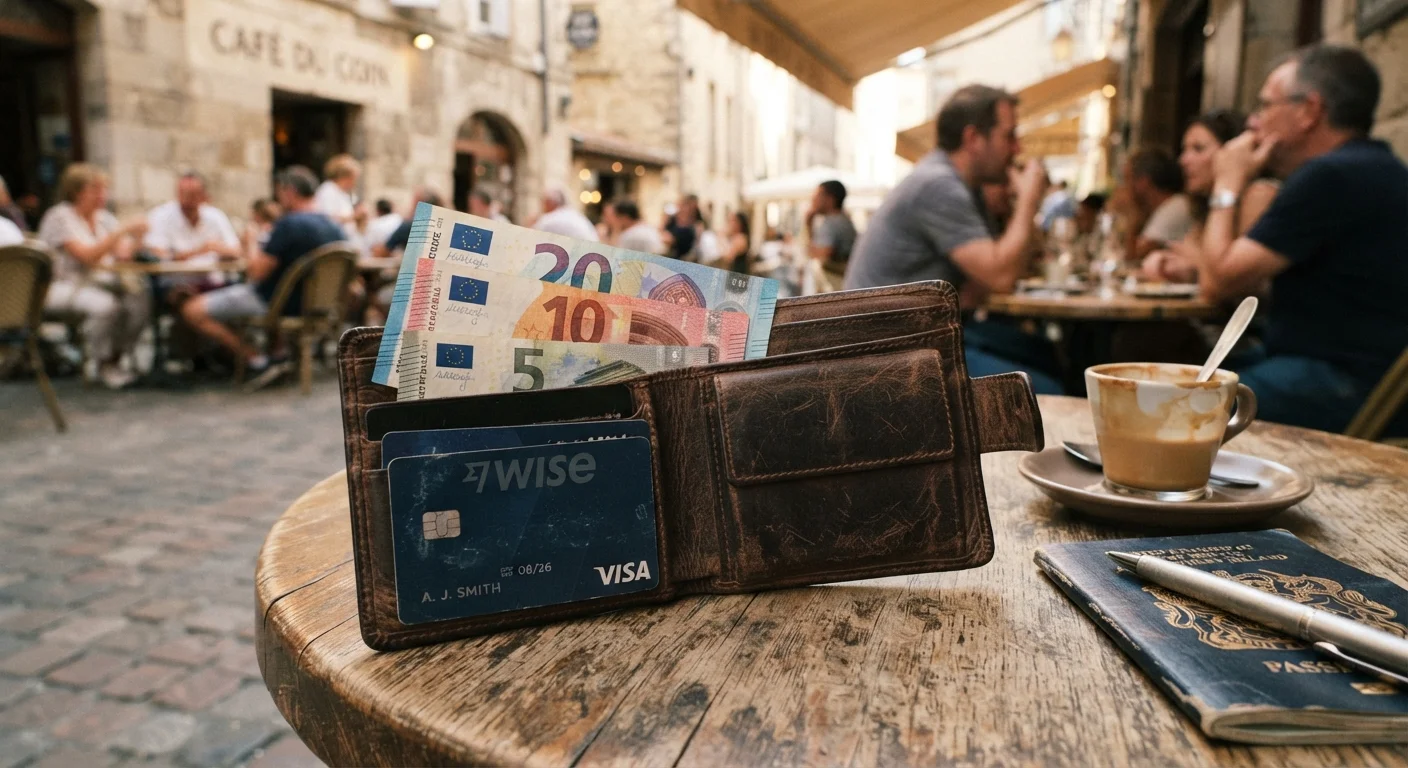
Option A
Cash
The universally accepted, low-tech fallback.
Best for: Destinations with limited card infrastructure, markets, rural areas, and situations where connectivity or power cannot be relied upon.
Option B
Cards
The convenient, loss-limiting digital option.
Best for: Urban destinations, longer trips, and travelers who want fraud protection and the ability to access funds without carrying large amounts of currency.
Why There's No Universal Answer
Ask seasoned travelers whether to carry cash or cards abroad and you'll get different answers - because the honest response is: it depends. The right balance shifts based on where you're headed, how long you're staying, and the kind of experiences you're chasing.
A city-hopper in Western Europe will have a very different experience than someone exploring rural Southeast Asia or a traveler navigating a remote national park with limited connectivity. Card acceptance, ATM density, local tipping culture, and the prevalence of petty theft all vary significantly by destination. Understanding those variables - rather than defaulting to habit - is what separates a prepared traveler from one caught off guard.
For a broader look at how to protect yourself while traveling, see our guide to why travelers lose valuables abroad.
| Criterion | Cash | Cards |
|---|---|---|
| Acceptance in rural areas | Universal | Often limited or unavailable |
| Fraud protection | None - loss is permanent | Strong - disputes and freezes available |
| Foreign transaction costs | Exchange rate margin at conversion | Fees of 1-3% per transaction (varies by card) |
| Risk if lost or stolen | High - unrecoverable | Lower - card can be frozen and replaced |
| Requires connectivity or power | No | Yes - terminal and network needed |
| Emergency purchasing power | Limited to what you carry | Access to credit limit if available |
| Small vendor / market use | Ideal | Rarely accepted |
| Spending record keeping | Manual tracking needed | Automatic via statements |
The Case for Carrying Cash
Cash remains indispensable in many corners of the world. In rural areas, at local markets, and with small vendors, card readers are either absent or unreliable. Some destinations - particularly in parts of Africa, Central America, and Southeast Asia - still operate predominantly on cash even in mid-sized towns.
There's also a practical simplicity to cash: it works without power, connectivity, or bank approval. When a card reader goes down, when a bank temporarily flags an unfamiliar international transaction, or when a market stall simply doesn't accept plastic, cash is what keeps your day moving.
Cash also has psychological advantages. Studies in behavioral economics suggest people tend to spend more when paying by card than when handing over physical currency - something worth considering if budget discipline matters on your trip.
~40%
Global transactions still made in cash
According to the Bank for International Settlements, cash remains the dominant payment instrument in many countries, particularly for small-value transactions.
1-3%
Typical foreign transaction fee on cards
Many standard credit and debit cards charge a foreign transaction fee on every international purchase, which compounds noticeably over a multi-week trip.
2-3 days
Recommended cash reserve for most trips
Travel finance advisors commonly suggest carrying enough cash to cover two to three days of expenses as a practical buffer against card failures or access issues.
The real risks with cash are straightforward: loss, theft, and the difficulty of replacing it. Carrying more than you need in one place amplifies exposure. A practical habit is to divide cash across different locations - some in a wallet, some in a hotel safe or hidden travel pouch - rather than keeping it all together. This connects to the broader security mindset covered in habits that prevent losing valuables abroad.
The Case for Using Cards
Cards offer something cash fundamentally cannot: the ability to stop a loss in its tracks. If a card is stolen or cloned, a quick call to your bank can freeze the account and initiate dispute processes. With cash, what's gone is gone.
For longer trips or higher-cost destinations, cards reduce how much physical currency you need to manage at once. Many financial institutions now offer accounts with no foreign transaction fees or fee rebates on international ATM withdrawals - worth researching before departure, though the specific products vary widely.
Cards also create a built-in spending record, which can simplify expense tracking and budgeting after the fact. And in a genuine emergency - a medical situation, a missed connection requiring an unplanned hotel - a card with available credit provides immediate purchasing power that cash reserves might not match.
The risks to watch: foreign transaction fees that quietly add 1-3% to every purchase, dynamic currency conversion traps at point-of-sale terminals (always pay in the local currency), and ATM skimming devices. For context on skimming and broader digital security risks abroad, our digital security while traveling guide covers practical steps.
Watch Out for Dynamic Currency Conversion
When paying by card abroad, a terminal or cashier may offer to charge you in your home currency rather than the local one. This is called dynamic currency conversion (DCC), and it almost always results in a worse exchange rate than simply paying in local currency. Always select the local currency option when given the choice - and if a terminal processes a DCC charge automatically, you can often request it be reversed.
Building a Practical Balance for Your Trip
Rather than treating this as an either/or decision, most experienced travelers land on a layered strategy: enough cash to cover two to three days of estimated spending, plus at least two cards from different networks (Visa and Mastercard, for example) stored separately from each other.
Before you leave, confirm whether your destination leans cash-heavy or card-friendly. Major cities in Japan, for instance, have historically been more cash-oriented than much of Europe. Check ATM availability and withdrawal limits - airport ATMs are widely available but often charge higher fees than in-city bank ATMs.
Notify your bank of your travel dates to reduce the chance of transactions being flagged. Know your card's PIN - many European chip-and-PIN terminals require it even for credit cards. And keep an emergency cash reserve - enough for a night's accommodation and transport - stored completely separately from your main wallet.
Packing decisions and payment strategy often intersect more than travelers expect. Just as the choice between a carry-on and checked bag shapes what you can bring, your payment strategy shapes how you move through a destination. See our carry-on vs. checked luggage guide for a parallel framework on traveling light but prepared.
The content on this site is for informational purposes only and is not a substitute for professional advice. Always consult a qualified professional for guidance specific to your situation.