

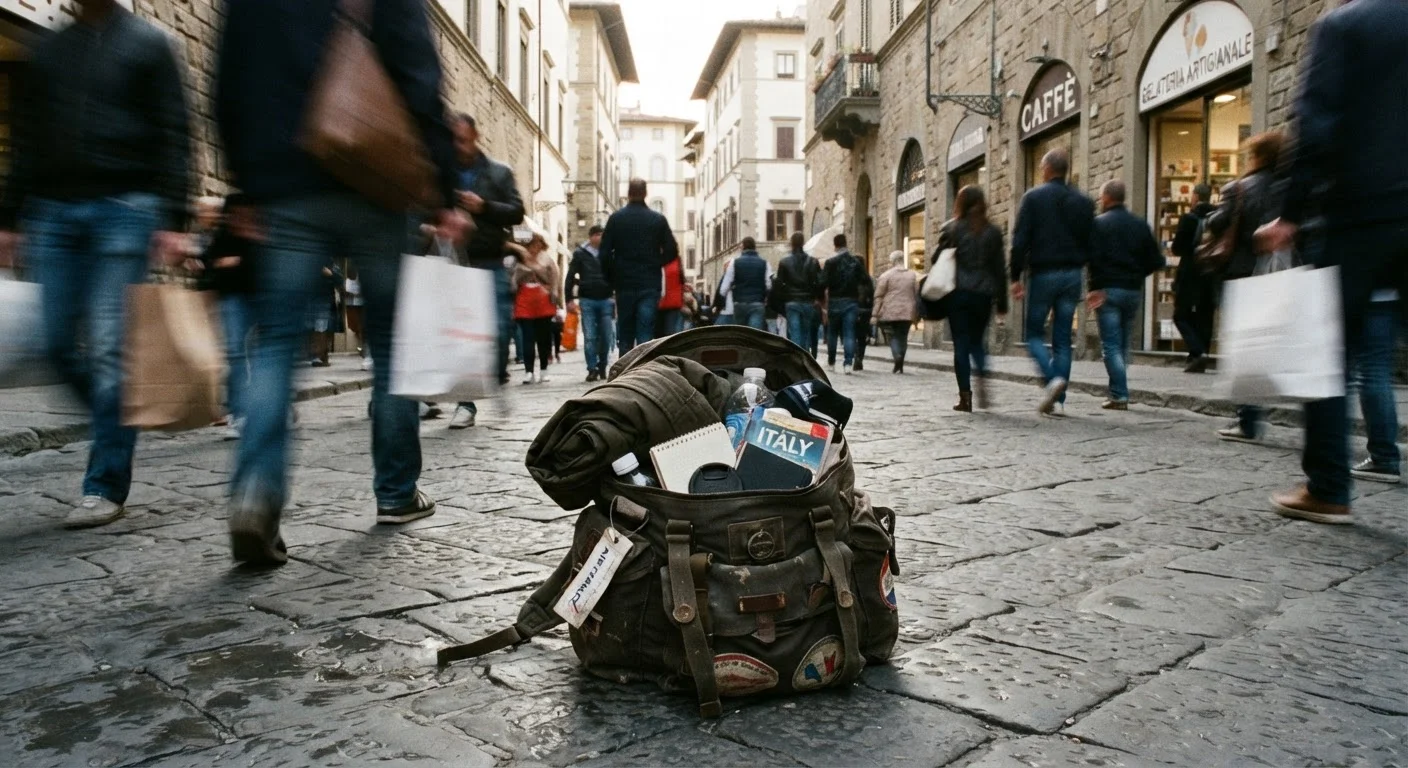
Why Travelers Are Disproportionately Targeted
Opportunistic theft doesn't discriminate by nationality or income level - it targets distraction and visibility. Travelers, almost by definition, carry more than they normally would: passports, foreign currency, multiple payment cards, electronics, and sometimes jewelry. They're also navigating unfamiliar environments, which means attention is divided in ways it simply isn't at home.
Understanding this dynamic is the first step. Most losses abroad - whether to theft or careless misplacement - are preventable, not inevitable. The habits that reduce risk are rarely dramatic; they're small, repeatable decisions about how you carry things, where you sit, and when you slow down.
Arrival Day Is Your Most Vulnerable Moment
Jet-lagged, unfamiliar with the environment, and often juggling luggage and directions - newly arrived travelers are the easiest targets for opportunistic theft. Keep your phone out of sight during navigation, use a bag you can secure in front of you, and avoid checking valuables in open areas like airport lounges or train platform benches while waiting for connections.
For a broader look at the financial consequences of being underprepared, the costs of travelling unprepared go well beyond replacing a stolen phone.
The Mistakes That Create Opportunity
Most incidents of travel theft follow a recognizable pattern: a moment of inattention, a predictable location, and a traveler whose valuables are easy to access. The six mistakes below cover the situations where losses most commonly occur - and each comes with a straightforward correction.
Storing all valuables in a single bag or pocket.
Why it happens: It feels more organized and convenient to keep everything together, especially when moving quickly between locations.
Leaving bags unattended in cafés, restaurants, or public transport.
Why it happens: Travelers relax once seated and assume a public setting feels safe, or simply get absorbed in a meal or conversation.
Using a backpack as your primary carry bag in crowded urban areas.
Why it happens: Backpacks are comfortable for long days of sightseeing and feel practical for carrying everything you need.
Flashing high-value items - phones, cameras, jewelry - in unfamiliar areas.
Why it happens: Travelers want to document their experience and often don't realize which environments carry higher snatch-and-run risk.
Skipping travel insurance or not understanding what it covers.
Why it happens: Insurance feels abstract before a trip, and many travelers assume their credit card or home policy covers them adequately abroad.
Carrying your actual passport as your daily ID document.
Why it happens: Many travelers aren't sure whether a passport copy is acceptable and default to carrying the original everywhere.
~400,000
U.S. passports reported lost or stolen annually
According to U.S. State Department data, roughly 400,000 American passports are reported lost or stolen each year, underscoring how common the problem is across all traveler types.
3x
Higher theft risk at transit hubs vs. residential areas
Travel security researchers consistently find that airports, train stations, and busy tourist squares carry disproportionately higher rates of opportunistic theft compared to quieter neighborhoods.
It's also worth thinking through how you handle money on the road. The question of carrying cash versus cards abroad affects how much you stand to lose in a single incident - and how quickly you can recover.
Always Keep Copies of Critical Documents
Before leaving home, photograph your passport, travel insurance policy, and any visas. Store copies in a secure cloud folder and email them to yourself. If your passport is lost or stolen abroad, these copies are essential when contacting your nearest U.S. embassy or consulate and can meaningfully speed up replacement. See what to do if your passport goes missing for a step-by-step breakdown.
Digital security is a related concern that often gets overlooked. Public Wi-Fi networks and ATM skimmers pose real risks alongside physical theft - protecting your data while travelling requires its own set of habits. And if you're concerned about your broader travel budget holding up under unexpected losses, why travel budgets fall apart mid-trip is worth reading before you go.
The content on this site is for informational purposes only and is not a substitute for professional advice. Always consult a qualified professional for guidance specific to your situation.