

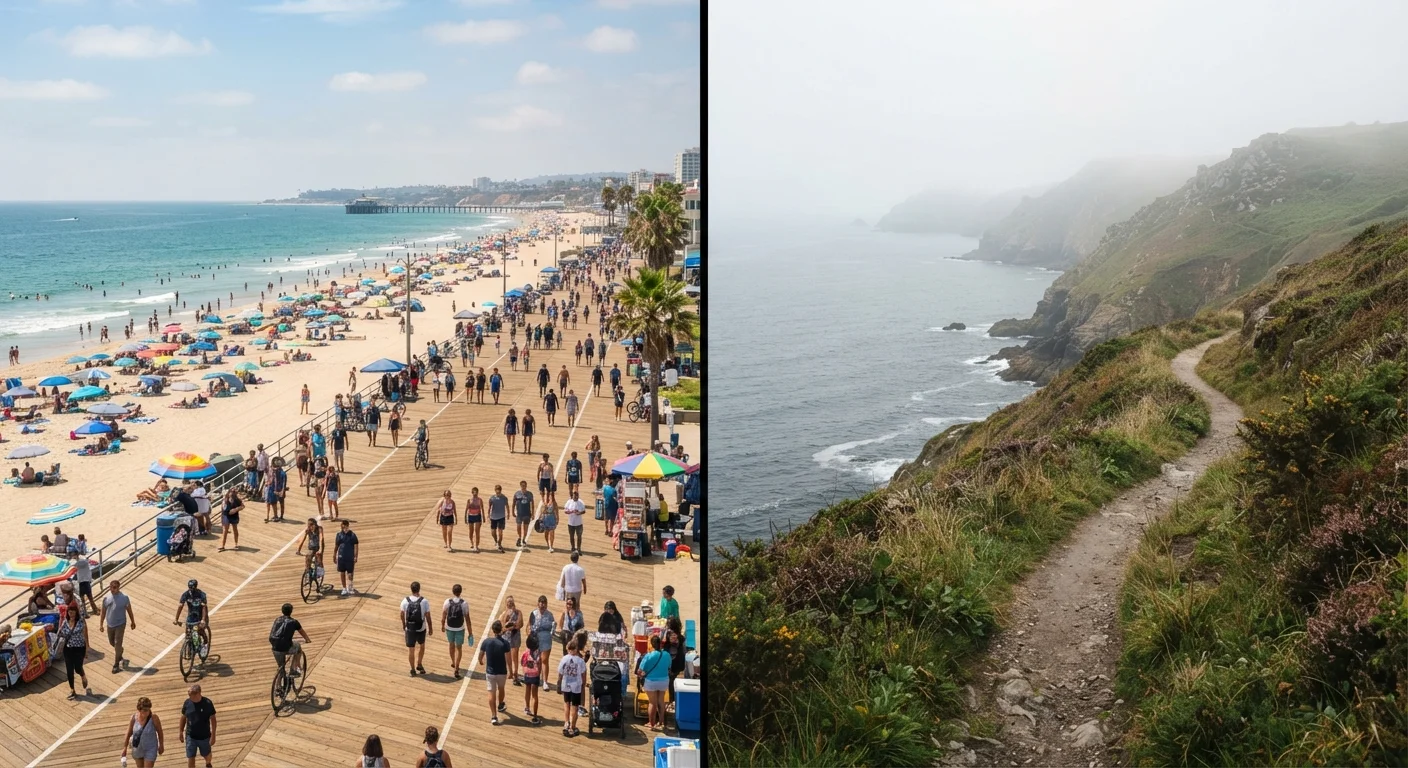
Our Verdict
Neither peak nor off-peak travel is universally superior - each involves genuine trade-offs that affect your experience in different ways. Peak season suits travelers who value reliability and a lively atmosphere and can absorb higher costs. Off-peak travel rewards flexibility, patience, and a willingness to adapt when conditions shift.
Best for travelers who have identified their personal priorities - budget, weather, solitude, or social energy - and want to make a timing decision grounded in honest expectations rather than assumptions.
What Peak and Off-Peak Actually Mean
Peak season isn't a fixed calendar window - it varies dramatically by destination. Hawaii's peak roughly aligns with US school holidays and winter escape months, while European coastal towns peak in July and August. Off-peak, meanwhile, spans the opposite window: the months when visitor numbers drop, often because of weather, school calendars, or competing holidays.
Between the two sits shoulder season - the weeks immediately before or after peak - which many experienced travelers treat as a sweet spot. Understanding these three zones is the starting point for any honest timing decision. For a deeper look at how timing intersects with destination-specific trade-offs, the full breakdown of peak vs. off-season travel walks through those variables in detail.
Shoulder Season: The Often-Overlooked Option
The weeks immediately flanking peak season - typically one to four weeks before or after - frequently offer a practical middle ground. Weather is usually still favorable, crowds are noticeably thinner, and most services remain operational. Shoulder season timing varies by destination, so researching the specific calendar for your chosen location is worth the effort before committing to dates.
The Case for Travelling in Peak Season
Peak season exists for a reason: conditions are generally at their most hospitable. Beaches are swimmable, mountain trails are snow-free, and the full range of local tours, restaurants, and attractions are operating. That reliability has real value, especially for travelers with limited time off who can't afford a trip derailed by closed museums or monsoon rains.
Predictable weather and open attractions
Peak season aligns with the most stable and pleasant conditions for most destinations. Attractions operate full hours, and weather-dependent activities - hiking, beach days, wildlife viewing - are most reliably available.
Full service availability across tourism infrastructure
Restaurants, tours, transportation, and visitor services run at full capacity. Travelers are less likely to arrive and find key experiences closed or limited.
Vibrant, social atmosphere at most destinations
High-season energy - festivals, markets, and fellow travelers - creates an atmosphere that quieter months simply don't replicate, which many travelers find energizing.
Easier to plan with confident logistics
With more options available and consistent operating schedules, it's generally easier to build a reliable itinerary during peak season without frequent contingency planning.
The social atmosphere during peak season is also something many travelers genuinely value. Destinations feel alive - festivals are running, locals are engaged with tourism, and fellow travelers create an energy that off-peak simply doesn't replicate. For first-time visitors to a destination, peak season also tends to mean better infrastructure support: more English-language services, tourist information centers at full operation, and transportation running on full schedules.
The Honest Costs of Choosing Peak Season
The trade-offs are real and shouldn't be minimized. Popular sites become genuinely difficult to enjoy when crowds are dense - think Maui's Road to Hana in August, or Rome's Colosseum in July. Accommodation prices at many destinations can be substantially higher during peak windows, and the best-located properties book out months in advance.
Significantly higher accommodation and flight costs
Popular destinations often see accommodation prices rise substantially during peak windows. The best-located and most sought-after properties frequently sell out months ahead.
Crowds reduce enjoyment at iconic sites
Major attractions can become genuinely difficult to experience meaningfully when visitor volumes peak. Lines, noise, and congestion at landmarks are common complaints from peak-season travelers.
Logistical friction increases across the board
Longer queues at airports, reduced availability of rental vehicles, and stretched restaurant wait times add up - particularly for travelers on tight schedules or with mobility considerations.
Less authentic local interaction
When tourism is at full volume, many local interactions become transactional rather than genuine. Some travelers report that off-peak visits feel more connected to a destination's everyday life.
Logistical friction increases too. Airport queues lengthen, rental car lots thin out, and restaurant waits stretch. For travelers sensitive to sensory overload or those travelling with young children or older relatives, these pressures can meaningfully affect the experience. Planning a destination-specific trip like Hawaii during peak months is worth examining carefully - the honest trade-offs between Hawaiian islands include seasonal crowd dynamics that vary significantly by island.
3-4×
Peak vs. off-peak accommodation price variation
Pricing at popular beach and ski destinations commonly varies by a factor of three to four between peak and low season, according to travel industry reporting.
~30%
Visitors preferring shoulder season timing
Travel surveys have consistently found a growing share of leisure travelers - roughly a third - actively seek shoulder-season timing to balance cost and crowd avoidance.
Making the Most of Off-Peak - and Knowing Its Limits
Off-peak travel can feel revelatory. Standing in a UNESCO site with a handful of other visitors rather than shoulder-to-shoulder crowds changes the experience fundamentally. Prices on accommodation, and sometimes flights, tend to be lower - though this is never guaranteed, and when you book matters as much as when you travel.
The limitations deserve equal attention. Some restaurants and seasonal attractions close entirely. Weather can be genuinely disruptive - not just inconvenient rain, but transportation-disrupting storms or extreme heat. Safety conditions at some destinations also shift off-peak, whether due to reduced staffing at rescue services in outdoor recreation areas or lower foot traffic in urban neighborhoods that benefits from natural surveillance during busier periods. Always check current travel advisories from official government sources before booking, and verify that your planned activities will actually be operational during your travel window.
For travelers weighing a slower, more immersive approach to off-peak destinations, the question of pace is worth considering separately - the comparison of slow travel vs. multi-destination trips offers a useful frame for thinking about how timing and travel style interact.
The content on this site is for informational purposes only and is not a substitute for professional advice. Always consult a qualified professional for guidance specific to your situation.