

The Awareness Gap No One Talks About
Most travellers who experience petty theft describe the same moment afterward: I knew I should have been more careful. That's not a confession of stupidity - it's a description of how the human brain behaves under sensory overload. New cities, unfamiliar languages, navigation anxiety, and sheer excitement all compete for cognitive bandwidth. When your attention is stretched, it becomes genuinely harder to notice the person who just quietly unzipped your bag on the metro.
Petty crime - pickpocketing, bag snatching, distraction scams, ATM fraud - isn't random bad luck. It's opportunistic, and it targets gaps in attention with practiced precision. Understanding why those gaps open is the first step toward closing them. As our guide to common travel safety myths explores, many travellers carry assumptions about risk that simply don't hold up on the ground.
Tourist Areas Are Not Inherently Safe Zones
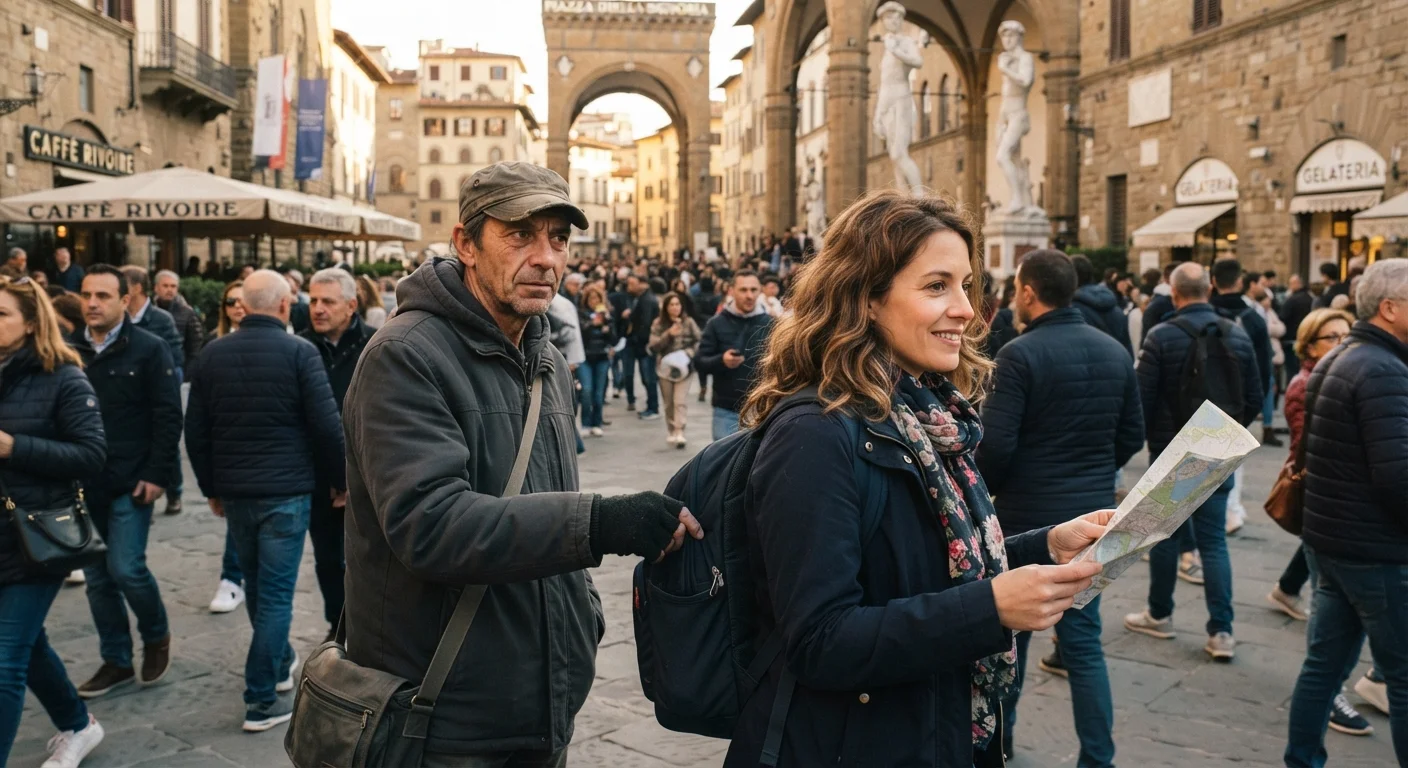
Many travellers assume that heavily policed or well-known tourist districts are lower-risk. In reality, these areas attract skilled opportunists precisely because of the density of distracted, luggage-laden visitors. Remain alert in plazas, near major landmarks, and on tourist-route public transit, not just in quieter neighborhoods.
The Mistakes That Open the Door
Petty crime rarely happens because a traveller did something dramatically careless. More often, it's a cluster of small, understandable habits - each innocuous on its own - that together create exploitable exposure. The mistakes below are drawn from patterns reported by travellers and documented by travel safety resources.
Carrying all valuables in one place - wallet, cards, cash, and passport together in a single bag or pocket.
Why it happens: It feels convenient, and at home it rarely causes problems. Travellers replicate domestic habits without adjusting for higher-risk environments.
Letting smartphones sit visibly on café tables or in open bag pockets while sightseeing or dining.
Why it happens: Phones have become so integrated into navigation and daily life that putting them away feels disruptive. Travellers also underestimate how quickly a device can be grabbed.
Engaging with unsolicited strangers who approach with gifts, petitions, or 'friendship bracelets' before a sales pitch.
Why it happens: Travellers want to be open-minded and culturally curious. It can feel rude to refuse or walk away, especially in early trip excitement.
Using ATMs without checking for skimming devices or shielding PIN entry in busy tourist corridors.
Why it happens: ATM use feels routine and low-risk. Travellers often rush transactions, especially in unfamiliar environments or when a line is forming behind them.
Relaxing vigilance after arriving safely at a destination, treating the trip as low-risk once the journey goes smoothly.
Why it happens: Arrival relief is real - travellers often exhale after navigating airports, customs, and check-in. That psychological release can translate into a false sense of security.
For a broader look at how valuables get lost during travel - and the daily habits that dramatically reduce your exposure - see our companion piece on why travellers lose valuables abroad.
Building the Habit of Quiet Vigilance
Closing the awareness gap doesn't mean spending your trip in a state of paranoia. It means building a handful of low-effort habits that become automatic - the same way experienced travellers eventually stop thinking consciously about holding their bag strap on the metro. They just do it.
~50%
Of travel theft involves distraction techniques
Security researchers and travel safety organizations consistently note that distraction-based theft - engineered situations that redirect a victim's attention - accounts for a significant share of tourist-targeting incidents.
Top 3
Riskiest locations: transit, markets, crowded plazas
Analysis from European travel safety reports repeatedly identifies public transit, open-air markets, and major tourist squares as the environments where opportunistic theft is most concentrated.
Start with the physical basics: split your cash, secure your documents separately, and use zipped pockets over open ones. Then layer in situational awareness - noticing who's standing unusually close, being skeptical of unexpected friendliness near landmarks, and giving yourself a mental reset after arrival rather than immediately relaxing your guard.
For a practical, learnable approach to staying observant without anxiety, our article on situational awareness on the road breaks the skill down step by step. And since theft often pairs with digital risk, it's worth reviewing digital security while travelling before your next trip.
Petty Crime Can Derail Your Entire Trip
A stolen passport or wallet isn't just an inconvenience - it can strand you, drain emergency funds, and consume days of your trip in consulate lines. Before you travel, make digital and physical copies of key documents and store emergency contact numbers separately from your main wallet. Recovery is possible, but prevention is far less costly.
Unexpected incidents also have a way of straining budgets mid-trip. If your finances feel fragile when things go wrong, our planning piece on why travel budgets fall apart mid-trip is worth a read before you go.
The content on this site is for informational purposes only and is not a substitute for professional advice. Always consult a qualified professional for guidance specific to your situation.