

Start here
Why Car Fluids Matter
Core knowledge
Engine Oil: The Big One
Build on it
Coolant, Brake Fluid, and Transmission Fluid
Complete the picture
Power Steering, Windshield Washer, and Battery Fluid
Put it into practice
How to Check and Top Up Fluids Safely
Why Car Fluids Matter
Your car is essentially a collection of moving metal parts, high temperatures, and electrical systems working simultaneously. Fluids are what keep all of that from destroying itself. They lubricate, cool, transmit force, and clean - and when any one of them runs low or degrades, the consequences range from reduced performance to expensive repair bills.
The good news: checking most fluids takes under five minutes and requires no tools. Understanding what each fluid does makes it far easier to spot trouble early. For a broader look at routine upkeep, see our guide for new drivers covering essential maintenance habits.
Dipstick
A long thin rod inserted into the engine oil reservoir that lets you measure the current oil level without any tools.
Hydraulic system
A system that uses pressurized liquid - like brake or power steering fluid - to transmit force from one point to another.
Coolant concentration
The ratio of antifreeze to water in your cooling system. The correct balance determines both the freeze point and boiling point protection your engine gets.
Synthetic oil
A type of engine oil manufactured to a consistent molecular structure, generally lasting longer between changes and performing better at temperature extremes than conventional oil.
Sealed transmission
A gearbox designed to be serviced only by a professional, with no dipstick or user-accessible fluid check point.
Engine Oil: The Big One
Engine oil lubricates the dozens of metal components moving inside your engine, reducing friction and carrying heat away from critical surfaces. Without it, those surfaces grind together and fail - often irreversibly.
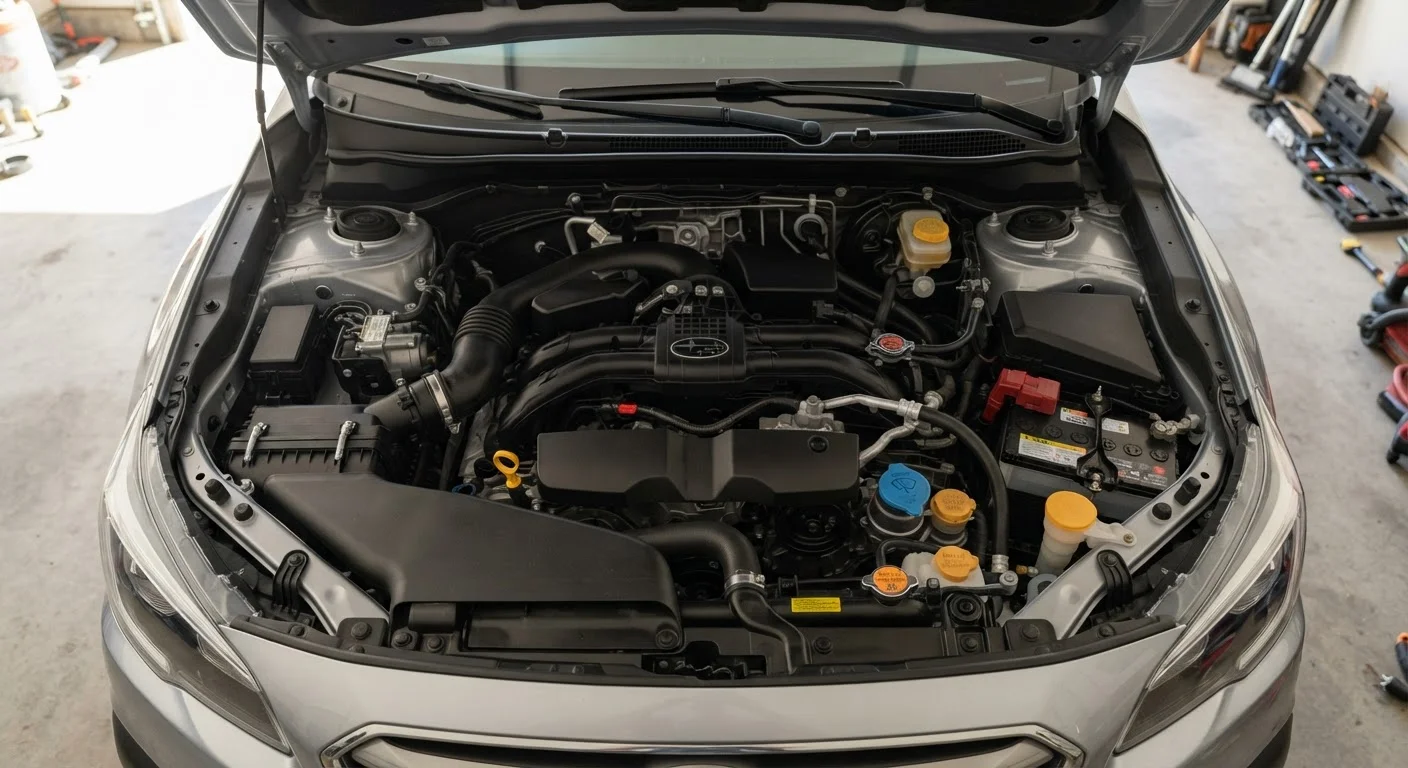
What to check: Pull out the dipstick (usually marked with a yellow or orange handle), wipe it clean, reinsert it fully, then pull it out again. The oil level should sit between the two marks on the stick. Also note the color: fresh oil is amber; very dark or gritty oil is overdue for a change.
When to top up or change: Check the level monthly. Change intervals vary widely by vehicle and oil type - many modern cars with synthetic oil go 7,500 to 10,000 miles between changes, while older engines may need it every 3,000 to 5,000 miles. Your owner's manual is the definitive source.
Check Oil When the Engine Is Cold
For the most accurate dipstick reading, check your oil after the car has been sitting for at least 10 minutes. This gives oil time to drain back into the sump, so you're measuring the actual reservoir level rather than oil still coating the engine internals.
Coolant, Brake Fluid, and Transmission Fluid
Coolant (antifreeze): This fluid circulates through the engine and radiator to manage temperature - preventing overheating in summer and freezing in winter. It's a mix of water and antifreeze concentrate; the correct ratio matters. Most vehicles use a translucent reservoir that lets you check the level without opening anything. Never remove the radiator cap when the engine is hot - the system is pressurized and can cause serious burns.
Brake fluid: Hydraulic braking systems rely on brake fluid to transfer the pressure from your foot on the pedal to the brake calipers at each wheel. Over time, brake fluid absorbs moisture from the air, which lowers its boiling point and reduces braking performance. Unlike most fluids, simply topping it up doesn't solve the problem - it needs periodic replacement, typically every two years or per your vehicle's schedule. A persistent drop in brake fluid level can also indicate worn brake pads or a leak in the system.
Transmission fluid: This lubricates and cools the gearbox. Automatic transmissions are particularly sensitive to fluid condition. Some vehicles have a sealed transmission with no user-serviceable dipstick; others have a standard check procedure. Refer to your manual rather than guessing.
Never Open a Hot Radiator Cap
Coolant systems operate under significant pressure. Removing the radiator or coolant reservoir cap while the engine is warm can cause scalding fluid to spray out suddenly. Always wait until the engine is fully cool - or at least 30 minutes after switching off - before opening anything in the cooling system.
Power Steering, Windshield Washer, and Battery Fluid
Power steering fluid: Hydraulic power steering systems use this fluid to make turning the wheel easier. Many newer vehicles use electric power steering and have no fluid reservoir at all - check your manual if you're unsure which type your car has. Low power steering fluid can make steering feel heavy or produce a whining sound when turning.
Windshield washer fluid: The only fluid here that isn't safety-critical in a mechanical sense, but running out at the wrong moment - behind a salt-spraying truck in winter - is a real hazard. Use a proper washer fluid rated for your climate; plain water can freeze in the lines or leave mineral deposits on the nozzles.
Battery fluid (lead-acid batteries): Older, non-sealed lead-acid batteries have removable caps and require distilled water to be added when the electrolyte level drops. Most modern vehicles have sealed maintenance-free batteries that don't need this. If you're unsure, your owner's manual will clarify the battery type.
For a full picture of how fluid checks fit into your car's broader upkeep, our article on your car's maintenance schedule explains service milestones in plain language.
How to Check and Top Up Fluids Safely
A few consistent habits make fluid checks straightforward and safe:
- Always work on a cold or fully cooled engine when checking coolant or anything near the radiator. Hot systems are pressurized.
- Use the correct fluid specification for your vehicle - not just any oil or coolant off the shelf. The wrong spec can damage seals or reduce performance. Check the reservoir cap or your owner's manual.
- Don't overfill. Overfilling engine oil, for instance, can cause foaming and pressure issues. Stay between the minimum and maximum marks.
- Note whether a fluid keeps dropping. A closed system like brakes or coolant shouldn't regularly need topping up. Repeated low levels mean something is leaking - a job for a qualified mechanic.
If you want to expand your maintenance vocabulary before getting started, car maintenance terms every driver should know is a useful reference. Keeping fluids topped up is one of the simplest ways to protect your vehicle - and your safety on the road.
Your Owner's Manual Is the Authority
General guidance applies to most vehicles, but specifications vary significantly between makes, models, and model years. Always verify the correct fluid type, capacity, and service interval in your own vehicle's owner's manual before purchasing or adding any fluid.
Frequently Asked Questions
A quick visual check of engine oil and coolant once a month is a good habit for most drivers. Other fluids like brake fluid and transmission fluid are checked less frequently - consult your owner's manual for recommended intervals.
For most fluids, mixing brands of the same type and specification is generally acceptable in an emergency. However, mixing different specifications - such as different coolant types - can cause problems. Always check your owner's manual for the correct spec before topping up.
Driving with critically low oil can cause severe engine damage within minutes, as moving parts lose lubrication and generate destructive heat. Pull over safely as soon as a low oil warning appears and check the level before continuing.
Engine oil level can drop slightly between changes through normal consumption. Most other fluids - brake, coolant, power steering - should stay relatively stable. A noticeable or repeated drop in any closed-system fluid likely indicates a leak worth investigating.
EVs do not use engine oil or transmission fluid in the traditional sense, but they still require coolant for battery and motor management, brake fluid, and windshield washer fluid. Check your specific vehicle's manual for its requirements.
If you notice a colored puddle under your car, a burning smell, or a warning light alongside low fluid, have a mechanic inspect it rather than simply topping up. These symptoms often point to a leak or a deeper mechanical issue.
The content on this site is for informational purposes only and is not a substitute for professional advice. Always consult a qualified professional for guidance specific to your situation.