

What Service Records Actually Contain
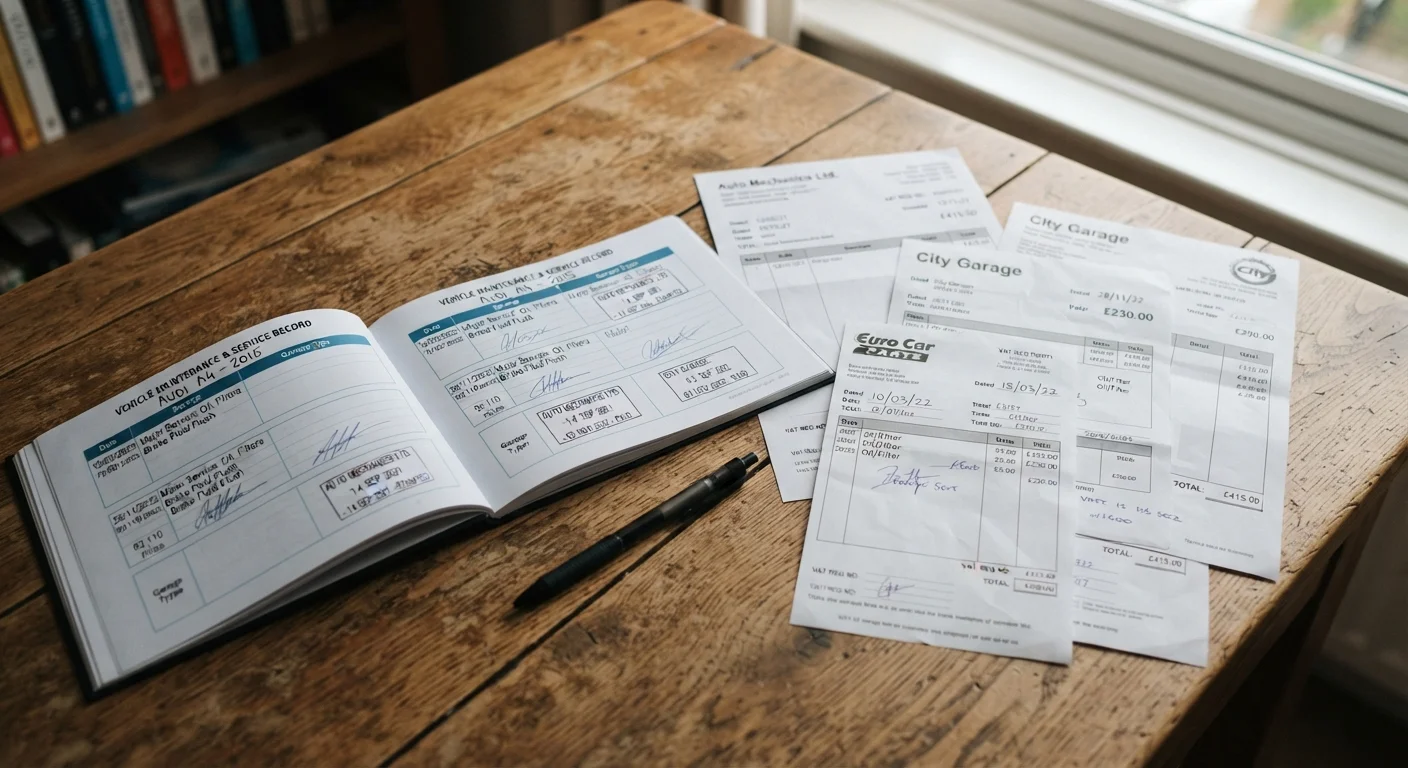
A vehicle's service history is a paper or digital trail of every maintenance visit logged during the car's life. At its most complete, it includes a manufacturer-issued logbook with dealer stamps, plus receipts and invoices detailing parts used and labor performed. In practice, records vary widely - some vehicles have thick folders of documented work; others arrive with nothing more than a seller's word.
Understanding what your car's maintenance schedule requires is the foundation for reading any service record meaningfully. Without knowing what should have happened, you can't assess whether the history reflects adequate care.
Service records typically show: the date of each visit, the odometer reading at the time, the type of work performed, the name of the shop or technician, and sometimes the parts used. Each of these data points is useful on its own - together, they paint a picture of how the vehicle has been treated.
Vehicle owner's manual
Contains the manufacturer's recommended service intervals to compare against the logged history.
Service logbook or stamped booklet
The primary document recording each service visit, date, mileage, and work performed.
Receipts and invoices from past services
Support the logbook entries and provide itemized detail on parts replaced and labor completed.
VIN (Vehicle Identification Number)
Allows you to request records from dealerships or check third-party vehicle history databases.
How to Read the History Step by Step
Follow these steps to move systematically through the paperwork and draw accurate conclusions. The goal is not to find a perfect record - few older vehicles have one - but to understand what the history tells you and where it leaves questions open.
What you will need
Gather all available documentation
Collect everything that relates to the vehicle's maintenance: the stamped service logbook, loose receipts, dealer invoices, and any digital records the seller or previous owner can provide. Organize them in chronological order before you start reviewing.
Check the dates and mileage sequence
Run through each entry in order and confirm that both the dates and odometer readings increase consistently. A date that jumps forward by three years, or an odometer reading that appears lower than the previous entry, signals a problem worth investigating further.
Identify what each service entry actually covered
A stamp that says "serviced" tells you almost nothing on its own. Look for entries that specify what was done - oil and filter change, brake fluid replacement, air filter, spark plugs, timing belt. The more detail an entry contains, the more useful it is. Vague entries are worth querying with the seller or the servicing garage directly.
For a breakdown of what different service types typically include, see our article on full, interim, and major service types.
Compare the history against the manufacturer's schedule
Open the owner's manual and find the recommended service intervals - usually listed in miles, months, or both. Match each major milestone (for example, 30,000-mile, 60,000-mile, or 100,000-mile services) against the logged history. Mark any milestone that appears to have been skipped or significantly delayed.
Look for patterns, not just individual gaps
One missed oil change is less concerning than a pattern of services spaced twice as far apart as recommended, or high-mileage maintenance items (timing belt, coolant flush, transmission fluid) that never appear in the records at all. Focus on whether the overall pattern suggests the car was consistently cared for or routinely deferred.
Verify records where possible
If services were carried out by a franchised dealer, that dealer may be able to pull up records by VIN - call ahead and ask. Independent garages often retain records too, and a quick phone call can confirm a stamp's legitimacy. For a broader view of the vehicle's history, a third-party vehicle history report (searchable by VIN) can also surface undisclosed events. See our guide to reading a used car's past for more on this process.
Cross-Reference With the Manufacturer's Schedule
The owner's manual lists every required service interval by mileage and time. Compare those intervals against the dates and odometer readings in the service history. If oil changes are logged every 12,000 miles but the manufacturer recommends every 5,000-7,500, that gap matters - even if records exist for every visit.
Handwritten Logs Without Receipts
A service logbook filled in by hand - without any accompanying receipts, invoices, or shop stamps - is difficult to verify. It's not automatically dishonest, but treat it as unconfirmed. Ask the seller for supporting documentation, or check whether a dealership or national chain can pull records by VIN.
Don't Rely on Service History Alone
Service records can be incomplete, informal, or in rare cases falsified. A documented history is a positive sign, but it should always be combined with a professional pre-purchase inspection by a qualified mechanic before you commit to buying a used vehicle. Records tell you what was claimed - an inspection tells you what's actually true.
What to Do When History Is Missing or Incomplete
A partial service history is not automatically a dealbreaker, but it does require a different approach. If records cover only recent years, the missing period represents unknown risk - particularly for high-mileage items like timing belts or coolant systems that may not have been addressed.
In these cases, the practical response is twofold. First, have a qualified mechanic inspect the vehicle thoroughly before purchase; they can often identify signs of deferred maintenance that records would have confirmed. Second, budget conservatively - assume that any major scheduled item without documentation may need attention soon.
Once you own a vehicle, keeping your own complete records going forward protects its value and makes future buyers' decisions easier. Our article on keeping records of your car's service history covers practical ways to do this.
For a broader look at what vehicle ownership documents mean, including titles and registration, see our guide to car ownership paperwork.
The content on this site is for informational purposes only and is not a substitute for professional advice. Always consult a qualified professional for guidance specific to your situation.