

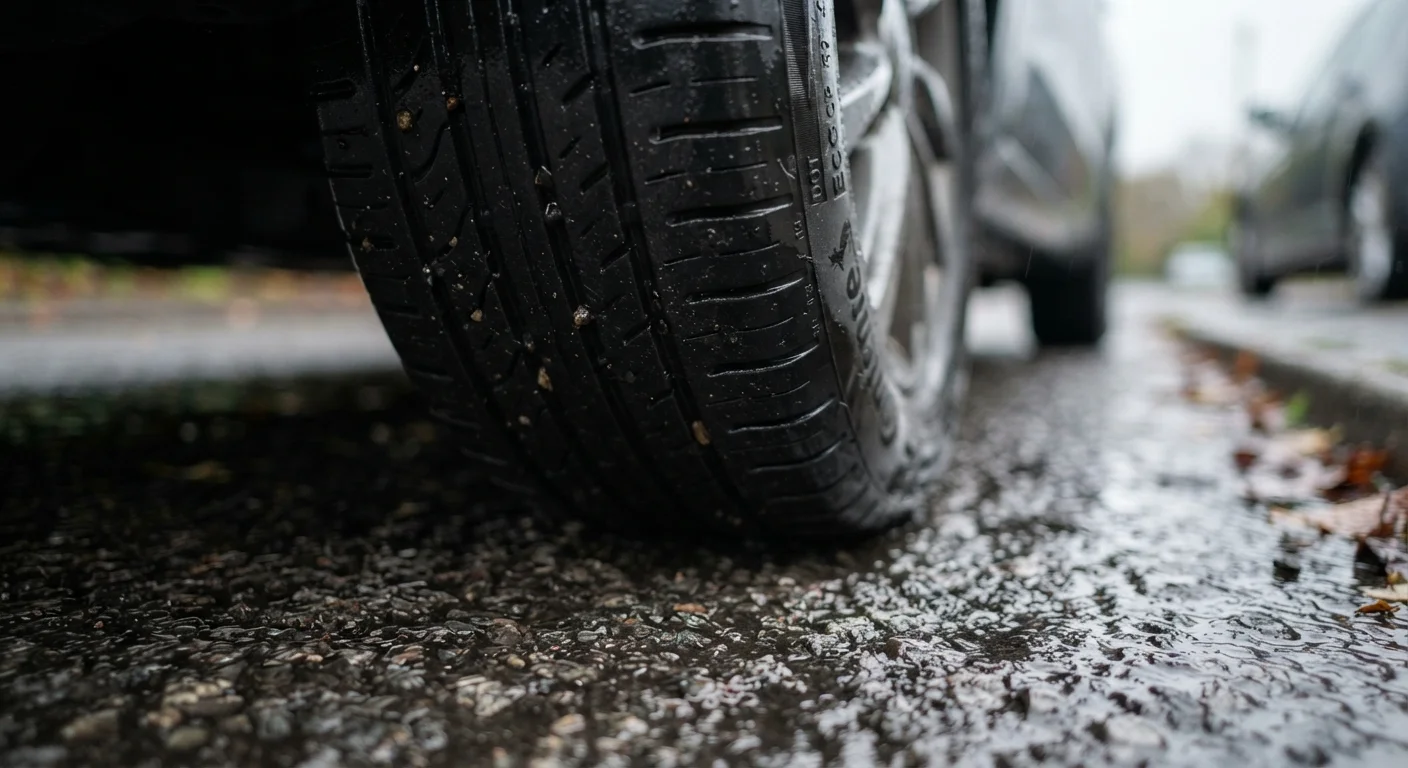
Why Tyres Deserve More Attention Than They Get
Every braking, steering, and acceleration input your car makes passes through four patches of rubber about the size of your hand. Yet tyres are among the most neglected components on most vehicles. Drivers tend to notice them only when something goes wrong - a flat, a blowout, or a failed inspection.
Routine tyre maintenance costs very little time and money compared to what poor tyre condition can cause: longer stopping distances, reduced wet-weather grip, and, in serious cases, sudden tyre failure at speed. If you're new to car ownership, our guide for new drivers covers where tyres fit into the broader maintenance picture.
11%
Crashes linked to tyre-related factors
NHTSA research found that approximately 11% of vehicle crashes involved tyre problems as a contributing factor.
4/32"
Tread depth where wet braking noticeably worsens
Testing by safety researchers consistently shows stopping distances increase significantly once tread depth falls to 4/32" on wet surfaces.
~1 PSI
Pressure lost per 10°F temperature drop
A widely cited rule of thumb from tyre industry guidelines - useful for anticipating seasonal pressure changes.
Getting Tyre Pressure Right
Tyre pressure is measured in PSI. The correct figure for your car is printed on a sticker inside the driver's door jamb or in the owner's manual - not on the tyre sidewall. The sidewall number is the maximum the tyre can hold, not the recommended operating pressure for your vehicle.
Check pressure when the tyres are cold - meaning the car has been parked for at least three hours or driven fewer than a mile. Heat from driving expands air and gives a falsely high reading. Use a reliable gauge; built-in gauges on petrol station air pumps vary in accuracy.
Check Pressure When Tyres Are Cold
Always measure tyre pressure before driving or after the car has sat for at least three hours. Even a short trip at highway speed raises tyre temperature and pressure by several PSI, making any reading taken afterward unreliable for adjustment purposes.
Many modern vehicles are fitted with a Tyre Pressure Monitoring System (TPMS), which triggers a dashboard warning when pressure drops roughly 25% below the recommended level. That's already a meaningful deficit. See our overview of dashboard warning lights for what the TPMS symbol actually means. Checking pressure manually once a month keeps you ahead of the light.
Reading Tread Depth
Tread channels water away from the contact patch so the tyre can grip wet pavement. As tread wears down, that ability diminishes. In the U.S., the legal minimum tread depth is 2/32 of an inch. Most safety organizations recommend replacing tyres at 4/32" because wet-braking performance drops noticeably before the legal limit is reached.
A quick field check: insert a quarter into a tread groove with Washington's head pointing down. If you can see the top of his head, the tread is at or below 4/32" - time to plan for replacements. The older penny test (Lincoln's head) identifies the 2/32" legal limit but misses the earlier safety threshold.
When checking tread depth, measure in multiple grooves across the tyre width, not just one spot. Edge wear may be hidden if you only probe the centre groove.
Uneven wear is common and a single measurement can give a false sense of security about remaining tread life.
Keep a small digital tyre gauge in the glovebox and make it a habit to check all four tyres on the first of every month - it takes under five minutes.
Consistent monthly checks catch gradual pressure loss long before it becomes a safety or handling issue.
Uneven wear patterns are also informative. Wear concentrated in the centre suggests chronic over-inflation; wear on both edges points to under-inflation; wear on one edge typically means an alignment issue. For a deeper look at both checks together, see tyre pressure and tread checks.
Tyre Rotation: What It Is and Why It Matters
Front and rear tyres wear at different rates depending on whether a vehicle is front-, rear-, or all-wheel drive, and on how weight is distributed. Rotation moves each tyre to a different position on the vehicle so wear spreads evenly across all four.
A common interval is every 5,000-7,500 miles, though your owner's manual may specify differently. Many drivers time it with every other oil change as a convenient reminder. Skipping rotation doesn't cause immediate problems, but it's one of the overlooked habits that gradually wear vehicles down.
Directional Tyres Have Rotation Limits
Some performance and winter tyres are directional - they have a tread pattern designed to rotate in one direction only. These can only be rotated front-to-back on the same side of the vehicle. Check the tyre sidewall for an arrow indicating the intended rotation direction before assuming a cross-rotation pattern applies.
If your vehicle has a full-size matching spare, some rotation patterns include it, extending the life of all five tyres. Confirm with the tyre manufacturer or a qualified technician whether your spare is suitable for inclusion.
Knowing When a Tyre Has Reached the End of Its Life
Tread depth isn't the only end-of-life signal. Rubber degrades with age even on tyres that look fine. Most tyre manufacturers and organizations such as the National Highway Traffic Safety Administration (NHTSA) suggest replacing tyres after 6-10 years from the date of manufacture, regardless of remaining tread.
Every tyre carries a DOT code on the sidewall. The last four digits indicate the week and year of manufacture - for example, 2419 means the 24th week of 2019. Check this code if you're unsure of a tyre's age.
Stop Driving on a Damaged Tyre
A sidewall bulge, visible cords, or a deep sidewall cut are not conditions to monitor - they indicate that a tyre could fail without warning. Do not drive further than necessary to reach a safe location, and have the tyre professionally inspected or replaced before continuing normal use.
Other signs a tyre needs immediate replacement: sidewall bulges or bubbles (indicating internal structural damage), deep cuts or cracks in the rubber, persistent slow leaks that recur after inflation, or any visible cords or fabric showing through the surface. A qualified tyre technician should evaluate any tyre showing these symptoms before the vehicle is driven further.
Seasonal Tyre Considerations
Ambient temperature directly affects tyre pressure - a general rule of thumb is that pressure drops roughly 1 PSI for every 10°F fall in temperature. This means winter mornings can trigger low-pressure readings or TPMS warnings even if no air has escaped. Check and adjust pressure more frequently during seasonal transitions.
In regions with significant snowfall or ice, all-season tyres offer a compromise, but dedicated winter tyres provide meaningfully better grip below about 45°F because of their softer rubber compound and tread design. Our article on seasonal car maintenance covers how temperature extremes affect tyres and other systems together.
“Tyres are the single most safety-critical component on a vehicle. Unlike most mechanical failures, tyre failure at highway speed gives the driver almost no reaction time.”
— NHTSA Vehicle Safety Communications, U.S. National Highway Traffic Safety Administration
This article is for general informational purposes only. Always consult a qualified tyre technician or your vehicle's owner's manual for guidance specific to your vehicle and circumstances.
The content on this site is for informational purposes only and is not a substitute for professional advice. Always consult a qualified professional for guidance specific to your situation.