

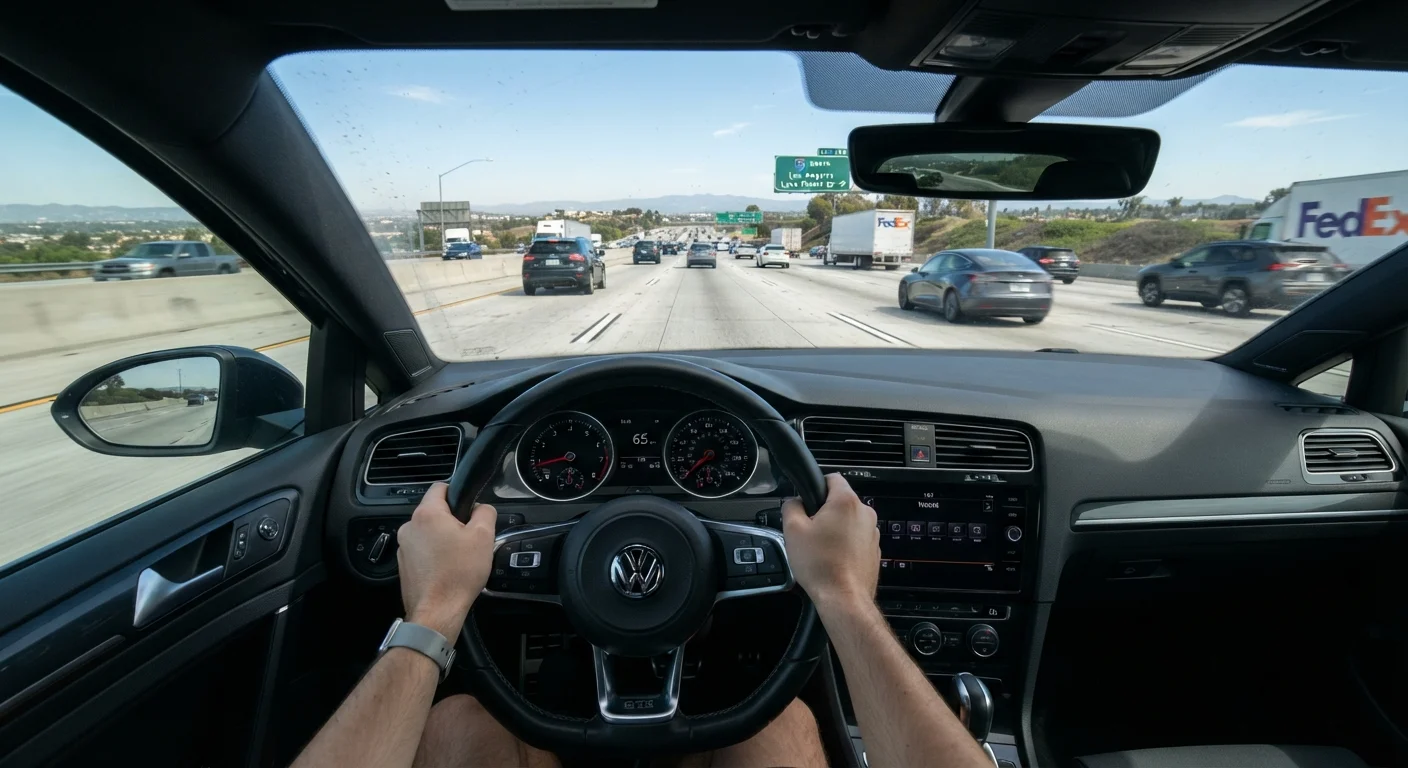
The Core Idea: Expect the Unexpected
Most crashes don't happen because one driver made a catastrophic error. They happen because two or more small mistakes aligned at the wrong moment. Defensive driving is the practice of reducing your vulnerability to other people's mistakes - and your own.
At its heart, defensive driving asks you to assume that conditions can change and that other drivers may not behave predictably. You treat uncertainty as a given, not an exception. That shift in mindset changes how you position your vehicle, how much space you leave, how early you signal, and where your eyes go.
It's worth separating this from simply being a cautious or slow driver. Defensive driving isn't timidity - it's calculated awareness. You make deliberate choices that give you more time and more space to respond, regardless of what happens next.
“The best drivers are not those who handle emergencies well - they're the ones who see trouble coming and avoid it entirely.”
— National Safety Council, U.S. nonprofit focused on eliminating preventable deaths
The Principles That Make It Work
Several overlapping habits define what defensive driving looks like in practice:
- Look far ahead. Train your eyes to scan 12-15 seconds down the road, not just at the bumper in front of you. This is where hazards give you enough early warning to act. Our article on where your eyes should be at every moment behind the wheel goes deeper on this skill.
- Maintain a generous following distance. The 3-second rule is a minimum. Increase that buffer when visibility drops, roads are wet, or traffic is unpredictable.
- Manage your speed for conditions - not just the sign. Posted limits are set for ideal conditions. Rain, glare, road debris, or heavy pedestrian activity all call for a lower speed than the sign might allow.
- Stay out of other drivers' blind spots. If you can't see a truck driver's mirrors, they can't see you. Move through blind spots quickly rather than hovering in them.
- Have an escape route in mind. At any given moment, ask yourself: if the car ahead stopped right now, where would I go? Keeping at least one lane option open is part of defensive positioning.
Practice the 3-Second Rule Right Now
Pick a fixed object on the road - a sign or overpass. When the car ahead passes it, count 'one-one-thousand, two-one-thousand, three-one-thousand.' If you reach the object before finishing the count, you're following too closely. Increase your gap and recheck.
How Conditions Change the Equation
Defensive driving isn't a static checklist - it scales with road conditions. On a dry, straight highway with light traffic, your margins are wide. In rain, fog, or congested urban streets, those margins shrink fast and your defensive habits need to compensate.
Wet roads are one of the most common places defensive driving breaks down. Stopping distances roughly double on wet pavement, which means the following distance that worked in dry conditions becomes dangerously short. See our guide on why wet roads demand a different driving mindset for a closer look at how to adjust.
Night driving, highway merges, construction zones, and high-pedestrian areas all present their own demands. The unifying principle is the same: the higher the hazard potential, the more buffer - in time and space - you need to create around your vehicle.
~94%
Crashes involving human error
The NHTSA estimates that human error is a critical factor in approximately 94% of serious crashes in the United States.
2x
Stopping distance increase on wet roads
Wet pavement can roughly double the distance required to stop compared to dry conditions, according to general highway safety guidance.
3 sec
Minimum recommended following gap
Most driver safety organizations, including the NSC, recommend a minimum 3-second following distance in normal driving conditions.
Building These Habits Over Time
Most drivers already practice some form of defensive driving without calling it that. The goal is to make these habits consistent and deliberate rather than occasional. Experience helps, but it isn't the whole story - risk awareness evolves differently for learners and experienced drivers, and complacency is a real risk for those who've been driving for years.
Taking a formal defensive driving course - offered through organizations like the NSC or AAA - can sharpen skills, expose blind spots in your habits, and may qualify you for an insurance discount. Beyond formal training, simple practices like putting your phone away, avoiding fatigued driving, and doing a quick mirror check before every lane change reinforce the same principles every time you drive.
The payoff is genuine: fewer close calls, less stress behind the wheel, and a meaningfully lower crash risk - not just for you, but for everyone sharing the road.
Defensive Driving Courses: What to Expect
Approved defensive driving courses typically run 4-8 hours and cover hazard perception, space management, and distraction reduction. Many are now available online. Completion certificates may be accepted by insurers or courts (for traffic violation dismissal) depending on your state - check your state's DMV or court system for accepted providers before enrolling.
Frequently Asked Questions
Not at all. Defensive driving is relevant to drivers of every experience level. In fact, long-time drivers sometimes develop overconfidence that can erode good habits. Regularly revisiting defensive principles helps experienced drivers stay sharp and recognize complacency.
Most driving safety organizations recommend at least a 3-second following gap in normal conditions. In rain, fog, or heavy traffic, that gap should increase to 4-6 seconds or more. Count from when the car ahead passes a fixed point until your car reaches the same point.
No. Defensive driving is about appropriate speed for conditions - not crawling in traffic. Sometimes the safest move is matching the flow of traffic to avoid being a hazard yourself. The key is staying within a speed where you can safely stop or maneuver if needed.
Many insurers offer discounts for completing an approved defensive driving or driver improvement course. Eligibility and discount amounts vary by insurer and state, so contact your provider directly to find out what applies to your policy.
Aggressive driving prioritizes speed and personal urgency over the safety of others - tailgating, weaving, and ignoring signals. Defensive driving does the opposite: it deliberately creates space, time, and options to respond to whatever other road users do.
The content on this site is for informational purposes only and is not a substitute for professional advice. Always consult a qualified professional for guidance specific to your situation.