

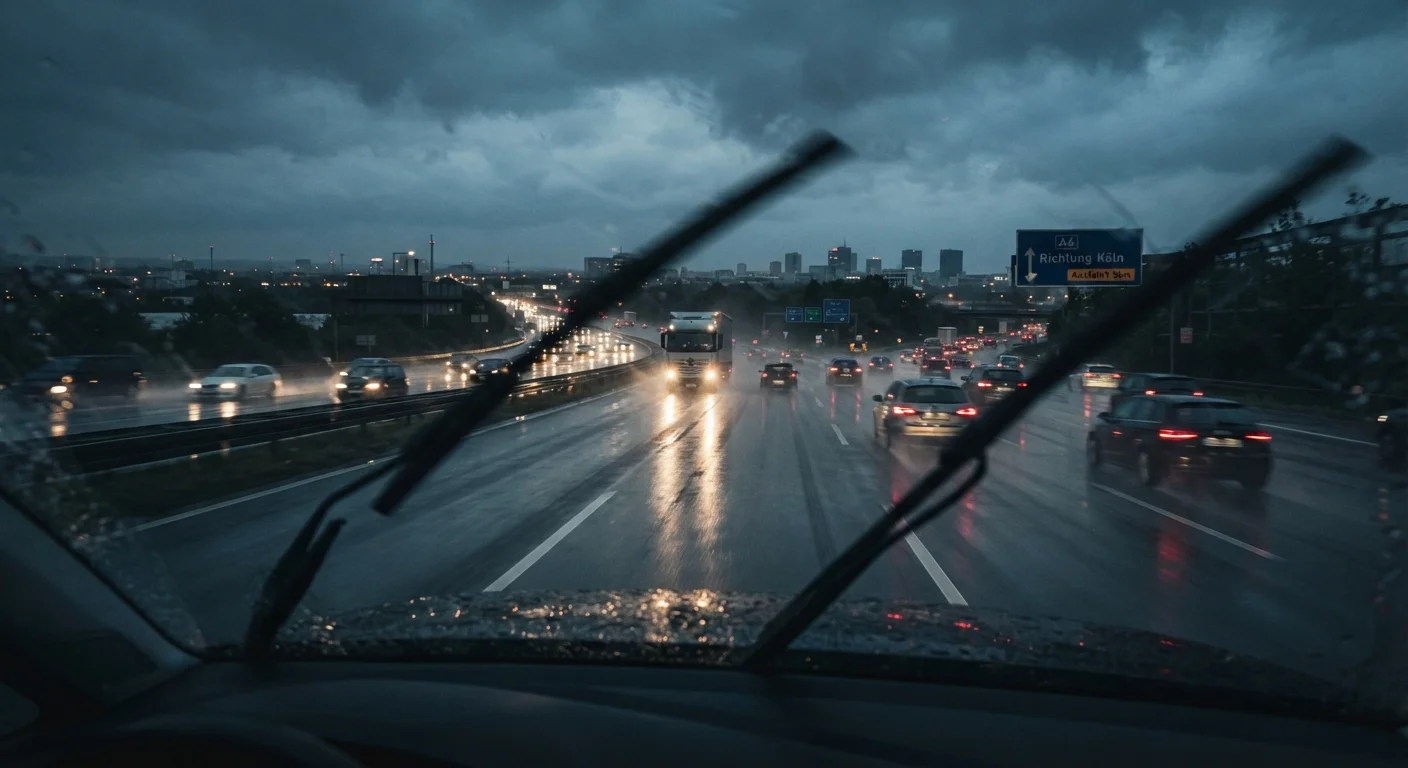
What Rain Actually Does to the Road Beneath You
Most drivers know wet roads are slippery - but fewer understand exactly why, or how quickly conditions can change. When rain first falls after a dry spell, it mixes with oil residue and tire dust that have built up on the asphalt. That initial layer is often more slippery than rain alone. As precipitation continues, water washes the surface cleaner, but the remaining film still dramatically reduces friction between your tyres and the road.
Tyre grip is what keeps your vehicle responsive when you steer, brake, or accelerate. On a wet surface, a tyre has to move water out of its path to maintain contact with the road. Modern tyre tread is designed specifically for this, but no tyre eliminates the risk entirely - especially as tread wears down. Even with good tyres, stopping distances in wet conditions are substantially longer than on dry roads, which is why the gap you leave to the car ahead matters so much more when it rains.
For a broader look at how different weather conditions affect your driving, see our guide on adapting to fog, ice, and snow.
~75%
Of weather-related crashes occur on wet roads
According to the Federal Highway Administration, wet pavement is a factor in the vast majority of weather-related traffic crashes in the United States.
35 mph
Speed at which hydroplaning can begin
Traffic safety research suggests hydroplaning can occur at speeds as low as 35 mph when tyre tread is worn or standing water is significant.
The Core Practices That Make the Difference
Adjusting to rain isn't just about slowing down - it's about rethinking every input you make behind the wheel. The practices below apply whether you're navigating a light drizzle on city streets or steady rain on the highway.
Reduce your speed below the posted limit whenever it rains.
Speed limits are set for ideal conditions. In rain, your tyres have less grip, your reaction time effectively shortens relative to stopping distance, and road markings can become harder to read. Travelling even 5-10 mph slower gives you meaningfully more control.
Increase your following distance to at least four seconds in wet conditions.
The standard two-second rule assumes dry roads. Wet surfaces extend braking distances considerably, so doubling your gap to the vehicle ahead compensates for reduced stopping ability and gives you time to react without emergency braking.
Turn on your headlights as soon as you activate your wipers.
Headlights in rain serve two purposes: they help you see the road ahead, and they make your vehicle visible to oncoming traffic and drivers behind you. Many states legally require headlights whenever wipers are in use.
Apply brakes, accelerator, and steering inputs gently and progressively.
Abrupt inputs - hard braking, sharp turns, sudden acceleration - can overwhelm the limited traction available on wet roads and trigger skidding or loss of control. Smooth, deliberate movements keep the tyres working within their grip limits.
Watch for pooled water and avoid lanes where water is visibly standing.
Hydroplaning occurs when a layer of water builds up between your tyres and the road faster than the tread can expel it. This causes the vehicle to lose contact with the surface entirely, rendering steering and braking temporarily ineffective.
Newer drivers may notice that rain feels more manageable once they understand what the road is actually doing. Risk awareness evolves with experience, but the fundamentals of wet-weather driving are learnable at any stage.
Quick Wins: Changes You Can Make Before You Pull Out
Some of the most effective wet-weather adjustments happen before you're even moving. Taking thirty seconds to check your mirrors, set your headlights, and mentally reset your speed expectations can significantly reduce your risk.
For more on where your attention should be directed while driving - in any conditions - our article on scanning techniques and gaze patterns covers the habits experienced drivers rely on. And if you want to understand how rain compares to more severe weather events, managing vision and traction in heavy rain goes deeper into the physics of stopping distances and visibility.
Rain Isn't the Only Challenge After Dark
If you're driving in rain at night, you're dealing with two compounding hazards at once: reduced grip and reduced visibility. Headlight glare on wet roads can make depth perception harder and obscure lane markings. Our article on how darkness changes the physics of the road covers the additional adjustments worth making when rain and low light combine.
The content on this site is for informational purposes only and is not a substitute for professional advice. Always consult a qualified professional for guidance specific to your situation.