

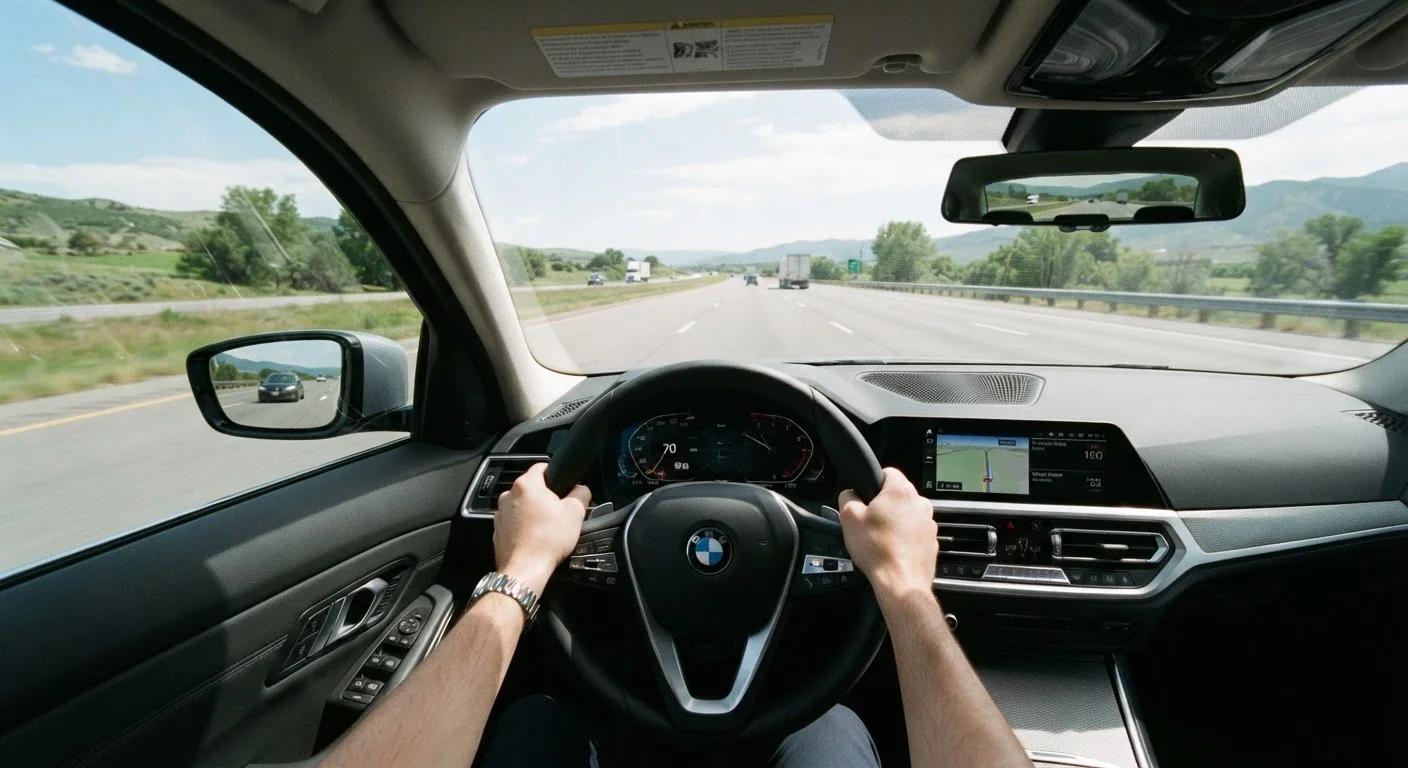
Why Eye Movement - Not Just Vision - Determines Safety
Most drivers assume that as long as they can see clearly, their eyes are doing their job. But having good vision is only half the story. How you move your eyes matters just as much as how sharp they are. A driver staring at the bumper of the car directly ahead can have perfect eyesight and still miss a child stepping into the road twenty yards away.
Safe driving depends on active, purposeful gaze movement - constantly gathering information from multiple zones: far ahead, nearby, to the sides, and behind. Think of it as managing a live feed from several cameras simultaneously, rather than watching one fixed screen.
This skill connects directly to defensive driving - anticipating problems before they develop, not just reacting once they arrive.
~94%
Of serious crashes involving human choice or error
According to the National Highway Traffic Safety Administration (NHTSA), the vast majority of crashes involve a human factor - with recognition errors, including failure to look properly, among the most common.
160 ft
Distance traveled blind in 2 seconds at 55 mph
This figure illustrates why even a brief glance away from the road - at a phone, mirror, or passenger - represents a significant gap in situational awareness.
3x
Higher crash risk with narrow gaze fixation
Research on driver gaze patterns suggests that drivers who fixate narrowly on the lane ahead rather than scanning broadly are significantly more likely to miss peripheral hazards.
The Key Zones Your Eyes Should Cover
Far Zone: 12-15 Seconds Ahead
On open roads and highways, your primary gaze should be aimed well down the road - roughly 12 to 15 seconds of travel time ahead. At 60 mph, that's about a quarter-mile. This gives you time to recognize a hazard, decide on a response, and act before the situation becomes a crisis. Most drivers look too close, which compresses their reaction window and leads to harder braking.
Middle Zone: 4-6 Seconds Ahead
This zone covers what's immediately developing - a car slowing, a cyclist merging, a light changing. Your eyes should briefly sweep this area regularly, especially in city traffic where conditions change quickly.
Peripheral and Mirror Zone
Your mirrors are your rear and side cameras. Aim to glance at them every 5-8 seconds - more frequently before braking or changing lanes. Mirrors don't cover everything, though. A brief over-the-shoulder check is still necessary for blind spots before any lane change.
Use the 'Aim High' Habit
The phrase 'aim high in steering' - taught in many driver training programs - is really about where you look, not just where you steer. Training yourself to look farther ahead naturally pulls your steering smoother, reduces overcorrection, and gives you earlier hazard warnings. Practice consciously shifting your gaze to the far end of the road whenever you notice you've been staring close.
Intersection Scanning: The Most Critical Moment
Intersections are where a large proportion of crashes occur. Even when you have the right of way, your eyes shouldn't assume other drivers will stop. The habit to build: left-right-left before entering any intersection. Look left first because that's where oncoming traffic from your immediate lane comes from, then right, then left again as you enter.
At a green light, this takes roughly one second and can prevent a broadside collision from a driver who runs a red. It's one of the habits that separates alert drivers from those operating on autopilot - a pattern explored in our article on habits that quietly erode safe driving.
What Breaks the Pattern - and How to Rebuild It
Any distraction that moves your eyes off the road - a phone, a navigation screen, a conversation - collapses your scanning routine. The danger isn't just missing one hazard; it's that you lose your mental map of surrounding traffic and have to rebuild it from scratch when your gaze returns.
If you notice your scanning has become narrow or lazy - common on familiar routes or long monotonous stretches - use deliberate prompts to re-engage. Some drivers mentally narrate what they see: "Truck merging left, gap ahead, pedestrian near the curb." This keeps the brain active and forces the eyes to keep moving.
Conditions that compress visibility, like rain or darkness, make a disciplined scanning routine even more important. When you can see less, you need to look more intentionally. Our guides on driving in heavy rain and night driving cover how to adapt your awareness habits to those environments.
“The eyes lead the car. Where a driver looks is where attention goes - and where attention goes determines what the driver can respond to. Building better gaze habits is one of the highest-value skills in driver training.”
— Traffic Safety Researcher, Driver behavior and human factors specialist
Frequently Asked Questions
On open highways, aim to look 12-15 seconds ahead - roughly a quarter-mile at highway speeds. In city traffic, that drops to about 1-2 blocks. Looking farther down the road gives you earlier warning of hazards and reduces the need for sudden braking.
A general guideline is every 5-8 seconds, though you should also check before braking, changing lanes, or turning. Regular mirror checks keep your mental map of surrounding traffic current so you're never caught off guard.
Do a quick head turn to look over your shoulder toward the blind spot zone - mirrors alone won't cover it. Keep the turn brief and return your eyes to the road ahead immediately. Signal before moving so other drivers anticipate your action.
New drivers concentrate heavily on staying in the lane and managing vehicle controls, which focuses their gaze narrowly forward. With practice, the mechanical tasks become automatic and the driver's attention frees up for broader scanning.
Yes - at 55 mph, two seconds of eyes off the road means traveling roughly 160 feet essentially blind. Research consistently links even brief phone glances to significantly elevated crash risk. This is covered more fully in our article on <a href="/cars-driving/safe-driving/phone-radio-passengers-how-different-distractions-affect-driving-attention">how different distractions affect driving attention</a>.
Yes. Rain and darkness both reduce how far and clearly you can see, which compresses your reaction window. Slow down, increase following distance, and be more deliberate about checking mirrors and intersections. Our guides on <a href="/cars-driving/safe-driving/driving-in-rain-why-wet-roads-demand-a-different-mindset">driving in rain</a> and <a href="/cars-driving/safe-driving/the-night-driving-habits-that-separate-confident-drivers-from-anxious-ones">night driving habits</a> go deeper on both situations.
The content on this site is for informational purposes only and is not a substitute for professional advice. Always consult a qualified professional for guidance specific to your situation.